


Understanding the Sineng Energy Storage Cabinet: A Cornerstone of Modern Power Systems
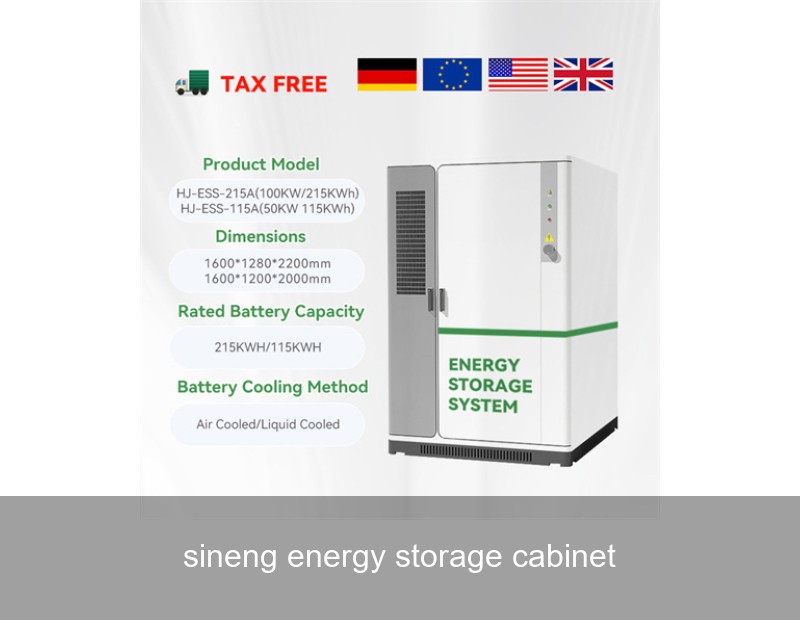
If you're managing a commercial facility or an industrial plant, you've likely felt the pressure of rising energy costs and the push for sustainability. The grid is becoming less predictable, and the solution often points towards on-site energy storage. In this landscape, the Sineng energy storage cabinet has emerged as a prominent and reliable component in many large-scale installations. But what exactly is it, and how does it fit into a truly intelligent and resilient energy ecosystem? As a Highjoule technical expert, I'll break down the technology and explain why the cabinet itself is just one piece of the puzzle for achieving energy independence.
Table of Contents
- What is a Sineng Energy Storage Cabinet?
- The Phenomenon: Grid Instability Meets Renewable Ambition
- The Data: Why Storage is No Longer Optional
- A Real-World Case: Stabilizing a German Manufacturing Plant
- The Key Insight: The Cabinet is a Component, Not a Complete Solution
- The Highjoule Approach: Intelligent Systems Beyond the Cabinet
- Looking Forward: The Integrated Energy Ecosystem
What is a Sineng Energy Storage Cabinet?
At its core, a Sineng energy storage cabinet is a containerized unit that houses the critical power conversion system (PCS) for a battery energy storage system (BESS). Think of it as the "brain and heart" of the storage setup. Its primary function is to convert the direct current (DC) electricity from batteries into the alternating current (AC) used by the grid and your facilities, and vice versa. Sineng Electric is a respected Chinese manufacturer known for producing reliable inverters and PCS units, and their cabinets are often selected for utility-scale and large commercial projects.
However—and this is crucial—the cabinet containing the PCS is not the entire storage system. It is a vital component that must be seamlessly integrated with other superior elements: high-performance battery racks, a cutting-edge Battery Management System (BMS), a thermal management system, and, most importantly, an overarching Energy Management System (EMS) that delivers true intelligence. This is where the distinction between a component supplier and a full-system provider like Highjoule becomes clear.
The Phenomenon: Grid Instability Meets Renewable Ambition
Across Europe and the U.S., we're witnessing a dual phenomenon. First, aging grid infrastructure is struggling with increased demand and extreme weather events, leading to more frequent outages and price volatility. Second, the rapid deployment of solar and wind creates intermittency—the sun doesn't always shine, and the wind doesn't always blow. This mismatch between renewable generation and consumption patterns creates a pressing need for a buffer: energy storage.
Businesses are no longer passive consumers. They are becoming "prosumers"—both producing and consuming energy. The goal is to maximize self-consumption of solar power, avoid peak demand charges, provide backup power, and even participate in grid services. A standalone Sineng energy storage cabinet can handle the basic conversion, but it cannot optimize these complex value streams on its own.
The Data: Why Storage is No Longer Optional
Let's look at the numbers. According to the International Energy Agency (IEA), global energy storage capacity needs to expand dramatically to meet net-zero goals, with grid-scale storage leading the growth. In the U.S., the Energy Information Administration (EIA) reports that large-scale battery storage capacity has been growing at an unprecedented rate, primarily to support solar integration.
| Challenge | Business Impact | Storage Solution |
|---|---|---|
| Peak Demand Charges | Can constitute 30-50% of a commercial electricity bill | Discharge during peak hours to cut costs |
| Grid Outages | Operational downtime costing thousands per hour | Seamless backup power supply |
| Solar Intermittency | Excess solar energy wasted without storage | Store midday surplus for evening use |
| Grid Services | New revenue stream for stable assets | Frequency regulation, voltage support |
The data is unequivocal: storage delivers tangible financial and operational resilience. The question is how to extract maximum value from the investment.
A Real-World Case: Stabilizing a German Manufacturing Plant
Consider a concrete example from our work in Europe. A mid-sized automotive parts manufacturer in Bavaria had installed a 2 MW rooftop solar array and was using a storage system built around a Sineng energy storage cabinet. While it provided basic functionality, they faced two issues: unpredictable battery performance during winter and an inability to strategically participate in Germany's lucrative primary control reserve (PCR) market.
Highjoule was brought in to upgrade the system's intelligence. We integrated our proprietary Adaptive Core EMS platform and replaced the generic thermal management with our climate-controlled battery enclosure. The EMS, using AI-driven forecasting, now optimizes every kilowatt-hour: it decides when to store solar energy, when to power the plant, when to sell to the grid, and crucially, when to bid into the PCR market. The results within the first year were significant:
- 25% increase in overall system efficiency.
- €120,000 annual revenue from grid services (PCR market).
- Elimination of peak demand charges, saving an additional €45,000 per year.
- Extended battery lifespan due to optimal cycling and thermal management.
This case highlights that the Sineng energy storage cabinet was a capable hardware foundation, but the real value was unlocked by Highjoule's advanced software and system integration expertise. The cabinet became a far more powerful tool within a smarter ecosystem.

Credit: Photo by American Public Power Association on Unsplash - A modern industrial energy storage installation.
The Key Insight: The Cabinet is a Component, Not a Complete Solution
The fundamental insight for any business considering energy storage is this: procuring a PCS cabinet is like buying a high-performance engine. You still need the rest of the car, the driver, and the navigation system to reach your destination efficiently and safely.
A reliable PCS from Sineng or others ensures efficient conversion. But without a top-tier BMS, you risk battery degradation or safety issues. Without an intelligent EMS, you leave money on the table by not optimizing for multiple value streams. And without robust thermal management, you compromise performance and longevity. System integration is the discipline that binds these components into a harmonious, high-performing asset.
The Highjoule Approach: Intelligent Systems Beyond the Cabinet
Since 2005, Highjoule has evolved from a component supplier to a global provider of turnkey, intelligent storage solutions. We view the Sineng energy storage cabinet as a potential element within our architecture, which we then enhance and empower.
Our HPS (Highjoule PowerStack) Series for commercial and industrial applications is a prime example. It is a fully integrated, containerized solution that can incorporate best-in-class PCS units (from trusted partners like Sineng when specified), but pairs them with our own long-cycle life LFP battery modules, our patented ActiveBalance BMS, and the Adaptive Core EMS cloud platform. This holistic design ensures:
- Predictive Optimization: Our EMS uses weather and load forecasting to schedule energy flows.
- Unmatched Safety: Multi-layer protection from the cell level to the grid connection.
- Scalability: Modular design allows capacity to grow with your needs.
- Remote Monitoring & Management: Full system visibility and control from anywhere.
For us, the goal is not just to install storage, but to deliver a guaranteed outcome: reduced energy costs, enhanced resilience, and a faster return on investment.

Credit: Photo by ThisisEngineering RAEng on Unsplash - Intelligent energy management is key to unlocking value.
Looking Forward: The Integrated Energy Ecosystem
The future of energy is decentralized, digital, and decarbonized. Storage is the enabling technology at the center of this transition. Whether your project starts with a Sineng energy storage cabinet or another PCS platform, the ultimate success hinges on the intelligence wrapped around it.
We are moving towards ecosystems where solar arrays, storage systems, EV charging stations, and building management systems communicate and optimize in real-time. In this world, proprietary, closed systems will fall short. Highjoule designs for interoperability, ensuring our solutions can communicate with other assets and grid signals, future-proofing your investment.
What's Your Energy Resilience Goal?
Is your primary driver to slash peak demand charges, to ensure uninterrupted operations for critical loads, or to create a new revenue stream by supporting the grid? Understanding your core objective is the first step in designing a storage system where every component, including the PCS cabinet, is selected and integrated to serve that specific goal. How will you define the intelligence behind your stored power?
 Inquiry
 Online Chat