


Solar Heating Systems: A Modern Guide to Energy Independence and Year-Round Comfort
As energy prices continue to fluctuate and the call for sustainable living grows louder, homeowners and businesses across Europe and the U.S. are seeking reliable, long-term solutions. One technology, often overshadowed by its electricity-producing cousin, is quietly revolutionizing how we heat our spaces and water: solar heating systems. Far from being a niche concept, these systems are a practical, mature technology that can dramatically reduce fossil fuel dependence and energy bills. But how do they work in a modern energy ecosystem, and what does it take to integrate them seamlessly into your home or business? Let's explore how combining solar thermal with advanced energy storage is creating a new standard for comfort and efficiency.
Table of Contents
- How Modern Solar Heating Systems Work: Beyond the Basics
- The Data: Why Solar Thermal Makes Financial and Environmental Sense
- Case Study: A Real-World Application in Germany
- The Critical Link: Why Energy Storage is the Game-Changer
- Highjoule's Integrated Approach: Smart Storage for Solar Thermal
- Considering a Solar Heating System? Key Factors to Evaluate
How Modern Solar Heating Systems Work: Beyond the Basics
At its core, a solar heating system captures the sun's thermal energy to heat a fluid—typically a water-glycol mixture—which is then used to provide space heating or domestic hot water. The main components are solar thermal collectors (often mounted on the roof), a heat transfer system, a storage tank, and a control unit. While this principle is well-established, the true innovation lies in integration and control.
Modern systems are no longer standalone. They are designed to work in concert with existing boilers, heat pumps, or underfloor heating, acting as the primary heat source whenever possible. The smart controller decides the most efficient source of heat at any given moment, prioritizing free solar energy. This is where the challenge—and opportunity—arises: the sun doesn't always shine when you need heat. This mismatch between supply and demand is the single biggest hurdle for maximizing solar contribution.

Image Source: Unsplash - Professional photo of solar thermal collectors.
The Data: Why Solar Thermal Makes Financial and Environmental Sense
The numbers speak for themselves. According to the International Energy Agency (IEA), solar thermal technologies for heating and cooling could provide over 16% of the world's total low-temperature heat demand by 2050. For a typical single-family home in Southern Europe or the sunny U.S. Southwest, a well-designed system can provide 60-80% of annual domestic hot water needs and 20-50% of space heating requirements, depending on climate and system size.
Financially, while the upfront investment is required, the operational costs are minimal. With a lifespan of 25+ years for the collectors, the long-term savings are substantial, especially when replacing electric, propane, or oil heating. Government incentives, like tax credits in the U.S. or various subsidies in European countries, significantly improve the payback period, often bringing it below 10 years.
Case Study: A Real-World Application in Germany
Let's look at a concrete example. A medium-sized dairy farm in Bavaria, Germany, sought to reduce its reliance on natural gas for heating water used to clean equipment and warm barns. They installed a 50-square-meter solar thermal collector array coupled with a 5,000-liter stratified thermal storage tank.
| Metric | Before Installation | After Installation |
|---|---|---|
| Annual Gas Consumption for Heating | 42,000 kWh | 14,500 kWh |
| CO2 Emissions | 9.2 tons/year | 3.2 tons/year |
| Annual Energy Cost | €3,800 (approx.) | €1,300 (approx.) |
The system now provides over 65% of their annual thermal energy needs, saving thousands of euros and cutting carbon emissions dramatically. The key to their success was the large, well-insulated thermal storage tank, which allows them to store excess heat from sunny days for use on cloudy ones.
The Critical Link: Why Energy Storage is the Game-Changer
The German farm case highlights a universal truth: the value of a solar heating system is maximized by its storage capacity. Thermal storage (hot water tanks) is one piece of the puzzle. However, the most resilient and efficient homes and businesses are now looking at a holistic energy approach: combining solar thermal, photovoltaics (PV), and advanced battery energy storage systems (BESS).
Think about it. On a sunny winter day, your solar thermal system heats your water. Your PV panels might be generating excess electricity. Without storage, that electricity goes to the grid. But with a home battery system, you can store that PV electricity to power your heat pump at night, your circulation pumps, and your home's entire electrical load. This creates a synergistic loop where solar energy—both thermal and electric—covers a vast majority of your energy needs.
Highjoule's Integrated Approach: Smart Storage for Solar Thermal
This is where Highjoule's expertise becomes pivotal. As a leader in advanced energy storage since 2005, we see solar heating systems not in isolation, but as a vital component of a complete, intelligent energy ecosystem. Our role is to provide the backbone that makes renewable systems like solar thermal more effective and reliable.
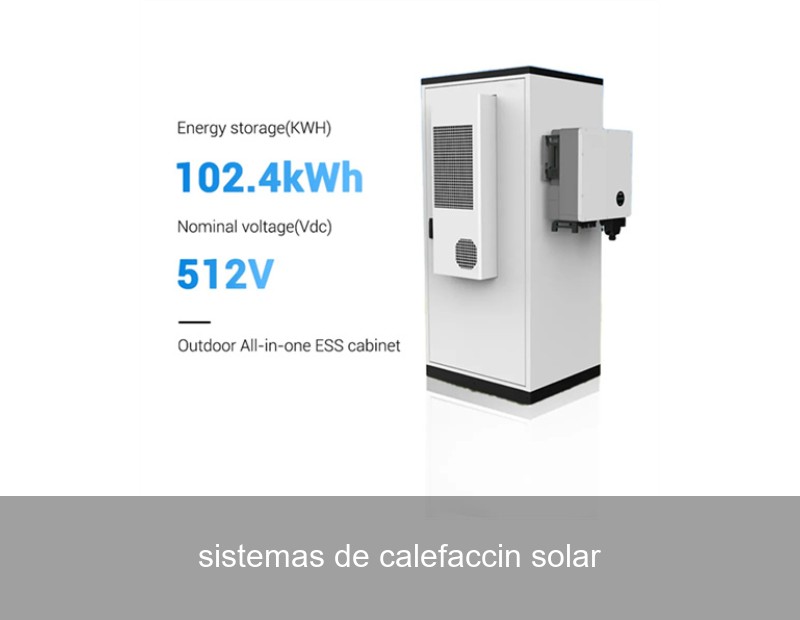
For residential and commercial clients investing in sistemas de calefacción solar, integrating a Highjoule battery storage system like our Residential Energy Hub or Commercial PowerStack unlocks new potential. Our systems can be programmed to prioritize using excess solar PV generation to power electrical heating elements in hybrid thermal storage tanks, or to ensure that all the ancillary equipment of the solar thermal loop runs on self-generated, clean electricity.
- For Homes: Our compact, safe lithium iron phosphate (LiFePO4) battery systems store surplus solar PV electricity. This means your heat pump, which can complement your solar thermal system on the coldest days, runs on your stored solar power, not expensive grid electricity at night.
- For Businesses & Industry: Highjoule's industrial-scale BESS solutions provide load shifting and demand charge management. A factory with process heat needs can use solar thermal during the day and dispatch stored battery energy to offset evening gas or electric heating peaks, leading to significant cost savings.
- For Microgrids: In remote or resilient community applications, Highjoule integrates solar thermal, PV, wind, and battery storage into a single, controllable microgrid. This ensures a constant, reliable supply of both heat and power, regardless of weather or grid status.

Image Source: Unsplash - Photo of a modern home battery installation.
Considering a Solar Heating System? Key Factors to Evaluate
If you're inspired by the potential of solar heating, a successful project hinges on careful planning. Here are the essential questions to ask:
- Your Thermal Load: What are your hot water and space heating demands? A professional energy audit is the best starting point.
- Solar Resource: What is your local solar insolation? Sites like Global Solar Atlas can provide initial estimates.
- System Integration: How will the solar thermal system interface with your existing boiler, heat pump, or electrical system? Plan for the whole system, not just the collectors.
- Storage Strategy: What is your plan for storing heat (larger thermal tanks) and, crucially, for storing complementary electricity (battery storage)? This defines your energy independence level.
- Incentives: What local, state, or federal incentives are available for solar thermal and paired storage systems? These can dramatically affect ROI.
The Future is Integrated
The journey towards a decarbonized, cost-stable energy future isn't about choosing one technology. It's about how technologies work together. A solar heating system provides clean, low-cost thermal energy. When paired with intelligent electrical storage from a provider like Highjoule, it becomes part of a resilient, self-optimizing energy asset for your property.
What would it mean for your energy security to have your heat and power needs met by a system you control, insulated from market volatility and powered by the sun?
 Inquiry
 Online Chat