


Smart Grid and Microgrid: The Intelligent Backbone of a Renewable Energy Future
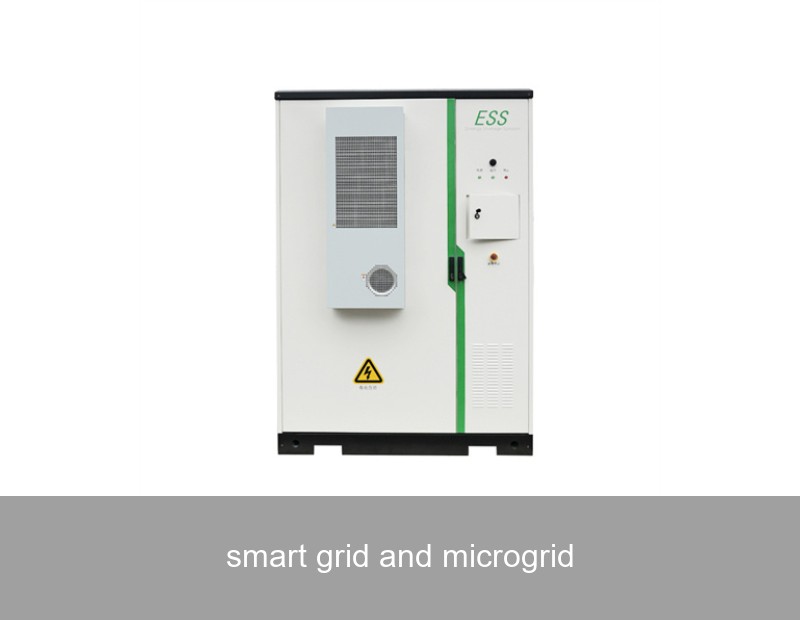
Imagine your local power network not just delivering electricity, but having a conversation with it. It knows when the sun is shining on your rooftop solar panels, anticipates a surge in demand during the big game, and seamlessly switches to battery power during an outage—all without you lifting a finger. This isn't science fiction; it's the reality being built today by the smart grid and microgrid. For homeowners, businesses, and communities, these intelligent systems are the key to unlocking a future of resilience, efficiency, and true energy independence. As a global leader in advanced energy storage, Highjoule has been at the heart of this transformation since 2005, providing the critical intelligence and storage solutions that make these agile grids possible.
Table of Contents
- What Are Smart Grids and Microgrids?
- The Challenge: An Aging Grid Meets Volatile Renewables
- The Solution: Intelligence, Storage, and Local Control
- Highjoule's Role: The Brain and Brawn of Modern Grids
- Case Study: A U.S. University's Leap to Energy Independence
- Future Trends: Where Are Intelligent Grids Heading?
What Are Smart Grids and Microgrids?
Let's break down these often-intertwined concepts. Think of the smart grid as the digital upgrade to our traditional, one-way power transmission system. It uses sensors, automated controls, and two-way communication to optimize the flow of electricity from all generators—large power plants to your home solar system—to consumers. Its goal is efficiency and reliability on a macro scale.
A microgrid, on the other hand, is a localized, self-contained energy system. It can disconnect from the main grid (the macrogrid) and operate autonomously, like an island of power. A microgrid typically integrates local generation (solar, wind, generators) with energy storage systems (ESS) and sophisticated control software. It is, by nature, a smart grid in miniature, but with a primary focus on resilience and local control.
Image: Advanced control systems are vital for smart grid and microgrid management. Source: Unsplash

The Challenge: An Aging Grid Meets Volatile Renewables
The push for smart grid and microgrid solutions isn't just about cool tech—it's a necessary response to pressing challenges. In Europe and the U.S., transmission lines and substations are aging, with much infrastructure exceeding its 50-year life expectancy. Simultaneously, the explosive growth of intermittent renewable sources like solar and wind is introducing new volatility. The grid was built for steady, predictable power flows, not for times when solar generation plummets as clouds pass or when thousands of electric vehicles plug in at once.
The data is telling: The U.S. Department of Energy notes that power outages cost the American economy an estimated $150 billion annually. In Europe, the need for grid flexibility is paramount to achieve the EU's 2030 renewable targets. The old, passive grid simply can't manage this complexity, leading to inefficiencies, blackout risks, and curtailment (wasting) of perfectly good renewable energy.
The Solution: Intelligence, Storage, and Local Control
This is where the integrated triad of smart grids, microgrids, and energy storage creates a powerful solution. The logic is a step-by-step progression:
- Phenomenon: The grid is stressed and renewable energy is sometimes wasted.
- Data & Analysis: Smart grid sensors identify congestion, forecast dips in solar/wind, and price signals in real-time.
- Action: Automated controls, coupled with distributed battery storage, spring into action. Batteries absorb excess solar at noon and discharge it during the evening peak, smoothing the curve. In a microgrid, the system can island itself during a main grid failure, keeping critical facilities online.
- Outcome: Enhanced reliability, maximized use of renewables, and lower overall energy costs.
Battery Energy Storage Systems (BESS) are the linchpin. They provide the critical buffer that translates grid intelligence into physical action—storing electrons when they're abundant and releasing them when they're scarce.
Highjoule's Role: The Brain and Brawn of Modern Grids
At Highjoule, we don't just see batteries; we see the building blocks for intelligent energy ecosystems. Our expertise bridges the gap between the promise of smart grid and microgrid technology and its real-world implementation. For commercial and industrial clients, our Highjoule C&I ESS is more than a battery bank. It's an asset that can perform peak shaving (reducing demand charges), provide backup power, and participate in grid services like frequency regulation. Our integrated energy management system (EMS) acts as the brain, making autonomous, cost-optimizing decisions every second of the day.
For larger community or utility-scale microgrid projects, Highjoule delivers turnkey solutions. We design, engineer, and deploy systems that seamlessly blend solar PV, our high-cycle life lithium-ion storage, and advanced grid-forming inverters. Our technology allows a microgrid to not only island gracefully but also to provide "black start" capabilities and stabilize voltage and frequency—a must for powering sensitive industrial loads or hospital districts. You can explore our approach to these resilient systems on our Microgrid Solutions page.
Image: Utility-scale solar plus storage is a cornerstone of modern smart grids. Source: Unsplash

Case Study: A U.S. University's Leap to Energy Independence
Let's look at a concrete example. A major public university in California faced a triple challenge: rising energy costs, a mandate to achieve carbon neutrality, and an increasing threat of public safety power shutoffs (PSPS) due to wildfire risk. Their goal was to create a resilient microgrid to protect critical research facilities and student housing.
Highjoule partnered with the university and a solar developer to deliver a 4.5 MW / 18 MWh battery energy storage system, integrated with a new 5 MW solar canopy array. Here's what the data shows after one year of operation:
| Metric | Result |
|---|---|
| Demand Charge Reduction | Over 40% monthly savings |
| Renewable Self-Consumption | Increased from 55% to over 90% |
| Backup Power for Critical Loads | Up to 48 hours of runtime |
| CO2 Emission Reduction | Approx. 3,200 metric tons annually |
The Highjoule system's smart controls constantly optimize for economics and carbon, importing minimal power from the grid. Most importantly, during a planned PSPS event, the microgrid successfully islanded, keeping vital virology labs and emergency service centers fully operational while the surrounding community was in the dark. This project exemplifies the smart grid and microgrid principles in action: local intelligence, storage-enabled resilience, and sustainable operation.
Future Trends: Where Are Intelligent Grids Heading?
The evolution is towards ever-greater decentralization and interactivity. We're moving from a few large microgrids to many nested, interactive ones—a concept some call the "nanogrid" at the individual building level. Vehicle-to-Grid (V2G) technology will turn electric fleets into mobile grid assets. Artificial intelligence will move from simple rule-based control to predictive and self-healing grid management.
For businesses and municipalities, the message is clear: energy is no longer just a commodity bill but a strategic resource. Implementing a smart energy strategy with storage at its core is a direct path to financial control, operational resilience, and sustainability leadership. The International Energy Agency highlights the critical role of storage in their Grid-Scale Storage report, underscoring its global importance.
Is your organization simply paying for power, or are you ready to actively manage it for cost, carbon, and continuity?
We invite you to share your biggest energy challenge. Is it unpredictable demand charges, achieving ESG goals, or ensuring uninterrupted power for your critical operations? Let's discuss how an intelligent smart grid or microgrid approach, powered by Highjoule's proven storage solutions, can turn that challenge into your competitive advantage.
 Inquiry
 Online Chat