


Smart House Price Philippines: How Energy Storage Boosts Property Value
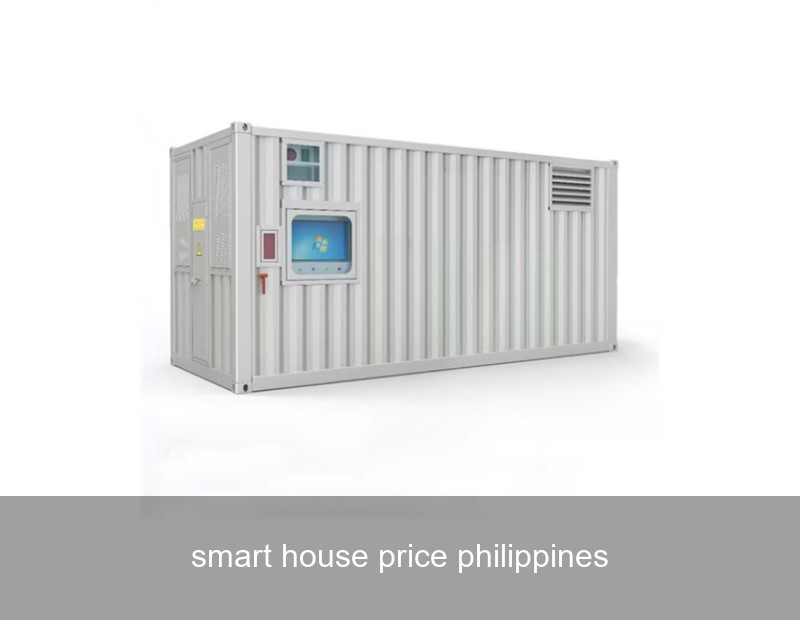
When evaluating a "smart house price Philippines," prospective buyers and investors are increasingly looking beyond square footage and traditional amenities. The modern definition of a smart home has evolved from voice-activated lights to a resilient, self-sufficient energy ecosystem. In a country facing frequent grid instability and some of the highest electricity costs in Southeast Asia, the integration of advanced energy storage is becoming a critical, value-driving feature. This article explores how technologies like solar-plus-storage are transforming property valuation, turning homes from passive consumers into active power assets.
The New Smart Home: Energy Intelligence is King
Gone are the days when "smart" meant a remote-controlled appliance. Today, true intelligence lies in a home's ability to manage its most critical and costly resource: energy. The phenomenon is global. In Europe and the U.S., homes with verified energy efficiency and storage capabilities command significant price premiums. Why? Because they directly address core pain points: energy security, operational cost, and environmental impact. In the Philippine context, with its unique challenges, this intelligence is not a luxury—it's a strategic upgrade.
Imagine two identical houses in a premium subdivision. One relies solely on the main grid and a diesel generator during outages. The other features a seamlessly integrated solar panel system coupled with a silent, automated Battery Energy Storage System (BESS). For a buyer, the second home isn't just a property; it's a safeguard against inconvenience, a hedge against rising power rates, and a statement of sustainability. This functional advantage is what's being priced into the modern "smart house price Philippines."
Data Drives Value: The Tangible Impact on Property
The connection between energy upgrades and property value is well-documented. Studies in mature markets provide a clear precedent. For instance, research consistently shows that solar photovoltaic (PV) systems increase home value. A foundational study by the U.S. Department of Energy's Lawrence Berkeley National Laboratory found that homes with solar panels sell for a premium, with the increase closely correlated to the system's projected energy savings. You can explore their findings here.
But the equation is evolving. The premium is now amplified when solar is paired with storage. A battery system transforms solar from a daytime cost-saver to a 24/7 energy solution. It provides:
- Uninterrupted Power Supply (UPS): Critical during the frequent outages that can affect productivity and comfort.
- Peak Shaving: Automatically using stored energy during peak tariff hours (often in the evening), dramatically reducing monthly bills.
- Energy Independence: Reducing grid dependence by 70% or more, a powerful feature in areas with unreliable infrastructure.
These aren't just theoretical benefits. They are quantifiable assets that appraisers and savvy buyers are starting to recognize. The value is calculated not just in resale price, but in the annual thousands of pesos saved—savings that effectively increase the owner's disposable income.
Case Study: A Suburban Manila Household
Let's examine a real-world scenario. A 2023 installation for a family in Alabang, Muntinlupa, provides compelling data. The household had a monthly average consumption of 1,200 kWh with a bill frequently exceeding ₱12,000. They faced 2-4 prolonged power interruptions monthly.
Solution Deployed: A 10kW rooftop solar PV array was integrated with a 15kWh lithium-ion battery storage system and an intelligent energy management system.
| Metric | Before Installation | After Installation |
|---|---|---|
| Average Monthly Bill | ₱12,400 | ₱2,800 (77% reduction) |
| Grid Outages Experienced | 3/month (avg.) | 0 (Critical loads powered by battery) |
| Annual Carbon Footprint Reduction | Baseline | Approx. 4.8 tons of CO2 |
When the family considered selling their property, these operational data points became a key part of the listing. The agent highlighted the guaranteed low energy costs and resilience, justifying an asking price 8% higher than comparable homes without storage in the same village. The property sold in 45 days, well below the area's average time-on-market. This case clearly illustrates how a "smart house price Philippines" is directly influenced by proven energy performance.

Image: A modern Philippine home equipped for solar energy. Source: Unsplash
Beyond Backup: The Full Value Stack of Home Energy Storage
To fully appreciate its impact on property value, we must understand the multi-layered benefits of a modern home BESS:
- Financial Asset: It is a factory that produces and manages cheap electricity, with a predictable payback period and decades of operation.
- Risk Mitigation Tool: It protects against utility rate inflation and grid instability—two significant risks for any homeowner.
- Future-Proofing: As electric vehicles (EVs) become common, the home storage system becomes the essential charging hub, further increasing the home's relevance and value.
- Grid Services (Future Potential): In advanced markets, aggregated home batteries can provide grid stability services. While nascent in the Philippines, this potential adds a forward-looking, innovative edge to the property.
Highjoule's Role: Engineering Intelligent Home Energy Systems
As a global leader in advanced energy storage since 2005, Highjoule understands that integrating these systems into a home is more than just hardware installation. It's about creating a seamless, intelligent energy backbone that enhances living experience and asset value. For the discerning homeowner in the Philippines or any market seeking resilience, our approach is pivotal.
Highjoule's Residential Energy Hub is not just a battery. It's an integrated system featuring:
- High-Density Lithium-Ion Batteries: Compact, safe, and with a long cycle life, designed for daily use.
- AI-Powered Energy Management System (EMS): The true "brain." It learns consumption patterns, forecasts solar production, and autonomously decides when to store, use, or export energy to maximize savings and comfort.
- Seamless Integration: Compatible with leading global inverter and solar panel brands, ensuring a plug-and-play experience for system integrators.
- Remote Monitoring & Control: Homeowners can track performance, savings, and system health in real-time via a user-friendly app, a feature that is highly attractive to tech-savvy buyers.
For developers building new premium subdivisions or retrofitting existing properties, incorporating Highjoule's systems from the blueprint stage is a powerful strategy. It elevates the entire project's positioning, allowing marketing to highlight not just smart lights, but smart, resilient, and affordable energy—a far more compelling value proposition that directly justifies a premium "smart house price Philippines."

Image: A modern, wall-mounted home battery storage unit. Source: Unsplash
The Future of the Market and Your Investment
The trend is undeniable. Global agencies like the International Energy Agency (IEA) consistently highlight the explosive growth of solar and storage, driven by both policy and economics. As battery costs continue to decline and awareness rises, energy resilience will transition from a premium add-on to a standard expectation for mid-to-high-end housing, much like high-speed internet did a decade ago.
This presents a critical question for anyone involved in the Philippine real estate landscape—whether you are a homeowner, a developer, or an investor: Are you evaluating properties based on the outdated metrics of the past, or are you accounting for the intelligent energy infrastructure that will define sustainable, valuable living in the future?
When you next see a listing with a premium "smart house price Philippines," dig deeper. Ask for the energy audit. Request the historical power bill data. Inquire about the storage system's capacity and intelligence. The answers will tell you if you're buying a home that is truly smart, or one that is merely wearing a tech-enabled disguise.
What is the first feature you will look for to assess the true energy intelligence of your next home?
 Inquiry
 Online Chat