


Beyond the Malaysia Generator Supplier: Securing Power with Intelligent Energy Storage
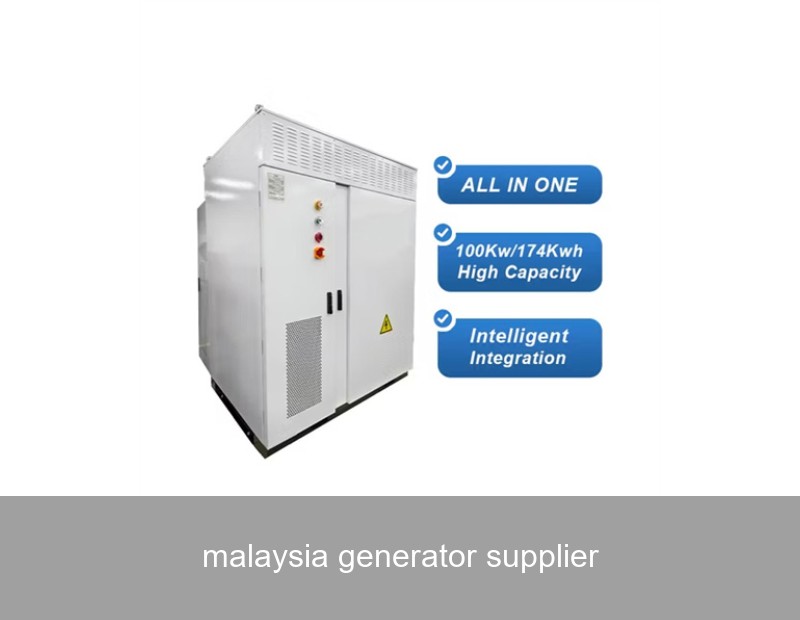
For businesses and communities in Malaysia, a reliable power supply isn't just a convenience—it's the backbone of operations, productivity, and growth. For decades, the immediate solution to grid instability or remote location has been a familiar one: contacting a Malaysia generator supplier. The diesel generator has been the steadfast, if noisy and fume-heavy, guardian against downtime. But as global energy conversations shift decisively towards sustainability, efficiency, and intelligence, a critical question emerges: Is the traditional generator model still the best, or even the most economical, solution for Malaysia's future? This article explores the evolving energy landscape and introduces a smarter, cleaner, and more sustainable path forward.
The Power Paradox: Malaysia's Reliance on Generators
Malaysia's rapid industrial and commercial growth often runs parallel to a persistent challenge: ensuring consistent, high-quality power. From sprawling palm oil mills in Sabah to high-tech manufacturing hubs in Penang and data centers in Cyberjaya, power interruptions can mean spoiled goods, halted production lines, and significant financial loss. The knee-jerk reaction has been to procure backup diesel generators. A Malaysia generator supplier provides the hardware, the fuel logistics, and a sense of security. The phenomenon is clear: generators are seen as the essential insurance policy.
Yet, this reliance creates a paradox. While solving the immediate problem of backup power, it introduces others: escalating operational costs due to volatile diesel prices, significant carbon emissions and local air pollution, noise pollution, and substantial maintenance burdens. You're not just buying a generator; you're buying into an ongoing cycle of fuel procurement, storage, and engine upkeep.
Beyond the Diesel Roar: The Data on Modern Power Needs
Let's look at the numbers. According to the International Energy Agency (IEA), Malaysia's total energy demand has grown steadily, with the commercial and industrial sectors being major drivers. Furthermore, global trends reported by agencies like BloombergNEF show that the levelized cost of electricity from solar PV coupled with battery storage has fallen dramatically, making it competitive with, and often cheaper than, conventional fossil-fuel generation for many applications.
This data points to a new reality. The need isn't just for backup power anymore; it's for resilient, predictable, and cost-optimized power. Modern facilities don't only need to keep the lights on during an outage; they need to manage peak demand charges from the utility, integrate on-site renewable sources like solar, and ensure power quality for sensitive equipment. A traditional diesel generator, operating in a simple on/off mode, cannot address these sophisticated needs. It's a blunt instrument in an era that requires a precision tool.
Key Limitations of the Traditional Generator-Only Approach:
- High & Unpredictable OPEX: Fuel costs are subject to global market fluctuations.
- Environmental Impact: CO2, NOx, and particulate matter emissions conflict with corporate sustainability goals.
- Noise & Space: Requires soundproofing and significant, often ventilated, space.
- Passive Asset: Only provides value during a grid outage, sitting idle otherwise.
- Limited Scalability: Scaling up often means simply buying a larger, more expensive generator.
Case Study: A Malaysian Industrial Park's Transformation
Consider the real-world example of a mid-sized industrial park in Johor. Housing several precision engineering workshops and a cold storage facility, the park management relied on a 2MW diesel generator system as primary backup. Their annual fuel cost for mandatory weekly testing and occasional grid outages exceeded RM 450,000. They also faced rising pressure from anchor tenants to improve the park's environmental footprint.
In 2023, they embarked on a modernization project. Instead of simply renewing contracts with their existing Malaysia generator supplier, they opted for an integrated solution. They installed a 1.2MW rooftop solar PV system paired with a 1.5MWh/750kW containerized battery energy storage system (BESS). The existing diesel generators were kept but relegated to emergency backup, drastically reducing their runtime.

The results after one year were telling:
| Metric | Before (Generator-Centric) | After (Solar + Storage) |
|---|---|---|
| Annual Fuel Cost | ~RM 450,000 | ~RM 85,000 (for rare, extended outages) |
| Grid Energy Consumption | 100% | Reduced by 40% during daylight |
| Peak Demand Charges | Full utility rate | Reduced by 25% via load shifting |
| Carbon Emissions | High (from diesel) | Reduced by an estimated 580 tonnes CO2e/year |
This case, mirrored by projects across Southeast Asia, illustrates a powerful shift. The goal moved from merely "having a backup" to actively "managing and optimizing energy."
The Intelligent Alternative: Rethinking the "Supplier" Model
The future of reliable power in Malaysia isn't about abandoning backup capacity; it's about enhancing it with intelligence. The new model transforms a business from a passive consumer (or generator operator) into an active energy manager. This is where advanced Battery Energy Storage Systems (BESS) become the cornerstone. A BESS does more than store energy—it serves multiple, revenue-protecting functions:
- Peak Shaving: Discharging during periods of high grid demand to avoid costly tariff peaks.
- Solar Self-Consumption Optimization: Storing excess solar energy for use at night, maximizing ROI on PV panels.
- Uninterruptible Power Supply (UPS)-Grade Backup: Providing seamless, instantaneous transition during grid faults, protecting sensitive processes.
- Frequency Regulation & Grid Services: In some markets, systems can even generate revenue by supporting grid stability.
This approach redefines the relationship with your energy partner. You no longer need just a Malaysia generator supplier who delivers a machine and fuel. You need a solutions provider who delivers a smart, integrated energy ecosystem.
Highjoule's Solution: Smart Storage for Uninterrupted Progress
This is precisely the gap that Highjoule, as a global leader in advanced energy storage since 2005, is designed to fill. We don't just supply batteries; we provide intelligent, software-driven power solutions that make energy resilient, sustainable, and economical.
For our clients in regions like Malaysia, facing similar challenges of grid reliability and rising energy costs, Highjoule offers tailored BESS solutions that work in harmony with existing infrastructure. Imagine your diesel generator not as your first line of defense, but as the last. Our systems can be configured to prioritize clean solar power and battery discharge. The generator only kicks in for prolonged outages, after the battery is depleted, slashing its runtime, fuel costs, and emissions by over 90%.

Our IntelliBESS platform for commercial and industrial applications features:
- All-in-One Design: Pre-integrated battery racks, HVAC, fire suppression, and PCS in a single, easy-to-deploy container or enclosure.
- AI-Powered Energy Management System (EMS): The brain of the operation, which automatically decides the most economical time to charge, discharge, or hold, based on weather forecasts, load patterns, and tariff schedules.
- Ultra-Safe LFP Chemistry: Utilizing stable, long-life Lithium Iron Phosphate battery cells, known for their safety and durability.
- Remote Monitoring & Control: Full visibility and control over your energy assets from anywhere in the world.
For microgrids and larger-scale applications, such as remote resorts, plantations, or island communities in Malaysia, Highjoule's systems enable true energy independence, integrating large-scale solar, wind, and existing generator sets into a stable, automated microgrid.
Your Power, Your Future: What's Your Next Move?
The landscape of reliable power is changing. The question for facility managers, business owners, and developers in Malaysia is no longer simply, "Who is a reliable Malaysia generator supplier?" The more strategic question now is: "How can we build a resilient, cost-effective, and sustainable power system for the next 20 years?"
Are you ready to explore how an intelligent energy storage system can reduce your operational costs, enhance your sustainability profile, and future-proof your operations against both grid instability and rising energy prices? What would the impact be on your bottom line if you could turn your energy infrastructure from a cost center into a strategic, value-adding asset?
 Inquiry
 Online Chat