


Smart Power Management System: The Brain Behind Modern Energy Independence
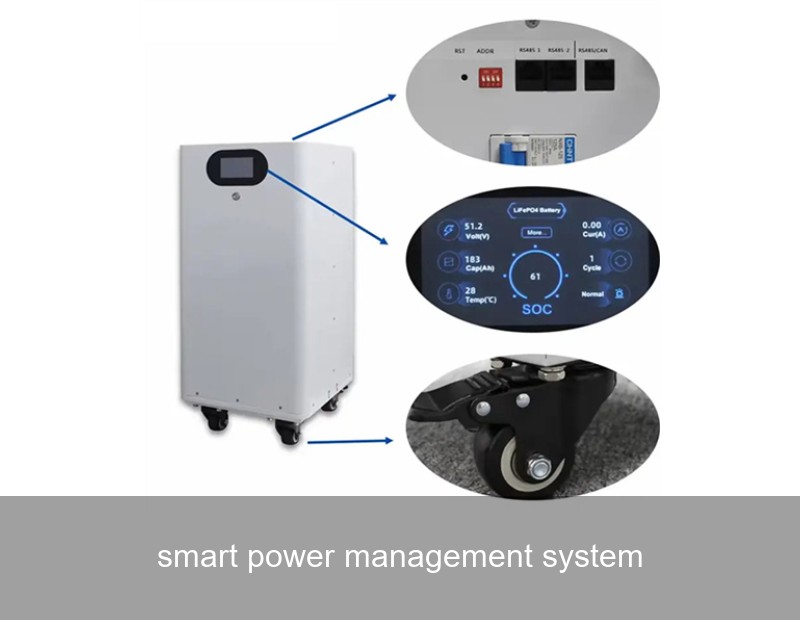
Have you ever wondered how a modern home with solar panels, an EV charger, and a battery seamlessly manages its energy? Or how a factory can keep running smoothly during a grid outage while saving thousands on electricity bills? The answer lies not just in the hardware, but in the intelligence that orchestrates it all: the Smart Power Management System. This digital brain is revolutionizing how we generate, store, and consume electricity, turning passive consumers into proactive energy managers. For businesses and homeowners across Europe and the US, understanding this system is key to unlocking true energy resilience and cost savings.
Table of Contents
- The Phenomenon: From Static Grids to Dynamic Energy Hubs
- The Data: Why Smart Management is No Longer Optional
- Case Study: A German Manufacturing Plant's Success Story
- The Core: How a Smart Power Management System Works
- Highjoule's Role: Intelligent Solutions for Every Scale
- The Future: Where is Smart Power Management Heading?
The Phenomenon: From Static Grids to Dynamic Energy Hubs
For over a century, our relationship with electricity was simple: we flipped a switch, and power flowed from a distant power plant through a one-way grid. We were passive consumers. Today, that model is being turned upside down. Rooftop solar, home batteries, and electric vehicles have turned homes and businesses into mini power plants. This creates a complex dance of energy flows. Without an intelligent conductor, this dance can become chaotic—wasting solar energy, straining the grid, or leaving you in the dark during an outage. The smart power management system is that essential conductor, dynamically balancing supply and demand in real-time.
The Data: Why Smart Management is No Longer Optional
The financial and practical benefits of integrating a smart energy manager are backed by compelling data. According to the U.S. Department of Energy, commercial buildings that implement advanced energy management systems can reduce their energy use by 15-30%. In Europe, with its high energy prices and ambitious decarbonization goals, the push is even stronger. Consider this: during peak demand periods, electricity prices can be 200-300% higher than the off-peak average. A smart system doesn't just save energy; it optimizes for cost, deciding when to draw from the grid, when to use stored battery power, and when to sell excess solar energy back for maximum profit.

Modern industrial facilities are prime candidates for smart power management, integrating on-site generation with grid power.
Case Study: A German Manufacturing Plant's Success Story
Let's look at a real-world example. A mid-sized automotive parts manufacturer in Bavaria, Germany, was facing steep ‘Netzentgelte’ (grid fees) and wanted to hedge against volatile energy prices. They had a 500 kW rooftop solar array and a desire for backup power, but these systems operated in silos.
By installing a comprehensive smart power management system, they achieved the following within the first year:
- 40% Increase in Solar Self-Consumption: The system intelligently shifted non-critical loads (like warehouse ventilation and pre-heating) to times of high solar production.
- 22% Reduction in Peak Grid Demand: The software used the on-site battery storage to "peak shave," preventing short, high-power draws from the grid that trigger high capacity charges.
- Full Backup for Critical Assembly Lines: During a planned grid maintenance outage, the system islanded the facility seamlessly, preventing an estimated €85,000 in production losses.
The project's ROI was achieved in under 4 years, a timeline accelerated by Germany's energy price trends. This case highlights the triple win of savings, sustainability, and security.
The Core: How a Smart Power Management System Works
Think of the system as having three key layers:
- Sensing & Monitoring: Advanced meters and sensors provide real-time data on energy generation (solar), storage (battery levels), and consumption (every circuit, major appliance, or process).
- Analysis & Forecasting: Using AI and weather data, the system predicts solar generation for the next day and anticipates building load patterns. It also fetches real-time or day-ahead electricity prices from the grid.
- Optimization & Control: This is the decision-making engine. Based on forecasts, prices, and user preferences (e.g., "always keep 30% battery for backup"), it creates a cost-optimized schedule. It then automatically controls inverters, batteries, and smart breakers to execute the plan.
| System Inputs (Data) | Core Functions (Brain) | Controlled Outputs (Action) |
|---|---|---|
| Solar Production | AI-Powered Forecasting | Battery Charge/Discharge |
| Grid Electricity Price | Cost Optimization Algorithms | Load Shifting (e.g., EV charging) |
| Building Energy Demand | Backup Power Logic | Grid Import/Export Limits |
| Weather Forecast | User Preference Management | Generator Start/Stop |
Highjoule's Role: Intelligent Solutions for Every Scale
This is where Highjoule's nearly two decades of expertise comes into play. We don't just provide batteries; we deliver integrated, intelligent energy ecosystems. Our HeliosIQ Platform is the cornerstone of our smart power management offering.
For residential customers, our Home Energy Hub seamlessly integrates with Highjoule solar batteries and inverters. Through an intuitive app, homeowners can set goals like "maximize self-sufficiency" or "minimize cost," and the system handles the rest, even preparing for predicted storms by pre-charging the battery.

A user-friendly interface is key for homeowners to interact with and trust their smart power management system.
For commercial and industrial (C&I) clients, HeliosIQ Commercial offers granular control. It can manage multi-megawatt systems, integrate with existing building management systems, and provide detailed reporting for sustainability (ESG) goals. A major US data center client, for instance, uses our platform to perform demand response, safely reducing load during grid stress events and generating significant revenue streams, all without impacting critical operations.
Our microgrid solutions empower communities and campuses to operate as independent, resilient energy islands, with our smart system acting as the grid-forming controller that balances all assets flawlessly.
The Future: Where is Smart Power Management Heading?
The next evolution is the transactive energy grid. Imagine your home's system not just responding to price signals but actively negotiating with your neighbor's system or the local utility to trade tiny packets of energy in real-time. With the rise of standards for grid interoperability, this future is closer than we think. Furthermore, the integration of electric vehicles as mobile storage units (V2H - Vehicle-to-Home, V2G - Vehicle-to-Grid) will add another layer of complexity and opportunity that only a sophisticated smart power management system can harness.
The question is no longer if you need a battery or solar, but how you will intelligently manage all the energy assets at your disposal. Is your current energy setup a collection of parts, or a unified, intelligent system working for your economic and environmental benefit?
 Inquiry
 Online Chat