


Unlocking Energy Independence: A Deep Dive into the SmartEN 5kVA Solar Battery
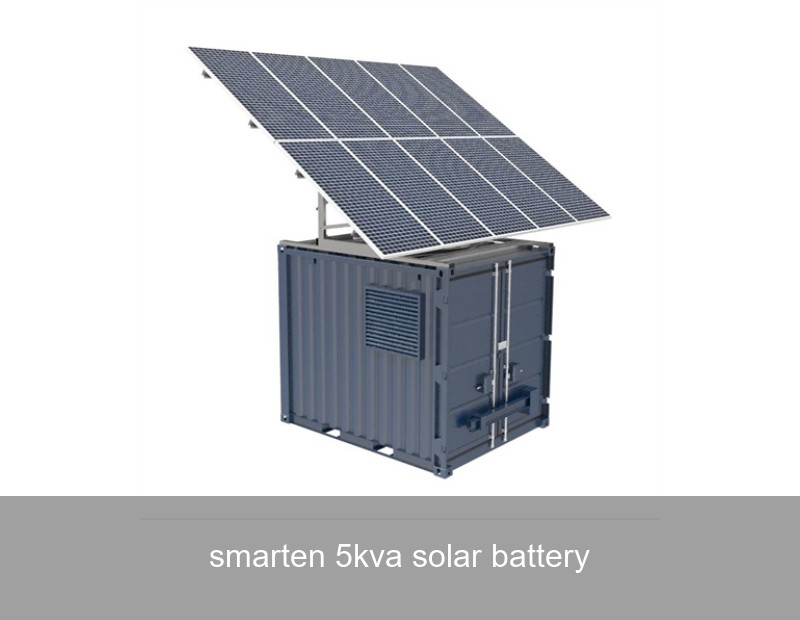
Imagine a world where your home not only consumes electricity but intelligently manages it, storing sunshine for a rainy day and powering your life with clean, resilient energy. This isn't a distant future; it's the reality enabled by advanced solar battery systems like the SmartEN 5kVA solar battery. For homeowners in Europe and the US, rising energy costs and an increasing frequency of grid disruptions are more than just headlines—they're monthly bills and real inconveniences. The solution lies in moving beyond simple solar panels to a fully integrated, smart energy storage system. This article explores how the right 5kVA battery can transform your energy usage, delving into the technology, real-world benefits, and what makes a system truly "smart."
Table of Contents
- The Rise of Smart Home Energy Storage
- What Does 5kVA Really Mean for Your Home?
- Beyond Capacity: The "Smart" in SmartEN 5kVA
- Real-World Impact: A Case Study from Bavaria
- Choosing Your Smart Energy Ecosystem
- Your Home as a Power Plant: What's Next?

Image: A modern home equipped with solar panels and a wall-mounted battery storage system, representing integrated energy independence.
The Rise of Smart Home Energy Storage
For years, solar panels were the undisputed stars of residential renewable energy. Homeowners celebrated slashing their electricity bills by generating power during the day. However, a significant pain point remained: the sun doesn't shine at night, and grid electricity during peak evening hours is often the most expensive. This mismatch created the phenomenon known as the "solar curve," where excess energy is exported to the grid at low rates, only to be bought back later at a premium.
Enter the smart solar battery. These systems don't just store energy; they manage it with sophisticated software. According to the International Energy Agency (IEA), the global capacity of battery storage is set to multiply exponentially, with residential systems leading the charge in markets like Germany and California. The driving forces are clear: economic savings, energy security during outages, and a tangible step towards sustainability. A basic battery solves the storage problem, but a smart battery like the SmartEN 5kVA solves the optimization problem, learning your habits and adapting to grid signals to maximize your return on investment.
What Does 5kVA Really Mean for Your Home?
Let's demystify the specification. kVA (kilovolt-ampere) is a unit of apparent power, closely related to kW (kilowatt). For a battery inverter system, the 5kVA rating primarily tells you the power output capability—how much load it can handle at once. Think of it as the size of the energy "pipe" from your battery to your home.
- Continuous Power: A 5kVA system typically provides around 4-5 kW of continuous power. This is sufficient to run essential household loads simultaneously—think refrigerator, lights, computers, WiFi, and a TV.
- Backup Power: During a grid outage, this rating determines what you can power. A 5kVA system is ideal for keeping your critical circuits running, though it may not handle high-surge appliances like air conditioners or well pumps without proper sizing.
- Battery Capacity (kWh): This is the other crucial number. While 5kVA is the power rating, the battery's capacity in kilowatt-hours (kWh) tells you how long it can supply that power. A common pairing for a 5kVA inverter is a 10-15 kWh battery, providing enough energy to get through the evening and night.
Companies like Highjoule design systems like the SmartEN 5kVA solar battery with this holistic view. It's not just an inverter or a battery pack; it's a unified system where power electronics, lithium-ion battery chemistry, and thermal management are engineered to work in perfect harmony, ensuring safety, longevity, and peak performance.
Beyond Capacity: The "Smart" in SmartEN 5kVA
So, what separates a generic battery from a smart one? The intelligence lies in the software and system integration. Highjoule's SmartEN series, for instance, is built around three core smart principles:
- Adaptive Learning: The system analyzes your household's energy consumption patterns over time. It learns when you typically use power and optimizes charging (from solar or the grid during off-peak times) and discharging cycles to match.
- Grid Interaction: In regions with dynamic electricity pricing or virtual power plant (VPP) programs, a smart battery can decide the most economical time to import or export energy. It can provide grid services, turning your home into a supportive node in the energy network.
- Resilient Operation: Smart inverters can detect a grid outage in milliseconds and seamlessly switch to backup power without a flicker in your lights. They also manage power flow to prevent overloading, ensuring stable operation.
Highjoule's platform integrates these features into a user-friendly app, giving homeowners in the US and Europe clear visibility into their energy production, consumption, and savings. This transforms the battery from a black box in the garage into an active tool for energy management.

Image: A smartphone displaying an energy monitoring app, showing solar production and home consumption patterns.
Real-World Impact: A Case Study from Bavaria
Let's move from theory to practice. Consider the Müller family in southern Bavaria, Germany. They installed a 8 kWp solar array in 2020. While their daytime electricity costs plummeted, they were still buying 60% of their power from the grid, especially in winter. In early 2023, they integrated a Highjoule SmartEN 5kVA system with a 13.5 kWh battery.
| Metric | Before SmartEN 5kVA | After SmartEN 5kVA (12 months) |
|---|---|---|
| Grid Electricity Purchases | ~4,200 kWh/year | ~1,100 kWh/year |
| Self-Consumption of Solar | 35% | 85% |
| Estimated Annual Savings | — | €1,250+ |
| Grid Independence During Outages | 0 hours | Full backup for essentials (10+ hours) |
The data speaks for itself. The system's smart logic prioritizes using solar energy to charge the battery and power the home during the day, reserving a full charge for the evening peak. Furthermore, by participating in a local flexibility program, the battery occasionally sells small amounts of power back to the grid during periods of high demand, generating additional revenue. This case, reflected in studies by the Fraunhofer Institute for Solar Energy Systems, highlights the multi-faceted value proposition: savings, security, and participation in the energy transition.
Choosing Your Smart Energy Ecosystem
Selecting a 5kVA solar battery system requires looking beyond brochures. Here is a checklist for homeowners:
- Depth of Discharge & Warranty: Can you safely use 90%+ of the battery's capacity? What is the warranty in years and cycles?
- Integration Capability: Does it work seamlessly with existing or new solar panels? Is the inverter hybrid-ready for future expansion?
- Software Intelligence: How sophisticated is the energy management? Can it adapt to time-of-use rates?
- Scalability: Can you easily add more battery modules later if your needs change (e.g., buying an EV)?
- Service & Support: Does the provider offer robust remote monitoring and local technical support?
Highjoule addresses these points head-on with its SmartEN product line. Designed with modularity in mind, the SmartEN 5kVA system can be expanded in increments, and its cloud-connected platform receives regular updates that add new features, like advanced tariff optimization. As a global provider with deep expertise since 2005, Highjoule's strength lies in delivering not just hardware, but a complete, future-proof energy solution backed by decades of engineering in commercial and residential storage.
Your Home as a Power Plant: What's Next?
The journey towards a fully intelligent home energy system is just beginning. With the rise of electric vehicles, which are essentially batteries on wheels, the potential for integration is staggering. Imagine your SmartEN 5kVA solar battery coordinating with your EV's charging schedule, powered entirely by excess solar, or even using the EV to power your home during an extended outage (vehicle-to-home technology).
The home is becoming an active participant in a decentralized energy grid. This shift requires reliable, intelligent hardware and software that can communicate and respond to signals. It's about building an ecosystem where solar panels, batteries, heat pumps, and EVs work in concert to create a resilient, efficient, and low-carbon household.

Image: An electric vehicle charging at a home with solar panels, representing the integrated future of home energy.
So, as you consider taking control of your energy future, ask yourself: Is your goal simply to store solar energy, or is it to actively manage your home's power flow for maximum independence, savings, and impact? The technology is here and it's smarter than ever.
 Inquiry
 Online Chat