


Sodium Battery Australia: The Emerging Contender in the Renewable Energy Storage Race
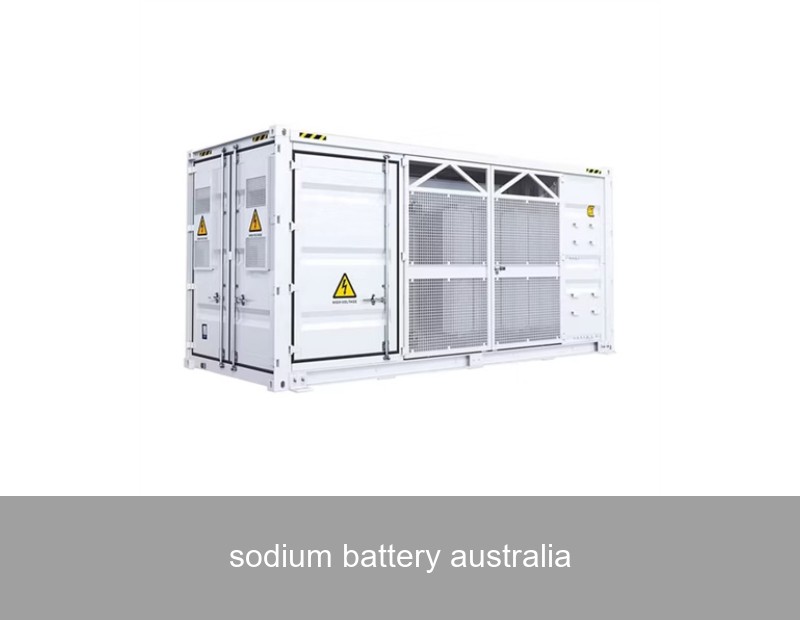
Australia's energy landscape is a fascinating paradox. Blessed with abundant sun and wind, it also faces unique challenges: vast distances, extreme weather, and a grid under constant pressure. As the nation charges towards its renewable energy targets, a critical question emerges: what's the best way to store all that clean power? While lithium-ion has been the dominant answer, a compelling alternative is making waves – sodium battery Australia projects are moving from lab benches to pilot sites, promising a more sustainable and potentially cost-effective future for storage.
Think of it this way: if our energy storage needs were a global kitchen, we've been heavily reliant on one specific, sometimes tricky-to-source ingredient (lithium). Sodium batteries, on the other hand, propose using a common, table-salt-abundant element. For a sun-drenched, resource-rich continent like Australia, this isn't just a technical shift; it's a potential strategic advantage in securing its energy independence.
The Phenomenon: Why Sodium is Gaining Ground
The global push for decarbonization has supercharged demand for energy storage. This surge has revealed pressure points in the lithium-ion supply chain, from mining concerns to geopolitical dependencies. Enter sodium-ion technology. It's not brand new, but recent breakthroughs in cathode materials and electrolyte chemistry have dramatically improved its energy density and cycle life, making it a viable grid-scale and commercial storage contender.
For Australia, the appeal is multi-faceted. Firstly, sodium is derived from soda ash or salt – resources that are virtually limitless and geographically dispersed, reducing supply chain risks. Secondly, sodium batteries typically avoid the use of critical materials like cobalt and nickel, aligning with ethical sourcing priorities. Thirdly, they perform better in a wider temperature range, a significant plus for the harsh Australian outback or heatwave-prone regions. This combination of factors is why research institutions, startups, and established players are now seriously exploring the sodium battery Australia ecosystem.

Image Source: Unsplash - Representative image of advanced battery manufacturing.
The Data: Comparing Sodium and Lithium
Let's break down the key characteristics. It's not about sodium replacing lithium everywhere, but about finding the right tool for the right job.
| Parameter | Lithium-ion (LFP typical) | Sodium-ion (Current Gen) | Implication for Australia |
|---|---|---|---|
| Energy Density | High (~120-160 Wh/kg) | Moderate (~100-140 Wh/kg) | Sufficient for stationary storage where space is less critical than cost. |
| Raw Material Cost & Abundance | Lithium, Cobalt, Nickel are geographically concentrated. | Sodium is ubiquitous and cheap. | Potential for significant long-term cost reduction and supply security. |
| Thermal Stability | Good, but requires management. | Generally higher inherent safety. | Reduced cooling needs, lower fire risk – ideal for remote, unattended sites. |
| Performance at Low Temp | Degrades significantly. | Better retention. | More consistent output across diverse Australian climates. |
| Cycle Life (Est.) | 4,000 - 6,000 cycles | 3,000 - 5,000 cycles (rapidly improving) | Already competitive for 10-15 year asset life in grid applications. |
As you can see, the trade-offs are evolving. For applications like residential solar storage where energy density is paramount, lithium still leads. But for large-scale renewable integration, commercial & industrial (C&I) load shifting, and microgrids – all key to Australia's energy transition – sodium's profile is incredibly attractive.
Case Study: Sodium Battery Australia Pilot in Remote Community Power
Let's look at a real-world example. In 2023, a pilot project was deployed in a remote off-grid community in Western Australia, replacing an aging diesel generator system supplemented by solar. The community, with around 50 residents, suffered from high energy costs and diesel supply volatility.
The system integrated a 500 kW solar array with a 1 MWh sodium-ion battery storage unit. The goals were to reduce diesel consumption by over 80%, provide stable power, and test the battery's real-world performance in temperatures regularly exceeding 40°C (104°F).
After 12 months of operation, the data was compelling:
- Diesel Reduction: 87% decrease in diesel usage, saving thousands in fuel logistics and costs.
- Battery Performance: The sodium battery system maintained over 95% of its rated capacity with minimal active cooling, even during peak summer heatwaves.
- Reliability: The community experienced zero unplanned outages related to the storage system.
- Economic: The Levelized Cost of Storage (LCOS) for the project was calculated to be 18% lower than a comparable lithium-ion (LFP) scenario over the projected lifespan, primarily due to lower upfront cell costs and reduced thermal management needs.
This pilot, documented in part by the International Energy Agency's innovation reports, demonstrates the niche where sodium-ion technology can shine first: providing resilient, temperature-forgiving, and cost-effective storage for decentralised energy systems.
Highjoule's Role in the Sodium-Ion Evolution
At Highjoule, we monitor and integrate the most promising storage technologies to offer our clients future-proof solutions. While our flagship HPS (Highjoule PowerStack) systems currently utilize leading lithium-ion chemistries for their proven performance, our R&D division is actively testing and validating next-generation sodium-ion cells from global partners.
Our approach is technology-agnostic, focused on the optimal outcome for the client. For a commercial business in Sydney looking for peak shaving, our lithium-based systems offer a perfect fit today. However, for a mining operation in the Pilbara requiring robust storage in extreme heat, or a large agricultural co-operative needing to store midday solar for evening irrigation, the emerging sodium battery Australia profile is highly relevant.
Highjoule's strength lies in our intelligent Energy Management System (EMS). This brain can optimize any storage chemistry – lithium, sodium, or future alternatives – to maximize ROI, extend lifespan, and seamlessly integrate with solar, wind, or the grid. We see sodium-ion as a potential key player in our future product portfolio, particularly for our Industrial and Microgrid solutions, where total cost of ownership and durability in tough environments are paramount.

Image Source: Unsplash - Representative image of a solar farm with battery storage.
Future Outlook: Challenges and Opportunities for Sodium Batteries in Australia
The path forward for sodium-ion technology in Australia isn't without hurdles. Manufacturing at a giga-scale needs to be proven to truly drive costs down. The recycling ecosystem is in its infancy compared to lithium. Furthermore, as noted by researchers at the Journal Nature Energy, continuous improvement in energy density is crucial to win in broader markets.
Yet, the opportunities are immense. Australia could leverage its chemical processing expertise and renewable energy advantage to potentially host not just deployment, but segments of the sodium battery value chain. Government initiatives supporting critical minerals and battery manufacturing could be extended to include sodium-based technologies.
So, what does this mean for you?
If you're a business owner, a project developer, or a community leader evaluating energy storage, the key is to think strategically about the application. Is absolute peak power in the smallest footprint the need? Or is it about affordable, safe, resilient storage over decades in a challenging climate? The answer guides the chemistry choice.
As the sodium battery Australia narrative unfolds, what specific energy challenge in your sector do you believe could be most positively disrupted by a safe, abundant, and cost-stable storage technology like this?
 Inquiry
 Online Chat