


Harnessing the Sun: The Transformative Potential of Solar Energy in Botswana
Imagine a land blessed with over 3,200 hours of brilliant sunshine annually, where clear skies are the norm rather than the exception. This isn't a futuristic vision—it's the present-day reality of Botswana. The potential for solar energy in Botswana is not just promising; it's staggering. Yet, like many sun-rich nations, Botswana faces the classic energy paradox: an abundance of natural resources juxtaposed with challenges in harnessing them for consistent, reliable power. This article delves into how solar technology, particularly when paired with advanced energy storage, is poised to unlock sustainable development, energy security, and economic growth for this dynamic African nation.
Table of Contents
- The Phenomenon: Botswana's Solar Bounty
- The Data: Quantifying the Solar Opportunity
- The Core Challenge: From Intermittency to Reliability
- The Solution: Intelligent Storage for a Stable Grid
- Case Study: Solar-Powered Water Security in the Kalahari
- Highjoule's Role: Tailored Solutions for Botswana's Landscape
- The Future: A Roadmap for Solar Dominance
The Phenomenon: Botswana's Solar Bounty
Botswana's geography is a solar engineer's dream. Located on a high plateau, much of the country experiences minimal cloud cover and atmospheric interference. The annual global horizontal irradiation (GHI) averages between 5.4 and 6.0 kWh/m² per day. To put that in perspective, this is approximately 20-30% higher than the solar resources found in leading European markets like Germany or Spain. This natural asset represents a clear path to reducing the country's historical reliance on imported coal-fired electricity and diesel generators, which are costly, polluting, and subject to supply volatility.

Image Source: Unsplash - A typical sun-drenched landscape in Botswana.
The Data: Quantifying the Solar Opportunity
The numbers tell a compelling story. According to the International Renewable Energy Agency (IRENA), Botswana has set an ambitious target to generate 15% of its electricity from renewables by 2030, with solar PV as the centerpiece. A study from the Botswana Institute for Technology Research and Innovation (BITRI) suggests that exploiting just a fraction of the country's suitable land for solar PV could generate multiple times the current national electricity demand. Yet, as of recent years, solar contributes less than 5% to the energy mix. This gap between potential and reality highlights a critical technological hurdle.
| Metric | Value | Implication |
|---|---|---|
| Average Daily Solar Irradiation | 5.7 kWh/m² | Among the highest in the world |
| National Renewable Energy Target (2030) | 15% of generation | Significant room for solar growth |
| Current Solar Contribution | < 5% | Massive untapped potential |
The Core Challenge: From Intermittency to Reliability
Here's the catch: the sun doesn't shine on command. Solar generation peaks in the middle of the day and falls to zero at night. This intermittency poses a fundamental problem for grid stability. How can hospitals, businesses, and schools rely on solar power after sunset or during cloudy periods? The answer, and the missing link for solar energy in Botswana to reach its full potential, isn't just more panels—it's smarter energy storage.
Why Storage is Non-Negotiable
- Grid Stability: Storage acts as a buffer, smoothing out the "duck curve" of solar production and demand.
- Energy Time-Shifting: Capturing excess midday solar energy for use during the high-demand evening peak.
- Diesel Displacement: Providing reliable backup power, eliminating the need for noisy, expensive diesel generators in remote areas.
The Solution: Intelligent Storage for a Stable Grid
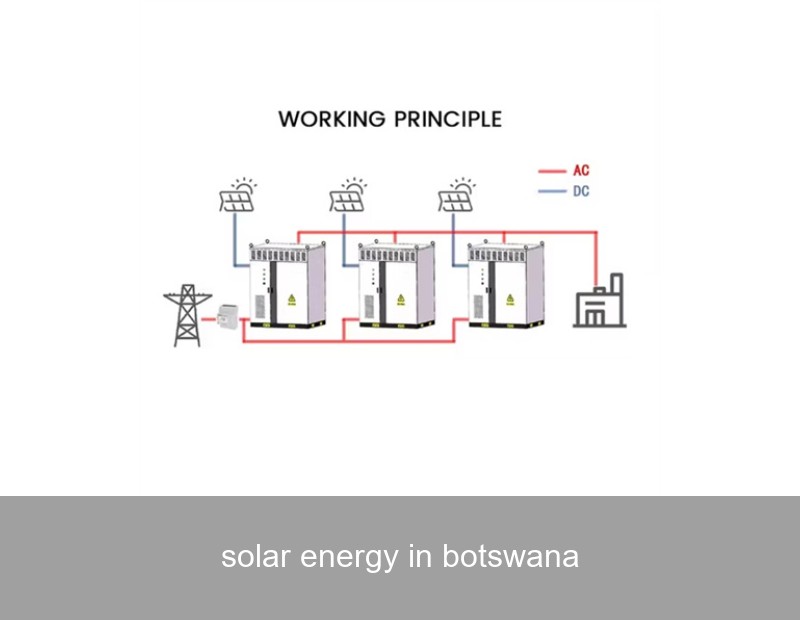
This is where modern Battery Energy Storage Systems (BESS) change the game. Think of BESS not as a simple battery, but as the intelligent "heart" of a solar installation. It doesn't just store energy; it manages it with precision, deciding when to charge, when to discharge, and how to optimize for cost, longevity, and grid support. For a market like Botswana, which includes sprawling cattle posts, remote clinics, and growing urban centers, scalable and robust storage solutions are the key to a resilient energy future.
Case Study: Solar-Powered Water Security in the Kalahari
Let's look at a real-world application. In the Kgalagadi District, a remote community reliant on boreholes for water faced constant challenges. Diesel pumps were expensive to run and maintain, and fuel deliveries were unreliable. In 2022, a pilot project was launched: a 50 kW solar PV array was integrated with a 120 kWh lithium-ion battery storage system to power the water pumping station.
The Results?
- 100% Diesel Displacement: The system now provides 24/7 water pumping powered solely by the sun.
- Cost Savings: Operational costs were reduced by over 70% annually, freeing up community funds.
- Reliability: Water access became consistent, improving public health and livestock farming.

Image Source: Unsplash - Solar-powered water pumping in an arid region.
Highjoule's Role: Tailored Solutions for Botswana's Landscape
At Highjoule, with nearly two decades of experience as a global leader in advanced energy storage, we understand that a one-size-fits-all approach doesn't work. The needs of a mining operation in Jwaneng differ from a shopping complex in Gaborone or a village microgrid in the Okavango Delta. Our expertise lies in designing intelligent, efficient, and sustainable power solutions that are tailored to specific contexts.
Highjoule Products and Services for the Botswanan Market
- Commercial & Industrial (C&I) Solutions: Our H-Series C&I BESS helps businesses and factories reduce peak demand charges, ensure backup power, and lower their carbon footprint. By integrating with existing or new solar arrays, we turn energy cost centers into assets.
- Containerized Utility-Scale Storage: For larger solar farms or grid support applications, our pre-engineered, plug-and-play Megapack solutions offer rapid deployment and robust performance even in harsh climates, a crucial factor for Botswana's environment.
- Microgrid Controllers & Software: The true brain of the operation. Our Energy Management System (EMS) software intelligently orchestrates solar PV, battery storage, and backup generators (if needed) to create a self-sufficient, optimized power island for remote communities or industrial sites.
Our systems are built with a deep understanding of thermal management and cycle life—essential for maximizing performance and return on investment under Botswana's intense sun. We don't just sell hardware; we provide end-to-end partnerships, from feasibility studies and system design to long-term performance monitoring.
The Future: A Roadmap for Solar Dominance
The journey for solar energy in Botswana is at an inflection point. With supportive policies, such as those outlined in the Botswana Vision 2036, and falling technology costs, the economic case is stronger than ever. The next critical step is widespread adoption of integrated "solar-plus-storage" as the default design for new energy projects. This combination transforms solar from a supplemental energy source into the bedrock of a modern, reliable, and independent national grid.
What if every new school, clinic, and business park was built as a self-sustaining power hub? What opportunities for economic development, education, and healthcare would emerge with guaranteed, low-cost electricity across the entire country? The technology to make this a reality exists today.
An Open Question for Stakeholders
For policymakers, developers, and business leaders in Botswana and similar sun-rich regions: As you plan your next energy project, are you evaluating solar as a standalone generator, or as a fully dispatchable power plant when combined with intelligent storage? The difference in outcome is night and day.
 Inquiry
 Online Chat