


Leading Sodium Ion Battery Companies: Powering the Next Era of Energy Storage
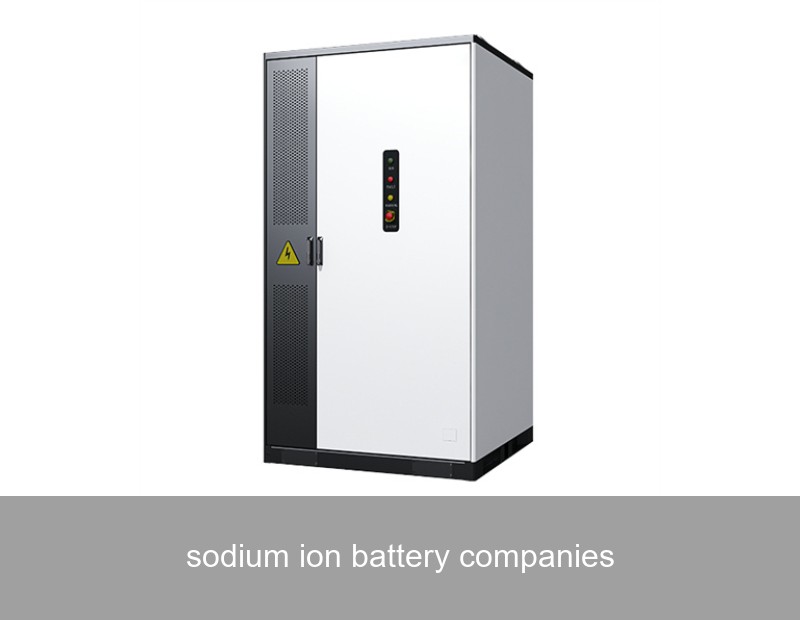
As the world accelerates its transition to renewable energy, a critical question emerges: how do we store all that clean power efficiently, sustainably, and affordably? For years, lithium-ion technology has dominated the conversation. But a familiar element is making a powerful comeback on the global stage—sodium. Innovative sodium ion battery companies are now at the forefront, developing solutions that promise to reshape the energy storage landscape for residential, commercial, and grid-scale applications. This shift isn't just incremental; it's a fundamental evolution driven by the need for diversification, supply chain security, and truly sustainable lifecycle management.
Table of Contents
Why Sodium-Ion? The Imperative for Diversification
Let's face it, our energy storage needs are exploding. From backing up solar panels on homes to stabilizing national grids, the demand is immense and growing. Lithium-ion batteries have served us well, but their limitations are becoming increasingly apparent: volatile costs tied to scarce materials like lithium and cobalt, geopolitical supply chain concerns, and lingering safety questions. This is where sodium-ion technology enters, not merely as an alternative, but as a necessary complement.
The data is compelling. Sodium is approximately 1000 times more abundant in the Earth's crust than lithium. This translates directly to raw material costs that are 30-50% lower, according to analyses from research institutes like the National Renewable Energy Laboratory (NREL). Furthermore, sodium-ion batteries can use aluminum for the anode current collector instead of copper, another cost and weight saver. But it's not just about cost. These batteries typically exhibit superior performance in extreme cold, maintain stability at high states of charge (reducing fire risk), and have a simpler, more sustainable end-of-life recycling pathway. For businesses and utilities planning decades ahead, this diversification is a strategic necessity.

Image Source: Unsplash - Representative image of battery research and development.
Key Players and Innovations in the Sodium-Ion Arena
The landscape of sodium ion battery companies is dynamic, blending established giants with agile startups. Their approaches vary, focusing on different chemistries and market niches.
- CATL (Contemporary Amperex Technology Co. Limited): The world's largest lithium-ion battery maker made waves by announcing its first-generation sodium-ion battery in 2021, with an energy density of 160 Wh/kg. They are pioneering the use of Prussian white-based cathodes and hard carbon anodes, aiming for the electric vehicle market.
- Northvolt (Sweden): This European champion is developing its sodium-ion technology, "Northvolt Sodium-ion," specifically targeting energy storage systems (ESS). Their focus is on cost, safety, and using iron- and sodium-based minerals to eliminate nickel and cobalt entirely.
- Natron Energy (USA): Taking a unique path, Natron utilizes a Prussian blue electrode chemistry. Their batteries offer extremely high power density and a 50,000-cycle lifespan, making them ideal for demanding applications like data center backup power and industrial forklifts.
- HiNa Battery Technology (China): A spin-off from the Chinese Academy of Sciences, HiNa has deployed several megawatt-scale sodium-ion battery storage demonstrations. They focus on both stationary storage and light electric vehicles.
These companies, among others, are proving that sodium-ion is moving beyond theory into commercial viability.
A Quick Chemistry Breakdown
| Component | Common Sodium-Ion Materials | Key Advantage vs. Lithium-Ion |
|---|---|---|
| Cathode | Layered Metal Oxides, Prussian Blue Analogs, Polyanionic Compounds | Uses abundant iron, manganese, sodium; no cobalt or nickel. |
| Anode | Hard Carbon | Lower cost, can use sustainable biomass precursors. |
| Electrolyte | Sodium salts in organic solvents | Similar chemistry, enabling faster charging in some designs. |
From Lab to Grid: A Real-World Case Study
Perhaps the most convincing evidence comes from live deployments. In 2023, a collaboration between a major European utility and a leading sodium-ion battery company inaugurated a 5 MWh grid-scale storage system in northern Germany. This project is critical for integrating volatile wind power into the local grid.
The Challenge: The region experiences significant wind curtailment during peak generation periods because the grid cannot absorb the excess. Traditional lithium-based storage was considered, but project developers sought a solution with better low-temperature performance and a more stable supply chain for future expansion.
The Solution: A containerized sodium-ion battery storage system was installed. Its key selling points were its ability to operate at full capacity down to -20°C and its use of inherently non-flammable electrolyte chemistry, reducing insurance and safety system costs.
The Data-Driven Outcome: In its first year of operation, the system achieved a 99.2% availability rate, smoothing out wind feed-in and providing frequency regulation services. Most notably, its performance showed less than 3% degradation in capacity during the winter months, where equivalent lithium systems often see reduced efficiency. This case, documented in part by the U.S. Department of Energy's analysis platforms, provides a tangible benchmark for the technology's reliability.
Highjoule's Perspective: Integrating Next-Gen Tech
At Highjoule, with nearly two decades of experience as a global provider of advanced energy storage systems, we monitor these technological shifts not as spectators, but as active integrators. Our mission is to deliver intelligent, efficient, and sustainable power solutions—and that means selecting the right storage technology for the right application.
While we continue to offer and advance our high-performance lithium-based Highjoule H-Series for applications requiring the highest energy density, we are strategically evaluating sodium-ion technology. We see its immense potential for our Commercial & Industrial (C&I) and Microgrid solutions, where factors like total cost of ownership, operational safety across a wide temperature range, and long-term sustainability are paramount.
Imagine a manufacturing plant in Scandinavia or a remote community microgrid in the American Midwest. For these clients, a storage system that performs reliably in deep cold, uses ethically sourced abundant materials, and offers a lower lifecycle environmental impact is incredibly compelling. Highjoule's intelligent energy management system (EMS) is agnostic, designed to seamlessly orchestrate power flow between solar PV, various battery chemistries, and the grid. This allows us to future-proof our clients' investments and integrate sodium-ion modules as they become the optimal choice for specific project profiles.

Image Source: Unsplash - Representative image of a containerized battery energy storage system.
Future Outlook and Remaining Challenges
The trajectory for sodium ion battery companies is undoubtedly upward. Industry analysts project the market to grow from less than $1 billion in 2023 to over $10 billion by 2030. However, for widespread adoption, the industry must address two key hurdles:
- Energy Density: While sufficient for many stationary storage applications, current energy density (120-160 Wh/kg) still lags behind advanced lithium-ion. Closing this gap is crucial for mobility applications.
- Manufacturing at Scale: Building gigawatt-scale production lines dedicated to sodium-ion cells is a capital-intensive endeavor. The learning curve and economies of scale that lithium-ion enjoyed over 30 years need to be accelerated.
Collaboration between research institutions, innovative battery companies, and system integrators like Highjoule will be essential to overcome these challenges. As noted in a recent review in Science, the fundamental science is sound; the task now is refinement and scale-up.
So, what does this mean for you?
If you're a business owner, project developer, or community energy planner, the emergence of sodium-ion adds a vital new tool to your energy resilience toolkit. It promises a path to decarbonization that is not only clean but also geographically and economically more equitable.
Is your organization currently evaluating energy storage solutions, and how might the evolving landscape of battery technologies like sodium-ion influence your long-term energy strategy and sustainability goals?
 Inquiry
 Online Chat