


Powering Resilience: How PYTES Battery Systems Are Transforming Energy Security in Puerto Rico
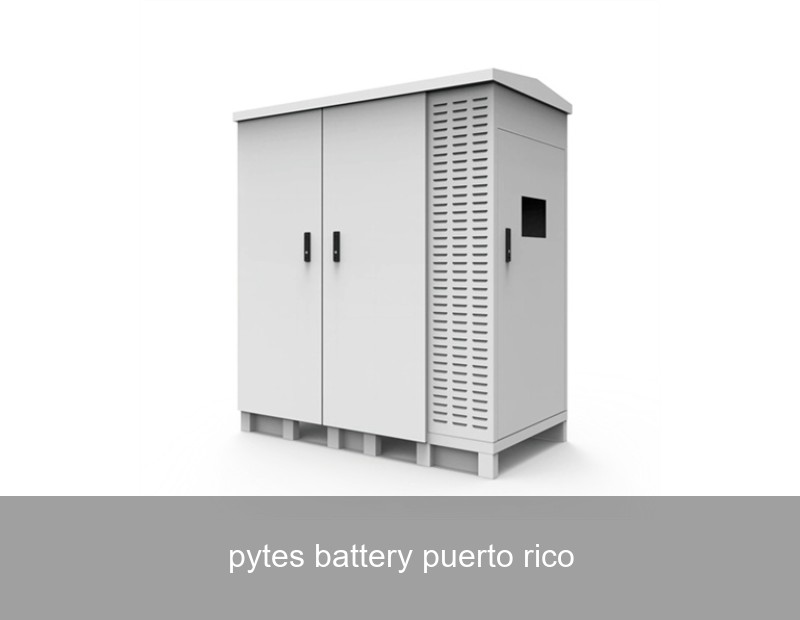
Imagine a scenario familiar to too many in Puerto Rico: the skies darken, winds pick up, and the familiar hum of electricity suddenly cuts to silence. For an island with a complex energy history, power outages aren't just inconveniences; they are significant disruptions to business, healthcare, and daily life. In this challenging landscape, a specific solution has risen to prominence—the PYTES battery Puerto Rico deployment. This isn't just about a brand of battery; it's about a proven model for energy resilience that is rewriting the rules of power independence for homes and businesses across the island.
The quest for reliable power in Puerto Rico is driven by stark data. Following Hurricane Maria in 2017, some areas were without grid power for nearly 11 months. Even in normal conditions, the grid faces challenges, leading to frequent and unpredictable outages. This vulnerability has accelerated a massive shift towards solar photovoltaic (PV) systems. But homeowners and business operators quickly identified a critical gap: solar panels alone go silent when the grid fails, unless they are paired with a robust battery energy storage system (BESS). This is where the specific demand for reliable, durable storage like PYTES batteries has surged, creating a blueprint for disaster-prone and grid-unstable regions everywhere.

A resilient home energy system in a tropical climate, combining solar and storage. (Representative image)
Beyond the Blackout: The PYTES Battery Phenomenon in Puerto Rico
So, why has "PYTES battery" become a commonly referenced term in Puerto Rico's energy conversation? The phenomenon stems from a perfect alignment of product capability and acute market need. PYTES batteries, particularly popular lithium iron phosphate (LiFePO4) models, are recognized for several key attributes essential for the island's environment:
- Thermal Stability & Safety: LiFePO4 chemistry is inherently more stable and less prone to thermal runaway than other lithium-ion types, a crucial safety factor in Puerto Rico's hot, humid climate.
- Cycle Life: With the expectation of frequent charging and discharging—both daily and during extended outages—these batteries offer a high number of cycles, ensuring long-term value.
- Depth of Discharge (DoD): They can be safely discharged to a high percentage of their capacity without significant degradation, meaning more usable energy during an outage.
This combination has made systems built around PYTES batteries a preferred choice for integrators and a trusted solution for end-users who cannot afford to gamble on their backup power.
The Technical Edge: What Makes a Battery System "Puerto Rico-Ready"?
At Highjoule, with nearly two decades of experience in advanced energy storage, we analyze such market successes deeply. A "Puerto Rico-ready" system, exemplified by the effective use of storage like PYTES batteries, goes beyond the battery cells themselves. It encompasses an integrated ecosystem designed for resilience:
| System Component | Critical Requirement for Puerto Rico | Highjoule's Parallel Solution Philosophy |
|---|---|---|
| Battery Chemistry | High-temperature tolerance, safety, long cycle life. | We prioritize LiFePO4 and similar stable chemistries across our product lines, ensuring safety and durability in all climates. |
| Inverter & System Integration | Seamless solar self-consumption and instant backup switching during grid failures. | Our systems feature intelligent, hybrid inverters that manage grid, solar, and battery power autonomously, providing uninterruptible power supply (UPS)-class transition. |
| Energy Management Software | Ability to optimize for self-sufficiency, manage grid-charging during limited windows, and provide user-friendly monitoring. | Highjoule's HIQ Energy Platform offers smart energy management, allowing users to set modes for maximum backup, cost savings, or grid support. |
| Installation & Service | Robust design to withstand high winds and corrosion, with accessible local or remote support. | Our global network includes certified partners trained to install systems to the highest standards, backed by our comprehensive warranty and remote monitoring support. |
This holistic approach is what transforms a commodity battery into a reliable energy asset. It's a principle we apply globally, whether for a residential customer in California seeking backup and time-of-use savings, or a commercial facility in Germany aiming for peak shaving and sustainability goals.
A Real-World Case Study: From Vulnerability to Energy Independence
Let's move from theory to tangible impact. Consider a mid-sized veterinary hospital in the mountainous region of Utuado, Puerto Rico. After Hurricane Maria, the clinic was incapacitated for weeks, risking animal lives and freezing business revenue. In early 2023, they installed a 25 kW solar PV array coupled with a 40 kWh energy storage system centered on PYTES batteries.
- The Challenge: Ensure critical refrigeration for medicines, power for surgical lighting and equipment, and basic clinic operations through frequent grid outages and during future storms.
- The Solution: A fully integrated solar-plus-storage system with smart islanding capability, allowing the clinic to disconnect from the grid and run solely on solar and batteries.
- The Data-Driven Outcome: In the first year post-installation:
- The clinic experienced **over 120 grid outages**, totaling more than 300 hours of lost grid power.
- The battery backup system maintained **100% uptime for critical loads** during all outages.
- Overall grid electricity consumption was reduced by **approximately 90%** during sunny periods.
- The projected payback period, factoring in avoided business interruption and energy savings, is estimated at **under 5 years**.
This case, echoed by thousands across the island, illustrates the transformative power of pairing solar with purpose-built storage. It's a powerful testament to a model that works. For more on Puerto Rico's energy transformation, see this report from the National Renewable Energy Laboratory (NREL).

Professional installation and maintenance are key to long-term storage system performance. (Representative image)
Highjoule's Commitment: Delivering Intelligent Storage for a Sustainable Future
While the PYTES battery story in Puerto Rico is compelling, our mission at Highjoule is to provide tailored, intelligent storage solutions that address a wide spectrum of global energy challenges. Drawing on the same principles of resilience proven in demanding environments like Puerto Rico, our product portfolio is designed for scalability and intelligence.
For the residential sector, our EverVolt Series offers modular battery systems that integrate seamlessly with new or existing solar installations, providing peace of mind and energy independence. For commercial and industrial (C&I) clients, our GridMax Solutions provide large-scale storage for peak shaving, demand charge reduction, and backup power, ensuring operational continuity and improved bottom lines. Furthermore, our Microgrid Controller technology allows communities or campuses to orchestrate multiple energy resources (solar, storage, generators) into a self-sufficient, resilient network.
Our approach is always system-first. We don't just supply hardware; we deliver a comprehensive energy resilience strategy, supported by our HIQ platform for real-time monitoring, control, and optimization. Whether it's a family home or a factory, the goal is the same: to turn energy from a vulnerability into a strategic asset.
The Future Grid: Lessons from Puerto Rico for the World
The story unfolding in Puerto Rico is a microcosm of a global shift. From extreme weather events in Europe to grid reliability concerns in the US, the demand for decentralized, resilient energy is universal. The successful adoption of solutions like PYTES battery systems in Puerto Rico offers a clear lesson: resilience is no longer a luxury; it's a fundamental requirement for modern living and economic activity.
It prompts us to ask a critical question: Is your home or business simply drawing power from a grid, or are you building your own intelligent, resilient energy ecosystem? The technology to make this shift is here, proven in some of the world's most challenging conditions. The path to energy security starts with understanding your vulnerability and taking the first step toward a solution that provides not just backup, but true independence.
For further reading on battery safety and technology, a valuable resource is the U.S. Department of Energy's Battery Testing Manual.
 Inquiry
 Online Chat