


Solaire Panneau How Much? A Realistic Guide to Solar Panel Costs and Value
So, you're thinking about going solar. It's a smart move, but the first question that pops into everyone's mind is: "Solaire panneau how much?" It's a great starting point, but the real story of solar isn't just about an initial price tag. It's about understanding the investment, the long-term value, and how the right technology can maximize your return. In this guide, we'll break down the costs, explore the factors that influence them, and show you how modern energy storage is changing the game, turning a simple solar panel system into a resilient and intelligent power solution for your home or business.
Table of Contents
- The Real Cost Breakdown: More Than Just Panels
- Key Factors That Answer "How Much?"
- The Storage Revolution: Why "Solaire Panneau" is Only Half the Answer
- Case Study: A German Household's Journey to Energy Independence
- The Highjoule Solution: Intelligent Systems for Maximum Value
- Making the Decision: Your Next Steps
The Real Cost Breakdown: More Than Just Panels
When you ask "solaire panneau how much?", you're typically quoted a cost per watt ($/W) or a total system price. In the U.S., the average residential solar panel system cost in 2023 was around $2.95 per watt before incentives, according to the U.S. Department of Energy. For a typical 6-kilowatt (kW) system, that translates to roughly $17,700. In Europe, prices vary by country but often range between €1,500 to €2,500 per kW installed. However, this headline figure includes much more than just the photovoltaic modules.
- Equipment (50-60%): This includes the solar panels, inverters (which convert DC solar power to usable AC power), mounting hardware, and wiring.
- Installation & Labor (15-25%): Professional installation ensures safety, efficiency, and compliance with local codes.
- Permits & Inspection (10-15%): Your installer typically handles the paperwork for building and electrical permits.
- Sales & Overhead (10-15%): This covers the company's operational costs.
Critically, this standard model has a limitation: it generates power only when the sun shines. What happens at night or during a grid outage? This leads us to the most important evolution in solar economics—adding a battery.
Key Factors That Answer "How Much?"
Your final quote is personalized. Here are the main levers that adjust the price:
| Factor | Impact on Cost | Why It Matters |
|---|---|---|
| System Size (kW) | Directly proportional | Based on your historical energy consumption and future needs (like an EV). |
| Panel Efficiency & Brand | High-efficiency panels cost more | More power from less roof space; premium brands offer better warranties and longevity. |
| Roof Type & Complexity | Can increase labor costs | Tile roofs or multiple angles require more time and specialized mounting. |
| Location | Varies by state/country | Labor rates, permit fees, and available incentives differ widely. |
| Energy Storage (Battery) | Adds significant upfront cost | Enables self-consumption, backup power, and grid services, dramatically increasing value. |
The Storage Revolution: Why "Solaire Panneau" is Only Half the Answer
The conversation is shifting from "solaire panneau how much" to "solaire plus storage how much, and what value does it bring?" A solar-only system exports excess daytime power to the grid, often at a low feed-in tariff, and leaves you dependent on the grid at night. Adding a battery changes everything.
Think of it this way: solar panels are your power generators. A battery storage system is your power bank account. It lets you store your solar surplus and spend it when you need it most—during peak evening rates, during outages, or at night. This self-consumption model is becoming crucial as grid electricity prices remain volatile and feed-in tariffs decline, a trend seen across both Europe and the U.S..

Image Source: Unsplash (Representative image of a solar and storage home system)
This is where companies like Highjoule redefine the equation. We don't just sell components; we provide integrated, intelligent energy systems. Our Highjoule Home Energy Hub combines high-efficiency solar integration with our advanced lithium iron phosphate (LiFePO4) battery technology. The intelligent energy management system (EMS) learns your usage patterns, automatically deciding when to store solar energy, power your home, or even sell back to the grid at optimal times. This isn't just about cost—it's about control, resilience, and maximizing the financial return on every kilowatt-hour your panels produce.
Case Study: A German Household's Journey to Energy Independence
Let's look at real data from a project in Bavaria, Germany. The Müller family wanted to reduce their reliance on the grid and secure backup power. In 2022, they installed a 8.2 kW solar array. Alone, it covered about 65% of their annual electricity needs. The rest was imported from the grid, especially in the evening.
In 2023, they added a Highjoule HES-10 battery system (10 kWh capacity). The results after one year:
- Self-Consumption Rate: Increased from 35% to 85%.
- Grid Import Reduction: Cut by over 70%.
- Bill Savings: Total energy costs reduced by an additional €920 annually, on top of solar savings.
- Backup Power: The system seamlessly provided power during two brief grid outages, keeping essential loads running.
For the Müllers, the question changed from "solaire panneau how much" to "what is the value of energy security and predictable bills?" The battery paid for itself in under 7 years, a timeframe shortened by Germany's high retail electricity prices.
The Highjoule Solution: Intelligent Systems for Maximum Value
Founded in 2005, Highjoule has been at the forefront of the storage revolution. We understand that the true cost of energy isn't just your monthly bill—it's the cost of downtime, the risk of price spikes, and the environmental impact. Our approach for commercial, industrial, and residential clients is built on three pillars:
- Intelligent Design: Our systems are not one-size-fits-all. We model your energy profile to right-size both solar and storage, ensuring optimal economics.
- Superior Technology: We use safe, long-life LiFePO4 battery chemistry and sophisticated inverter/EMS technology that ensures efficiency, reliability, and seamless integration with both new and existing solar arrays.
- Global Support: With expertise across European and North American markets, we provide solutions that meet local regulations, incentives, and grid requirements.
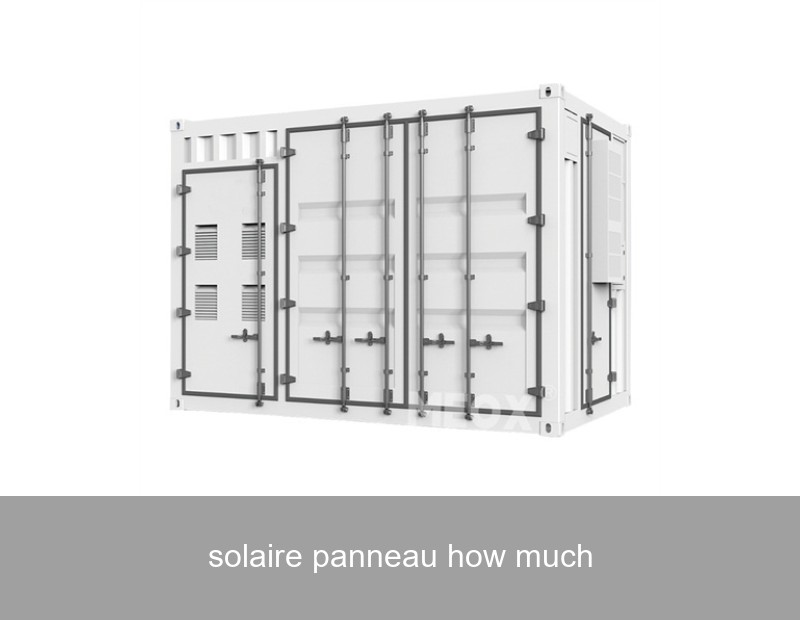
For a business with high daytime consumption, our Commercial Peak Shaving service can drastically reduce demand charges. For a remote microgrid, our containerized large-scale storage provides stability. And for a homeowner, the Home Energy Hub offers peace of mind and financial control.

Image Source: Unsplash (Representative image of an industrial battery storage installation)
Making the Decision: Your Next Steps
So, "solaire panneau how much?" is just the beginning. The more complete question is: "What is the total value of a resilient, intelligent energy system for my property?"
The next step is to move from averages to a personalized analysis. This requires looking at your last 12 months of utility bills, understanding your local net metering policies and incentives (like the U.S. Residential Clean Energy Credit), and defining your goals—is it pure bill savings, backup power, or reducing your carbon footprint?
What energy challenge keeps you up at night—is it the unpredictability of your next electricity bill, or the vulnerability of being without power during a storm?
 Inquiry
 Online Chat