


Solar and Alternative Energy: Powering a Sustainable Future Beyond the Grid
Imagine a world where your home or business isn't just powered by clean energy but is a self-sufficient hub of it. This isn't a distant dream; it's the reality being built today through the intelligent integration of solar and alternative energy sources. For decades, solar panels have been the poster child of the green revolution. But the true transformation lies not just in generation, but in control—storing that abundant sunshine for a rainy day, literally and figuratively. This is where advanced energy storage systems become the indispensable brain and battery of a modern, resilient, and cost-effective power strategy.
Table of Contents
The Phenomenon: From Intermittent to Uninterruptible
You've likely seen it: rooftops gleaming with solar panels, their productivity soaring under the midday sun only to fall silent at night or during cloudy spells. This intermittency is the fundamental challenge of solar and alternative energy like wind. The grid, a marvel of engineering, was designed for steady, predictable power flows from large central plants. Injecting variable renewable energy at scale creates a complex balancing act for grid operators, sometimes leading to curtailment (wasting excess solar energy) or reliance on fossil-fuel "peaker" plants during high demand.
The solution is elegantly simple in concept: store the surplus. By pairing generation with storage, we can time-shift energy. The sun's energy captured at noon can power your evening routines, and a windy night's output can fuel the morning rush. This turns variable sources into dispatchable, reliable assets, transforming both individual energy independence and overall grid stability.
The Data: Why Storage is the Missing Link
The numbers speak volumes about this accelerating shift. According to the U.S. Energy Information Administration (EIA), battery storage capacity in the United States has been growing exponentially, with significant additions tied directly to solar farms. In Europe, the drive for energy security and climate goals is fueling similar growth. But it's not just about capacity; it's about value. A study by the National Renewable Energy Laboratory (NREL) highlights that solar-plus-storage systems can significantly increase the value of solar by:
- Maximizing Self-Consumption: Using more of your own solar power, reducing reliance on expensive grid electricity.
- Providing Backup Power: Keeping critical loads running during grid outages, a feature whose value is immeasurable during extreme weather events.
- Enabling Grid Services: In some markets, systems can support the local grid, potentially creating revenue streams for owners.

Image: A modern solar-plus-storage installation for a home. (Source: Unsplash)
A Case Study: Resilience in Action in California
Let's look at a real-world example from our target market. A medium-sized winery in Napa Valley, California, faced a dual challenge: rising electricity costs and an increasing threat of Public Safety Power Shutoffs (PSPS)—where utilities preemptively cut power during high wildfire risk to prevent infrastructure from sparking fires. For them, a power outage wasn't just an inconvenience; it threatened temperature-controlled fermentation tanks, risking an entire season's product.
They partnered with Highjoule to implement a tailored solution: a 250 kW solar canopy array coupled with a 500 kWh Highjoule H-Series commercial battery energy storage system (BESS). The results were transformative:
| Metric | Before Installation | After Installation |
|---|---|---|
| Grid Electricity Demand During Peak Hours | ~100% | < 15% |
| Annual Energy Costs | $72,000 | $18,000 (75% reduction) |
| Backup Power Duration for Critical Loads | 0 hours | 10+ hours |
During a PSPS event in October 2023, the system seamlessly islanded the facility, maintaining perfect climate control for over 8 hours. The winery estimated this single event prevented over $150,000 in potential product loss. This is the power of solar and alternative energy made resilient and economical through intelligent storage.
The Highjoule Approach: Intelligent Integration
At Highjoule, we believe a superior storage system is defined by more than just the battery cells. Since 2005, we have focused on delivering complete, intelligent power solutions. Our systems are engineered to be the perfect partner for solar and alternative energy sources.
For residential customers, our EverHome series is more than a wall-mounted battery. It's an integrated energy manager. Its AI-driven software learns your home's consumption patterns and solar production, automatically optimizing when to store, use, or even sell back energy based on real-time electricity rates and weather forecasts. Imagine your system preparing for a storm by fully charging itself, all without you lifting a finger.

Image: A technician servicing a large-scale commercial battery storage system. (Source: Unsplash)
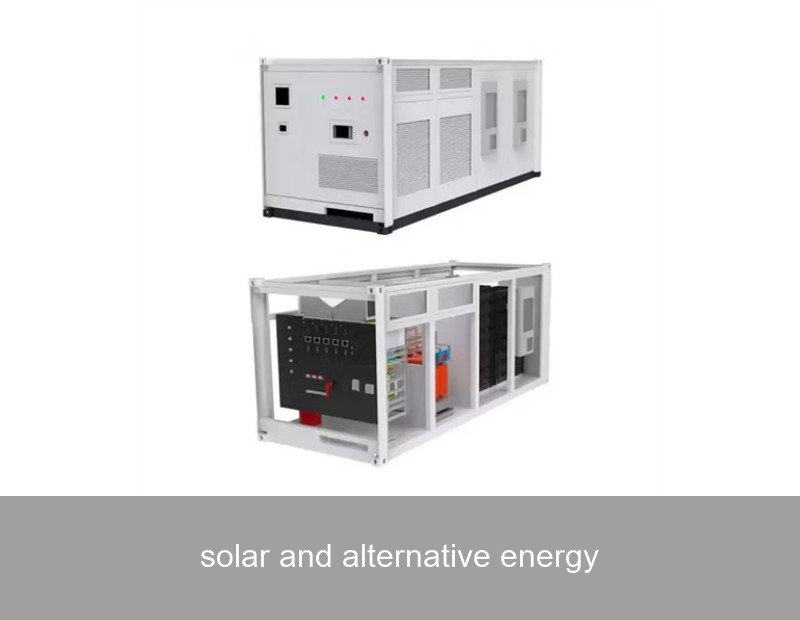
For commercial and industrial (C&I) applications, our H-Series BESS is a workhorse of reliability and scalability. These modular, containerized solutions can be configured from hundreds of kWh to multiple MWh, providing:
- Demand Charge Management: Slicing peak power draws, which often constitute a large portion of a business's utility bill.
- Uninterruptible Power Supply (UPS): Offering sub-20ms transition times to keep sensitive operations running.
- Future-Proof Design: Easily scalable as your energy needs grow or as you add more solar capacity.
Beyond the Battery: A Holistic Energy Ecosystem
The future of energy is not siloed. True sustainability comes from a holistic ecosystem where generation, storage, consumption, and even electric vehicle (EV) charging work in concert. This is the vision behind Highjoule's GridSynergy Platform.
Think of it as the conductor of your personal or commercial energy orchestra. It doesn't just manage your Highjoule battery and solar panels. It can integrate with other alternative energy sources like small wind turbines, coordinate the charging of your EV fleet for optimal cost (a concept known as "vehicle-to-grid" or V2G ready), and participate in utility demand-response programs—all through a single, intuitive dashboard. For microgrid applications, like remote communities or university campuses, this platform is the brain that balances multiple distributed energy resources (DERs) to create a stable, independent grid.
The Role of Policy and Innovation
Growth in this sector is further accelerated by supportive policies like the U.S. Inflation Reduction Act (IRA) and the European Union's Green Deal, which provide tax credits and incentives for storage deployments. Meanwhile, continuous innovation in battery chemistry, like lithium iron phosphate (LFP) which Highjoule utilizes for its safety and longevity, is improving system performance and reducing costs. The International Energy Agency (IEA) continues to track this progress, noting that energy storage is a critical technology for the clean energy transition.
Your Energy Future: Questions to Consider
The journey towards energy independence and sustainability is unique for every home and business. It starts with asking the right questions. What are your primary drivers: reducing your carbon footprint, achieving energy security against outages, or simply taking control of rising energy costs? How does your local utility structure its rates—are there time-of-use tariffs you could leverage? What is the solar potential of your roof or land?
We at Highjoule are ready to help you explore these questions. Our team of experts works with you to analyze your energy profile and design a system that turns the promise of solar and alternative energy into your daily, dependable reality. So, what's the first step you'll take to redefine your relationship with power?
 Inquiry
 Online Chat