


Unlocking Energy Independence: The Power of the Wind and Solar Combination
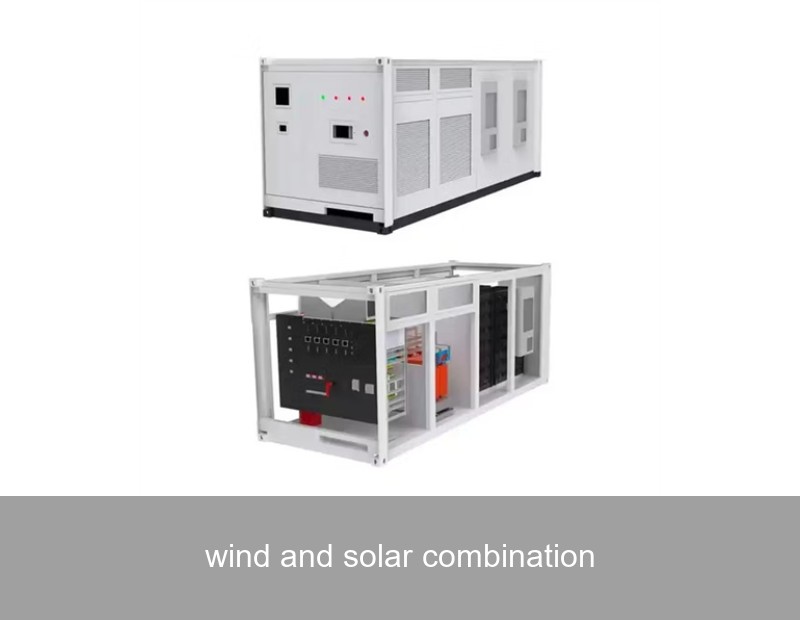
Have you ever watched the wind blow fiercely on a cloudy day, while your solar panels sit idle? Or seen a brilliantly sunny, still day where wind turbines stand motionless? This is the fundamental challenge of renewable energy: intermittency. The wind doesn't always blow, and the sun doesn't always shine. But what if they could work together to cover each other's weaknesses? The strategic integration of a wind and solar combination is emerging as the most reliable and cost-effective path to a clean energy future, especially for businesses and communities seeking true energy resilience. By pairing these two complementary forces—often with intelligent storage as the linchpin—we can create a power supply that is far greater and more stable than the sum of its parts. As a leader in advanced energy storage, Highjoule has been at the forefront of designing systems that make this powerful synergy not just possible, but profitable and practical.
Table of Contents
- The Intermittency Challenge: More Than Just Bad Weather
- Synergy in Numbers: How Wind and Solar Data Complement Each Other
- The Storage Keystone: Making Hybrid Power Dispatchable
- Case Study: A Texan Industrial Plant's Journey to Resilience
- Highjoule's Role: Intelligent Systems for Optimized Hybrid Energy
- The Future: Hybrid Plants and Smarter Grids
The Intermittency Challenge: More Than Just Bad Weather
Let's be honest: relying solely on one type of variable renewable energy (VRE) is a bit like putting all your eggs in one basket that's subject to the whims of nature. For a factory manager in Germany or a municipality in California, this unpredictability translates into real financial risk—energy price spikes, demand charges, and even operational downtime. The grid itself faces stability issues when a cloud bank reduces solar output or wind speeds suddenly drop. This isn't a flaw in solar or wind technology; it's a characteristic of their natural fuel sources. The solution, therefore, lies in diversification. Think of it as building a balanced investment portfolio, but for your energy needs. Combining generation sources that peak at different times smooths out the overall production curve, reducing the steep ramps and drops that strain infrastructure and budgets.
Synergy in Numbers: How Wind and Solar Data Complement Each Other
The magic of the wind and solar combination is clearly visible in the data. In many regions, particularly across Europe and the Great Plains of the US, wind and solar resources have a natural anti-correlation. Wind patterns often increase during the evening, night, and winter months—precisely when solar irradiance is low. Conversely, sunny summer days with high solar output can coincide with periods of lower wind speeds.
Studies from grid operators consistently highlight this effect. For instance, the National Renewable Energy Laboratory (NREL) found that hybrid wind-solar plants can achieve higher capacity factors—meaning they use a greater percentage of their potential maximum output—than either plant alone. The combined profile delivers a more consistent "base load" of renewable energy, dramatically reducing the number of hours with zero generation.

Image: A visual representation of co-located wind and solar generation. Source: Unsplash
The Storage Keystone: Making Hybrid Power Dispatchable
While combining wind and solar flattens the generation curve, there will still be times of surplus and deficit. This is where advanced energy storage transforms a good hybrid system into a game-changing one. Storage acts as the shock absorber and time-shift tool. Excess energy generated during peak windy/sunny periods is stored rather than curtailed. Then, during periods of low generation or high energy prices, that stored power is dispatched on demand.
This capability turns variable renewable energy into dispatchable power—a utility-grade resource that can be called upon when needed. For commercial and industrial (C&I) users, this means:
- Maximizing Self-Consumption: Use more of the cheap, clean energy you generate on-site.
- Demand Charge Management: Slice peak grid power draws, which often constitute 30-50% of an electricity bill.
- Backup Power: Providing seamless, clean backup during grid outages, moving beyond diesel generators.
Case Study: A Texan Industrial Plant's Journey to Resilience
Let's look at a real-world application. A large chemical processing plant in Texas was facing volatile energy prices and growing concerns over grid reliability after weather-related events. Their goal was to lock in energy costs and ensure critical processes could continue during outages.
The Solution: They deployed a hybrid power system featuring:
- A 5 MW onsite wind farm.
- A 3 MW rooftop and ground-mount solar array.
- A 4 MW / 16 MWh Highjoule Titan BESS (Battery Energy Storage System).
The Results (18-month post-installation):
| Metric | Performance |
|---|---|
| Renewable Energy Coverage | Increased from 40% (solar only) to 85% (wind+solar+storage) |
| Peak Demand from Grid | Reduced by 62% |
| Annual Energy Cost Savings | $1.2 million |
| CO2 Emissions Reduction | 8,400 tons annually |
The Highjoule Titan BESS, with its advanced forecasting and energy management system (EMS), intelligently decides in real-time whether to store wind power, solar power, or grid power based on weather predictions and price signals. During a notable grid disturbance, the system islanded the critical plant load, providing 4 hours of full backup power seamlessly.
Highjoule's Role: Intelligent Systems for Optimized Hybrid Energy
At Highjoule, we don't just supply batteries; we provide the intelligence that makes a wind and solar combination truly intelligent and profitable. Our products and services are designed specifically for the complexity of hybrid and microgrid applications:
- Adaptive BESS Platforms: Our Titan (for C&I/Utility) and Helix (for Commercial/Community) series feature modular, liquid-cooled designs for safety, longevity, and effortless scalability. They are agnostic to the DC source, seamlessly integrating with both solar PV and wind turbine outputs.
- Orion Energy Management Software: This is the brain of the operation. Orion uses AI-driven forecasting for weather, load, and energy prices to optimize every kilowatt-hour. It doesn't just react; it proactively plans charge/discharge cycles to maximize economic return and reliability.
- Full-System Integration & Services: From initial feasibility studies and financial modeling to engineering, procurement, construction (EPC), and long-term performance monitoring, Highjoule provides an end-to-end partnership. We ensure your hybrid system meets both your financial and operational resilience goals.

Image: Advanced control systems are crucial for managing hybrid energy assets. Source: Unsplash
The Future: Hybrid Plants and Smarter Grids
The trend is clear. The International Energy Agency (IEA) highlights the rapid growth of utility-scale hybrid plants, particularly those pairing solar PV with storage. The next logical step is the full integration of wind. These "renewable power plants" offer a single, predictable point of interconnection for grid operators, simplifying balancing and transmission use.
For forward-thinking businesses and communities, the question is no longer if to adopt renewables, but how to combine them for the best outcome. The integrated wind and solar combination, underpinned by sophisticated storage, represents the most mature and effective blueprint for energy independence today.
Ready to Explore Your Hybrid Potential?
Every site has a unique wind pattern, solar profile, and load curve. What would a detailed analysis reveal about the potential for a combined wind, solar, and storage system at your facility? How much could you save, and what level of resilience could you achieve?
 Inquiry
 Online Chat