


Unlock Energy Independence: Your Complete Guide to a Solar and Wind Hybrid System for Home
Have you ever watched your solar panels sit idle on a cloudy, windy day and wished you could capture that energy too? You're not alone. More homeowners are looking beyond single-source renewables to build true energy resilience. This is where the solar and wind hybrid system for home shines, combining the strengths of both technologies to provide a more consistent and reliable clean power supply. In this guide, we'll explore how this integrated approach works, its undeniable benefits, and what it takes to power your home with a smarter, more robust renewable energy setup.
Table of Contents
The Untapped Potential: Why Go Hybrid?
Let's face it: the sun doesn't always shine, and the wind doesn't always blow. But here's the fascinating part—they often complement each other. Solar production typically peaks in the middle of the day, especially in summer. Wind, on the other hand, can be stronger at night, during storms, or in the winter months. A solar and wind hybrid system for home leverages this natural synergy.
According to data from the National Renewable Energy Laboratory (NREL), hybrid renewable systems can increase overall energy capture by 20% to 50% compared to solar-only systems, depending on your local climate. This isn't just about generating more kilowatt-hours; it's about smoothing out the peaks and valleys in your power generation. The result? Greater energy self-sufficiency, reduced reliance on the grid, and a significant step towards true off-grid capability.

Think of it like this: your solar array is your reliable daytime worker, and your small wind turbine is the night shift and storm-season champion. Together, they keep your home's power flowing more consistently throughout the year.
How a Hybrid Solar-Wind System Actually Works
The magic of a hybrid system lies in its intelligent integration. It's more than just having two power sources; it's about having them work in concert under the command of a smart brain.
- Dual Generation: Photovoltaic (PV) panels convert sunlight into DC electricity. The wind turbine uses the kinetic energy of the wind to spin a generator, also producing DC electricity.
- Power Conversion & Unification: Both DC sources are fed into a hybrid inverter. This is the system's core. It converts the DC power to usable AC power for your home appliances.
- Smart Energy Management: The system's controller continuously monitors energy production from both sources and your home's consumption. It makes real-time decisions: power the home directly, charge the battery storage, or, if allowed, export excess to the grid.
- Storage is Key: An energy storage system (ESS) is the heart of modern hybrid setups. It stores surplus energy from either source for use when both generation methods are low (e.g., a calm, overcast day).
Key Components of Your Home Hybrid System
Understanding the building blocks will help you see the full picture. Here’s what you need:
| Component | Primary Role | Why It Matters |
|---|---|---|
| Solar PV Array | Daytime & summer energy generation | High-efficiency panels capture maximum sunlight. |
| Small Wind Turbine | Nighttime, winter, & stormy weather generation | Vertical or horizontal axis models designed for residential use. |
| Hybrid Inverter | System brain & power converter | Manages inputs from solar, wind, and batteries, outputting clean AC power. |
| Battery Energy Storage | Stores surplus energy for on-demand use | Enables power availability 24/7, regardless of weather. |
| System Controller & Monitoring | Optimizes performance & provides user insights | You can track production and consumption in real-time via an app. |
A Real-World Case: The Johnson Family Farm
Let's move from theory to practice. The Johnson family owns a 5-acre homestead in Colorado, USA. They experienced frequent grid instability and wanted to achieve near-total energy independence. Their challenge was the region's variable weather: brilliant sunshine followed by windy, snowy periods.
In 2022, they installed a solar and wind hybrid system for home with the following specs:
- Solar: 8 kW rooftop array
- Wind: One 5 kW vertical-axis wind turbine (VAWT)
- Storage: A 20 kWh lithium-iron-phosphate (LFP) battery system
- Smart Integration: A high-capacity hybrid inverter with advanced logic.
- Annual energy self-sufficiency increased from 65% (solar-only estimate) to 92%.
- The wind turbine provided over 40% of their total winter electricity needs, compensating for shorter solar days.
- During a 48-hour grid outage following a winter storm, the hybrid system with batteries kept the home's essential loads running seamlessly.
- Their calculated payback period, with available incentives, was under 8 years.
This case, documented in part by the U.S. Department of Energy, highlights the tangible resilience and economic benefits of a well-designed hybrid system.
How Highjoule Powers Smarter Hybrid Homes
As a global leader in advanced energy storage since 2005, Highjoule doesn't just provide batteries; we provide the intelligent core that makes a solar and wind hybrid system for home truly effective. Our expertise lies in seamlessly integrating diverse energy sources into a reliable, user-friendly power solution.
For homeowners considering a hybrid system, Highjoule's HPS (Highjoule PowerStack) Series of modular battery storage is the ideal foundation. Its high cycle life and wide operating temperature range make it perfect for the variable charging profiles from solar and wind. More importantly, our Energy Operating System (EOS) is the true differentiator. This smart software platform acts as the conductor of your personal energy orchestra:
- It dynamically prioritizes power flow—from solar, wind, or battery—based on weather forecasts, usage patterns, and electricity rates.
- It offers sophisticated monitoring, giving you a clear breakdown of what percentage of your power came from the sun, the wind, or your reserves each day.
- It ensures the longevity of your entire system by managing charge/discharge cycles with battery health as a top priority.
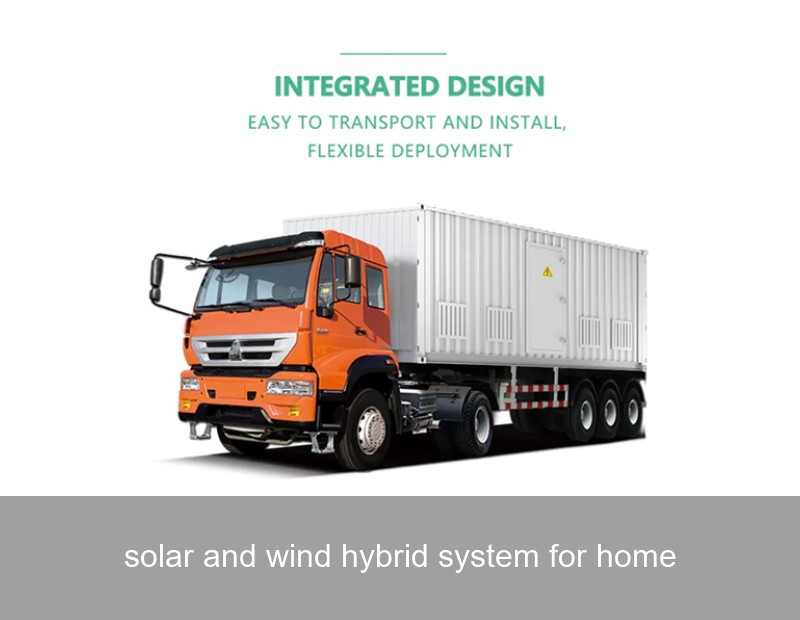
For commercial or larger microgrid applications, Highjoule's scalable containerized solutions can integrate utility-scale solar and wind, but the principle remains the same: intelligence, reliability, and sustainability at the core.
Is a Hybrid System Right for Your Home? Ask These Questions
The hybrid path is powerful, but it requires careful consideration. Start by evaluating your situation:
- Location & Resources: Do you have consistent wind (average > 10 mph/4.5 m/s)? A site assessment is crucial. Tools from WINDExchange can provide initial insights.
- Space & Zoning: Do you have adequate, unobstructed space for a small wind turbine? Are there local height restrictions or noise ordinances?
- Energy Goals: Are you aiming for full off-grid living, or primarily backup resilience and bill reduction?
- Budget & Incentives: Hybrid systems have a higher upfront cost than solar-only. However, federal (like the U.S. Investment Tax Credit), state, and local incentives can significantly offset the cost for both solar and wind components.
So, as you envision a future of unshakable energy security for your home, what will be the first step you take to understand your unique potential for harnessing the sun and the wind?
 Inquiry
 Online Chat