


Unlocking Reliable Clean Power: The Ultimate Guide to Solar and Wind Turbine Hybrid Systems
Imagine a power source that works diligently day and night, summer and winter. While solar panels rest at night, wind turbines often spin more vigorously. During calm, sunny days, solar arrays hit peak production. This complementary dance is the core principle behind a solar and wind turbine hybrid system. For homeowners, businesses, and communities seeking true energy independence and a robust renewable portfolio, combining these two giants of clean energy is no longer just an idea—it's a smart, data-driven strategy for a resilient future.
The Intermittency Challenge: Sun Doesn't Always Shine, Wind Doesn't Always Blow
Let's be frank: the single biggest hurdle for renewables like standalone solar or wind is intermittency. A cloudy week can slash solar output, and a "wind drought" can idle turbines. This variability makes it challenging to rely on 100% renewable power without a backup plan, often forcing a fallback to the grid or fossil-fuel generators. This is where the hybrid model shines. By leveraging two different weather-dependent sources, you significantly smooth out the power generation curve. It's a classic case of not putting all your energy eggs in one basket.

Image Source: Unsplash - Illustrating the synergy of solar and wind energy in one location.
The Data Advantage: Why 1+1 > 2
The synergy isn't just theoretical; it's mathematical. Studies and real-world data show that co-locating solar and wind can increase overall capacity factor—the ratio of actual output to potential maximum output—by 20% to 50% compared to either system alone. This is because solar and wind resources often have anti-correlated patterns. For instance, in many temperate regions:
- Seasonal Compensation: Solar peaks in summer, while windier periods often occur in fall, winter, and spring.
- Diurnal Patterns: Solar produces during daylight hours. Wind speeds can pick up in the evening and overnight, especially in coastal and mountainous areas.
This natural balancing act results in a more stable and predictable aggregate energy yield, reducing the size and cost of the backup storage or generation needed.
Real-World Case Study: Powering a Remote Community in Scotland
Let's look at a concrete example from the Isle of Eigg, Scotland. This off-grid community once depended on diesel generators. Seeking sustainability and cost reduction, they implemented an integrated renewable system featuring:
- ~50 kW of solar PV
- ~24 kW of wind power (multiple small turbines)
- A robust battery energy storage system (BESS) and backup hydro.
The results were transformative. The hybrid setup, with wind compensating for low solar in winter and solar contributing in calmer summer days, allowed the island to achieve over 90% of its annual electricity from renewables, slashing diesel use and carbon emissions dramatically. This project, supported by data from community energy advocates, is a beacon for remote and grid-connected applications alike, proving that hybrid systems are technically and economically viable.
The Critical Role of Energy Storage Systems (ESS)
While solar and wind complement each other, they don't always produce exactly when you need power. That's why the third, and arguably most crucial, component of a modern hybrid system is intelligent energy storage. A high-performance BESS acts as the brain and battery of the operation:
- Energy Time-Shifting: Stores surplus solar power at noon for use during the evening peak.
- Short-Term Bridging: Smooths out minute-to-minute fluctuations in wind or passing clouds.
- Grid Services: For larger systems, it can provide frequency regulation and delay costly grid infrastructure upgrades.
Without smart storage, a significant portion of your hybrid system's potential goes to waste.
Highjoule's Intelligent Solutions for Hybrid Systems
This is where Highjoule's expertise becomes pivotal. Since 2005, we've specialized in making advanced energy storage systems that are the perfect partner for solar and wind hybrid projects. We don't just sell batteries; we provide integrated, intelligent power management solutions.
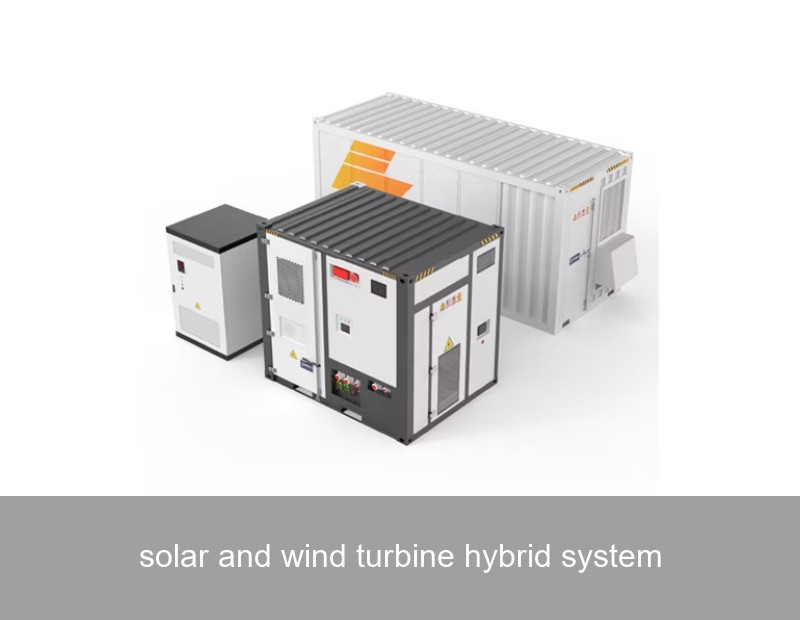
For a robust solar and wind turbine hybrid system, Highjoule's HPS Series Commercial & Industrial ESS is engineered to handle the complex charge/discharge cycles from multiple input sources. Its key features include:
- Multi-Source Integration: Seamlessly manages DC/AC coupling from solar inverters and wind turbine controllers.
- Advanced Battery Management System (BMS): Ensures safety, longevity, and maximum performance from our LiFePO4 battery cells, known for their stability and long cycle life.
- AI-Powered Energy Management Software (EMS): This is the true differentiator. Our EMS predicts weather patterns, learns consumption habits, and autonomously decides the optimal time to store, use, or even sell back energy, maximizing your return on investment.
| System Scale | Recommended HPS Model | Key Benefits for Hybrid Use |
|---|---|---|
| Large Commercial / Microgrid | HPS-500 | Scalable to MWh level, advanced grid-forming capabilities for off-grid resilience. |
| Small Business / Agri-Farm | HPS-100 | Compact footprint, plug-and-play integration with most hybrid inverters. |
| Residential (Large Property) | HPS-30 | Quiet operation, smart home integration, optimized for self-consumption. |

Image Source: Unsplash - Representative of a modern commercial battery energy storage system installation.
For instance, a dairy farm in Bavaria using both rooftop solar and a small wind turbine integrated a Highjoule HPS-100 system. Our EMS coordinates the assets, ensuring the cooling facilities run continuously on stored wind power from the night, while solar charges the batteries and powers daytime operations. This cut their grid dependence by over 80% and provided a reliable power supply critical for their operations.
The Future of Hybrid Renewable Energy
The trend is clear. As noted by research from the International Energy Agency (IEA), the future of decarbonization lies in diversified, flexible power systems. Hybrid renewable plants, coupled with storage, are becoming the new standard for new installations, especially in areas with high grid connection costs or volatile energy prices. The technology is mature, the economics are improving, and the environmental imperative is undeniable.
So, as you consider taking control of your energy future, ask yourself this: Is your current energy solution as resilient and efficient as it could be? What would a power supply that actively harmonizes with your local environment—capturing the sun's rays and the wind's force—look like for your home, business, or community project?
 Inquiry
 Online Chat