


Finding Your Ideal Solar Aruba Supplier: A Guide to Sustainable Energy Independence
consistent, powerful sunshine, cooling trade winds, and a growing desire to break free from volatile fossil fuel prices. This isn't just a dream; it's the daily reality for Aruba, "One Happy Island." With some of the highest electricity costs in the Caribbean, largely due to imported diesel, the shift to solar energy isn't just eco-friendly—it's an economic imperative. But navigating the market to find a reliable, technologically advanced solar Aruba supplier can be complex. It's not just about panels on a roof; it's about a complete, intelligent system designed for resilience and maximum return on investment. This guide will illuminate the key considerations, backed by data and real-world examples, to help you make an empowered choice for your home or business.
Table of Contents
Why Aruba is a Solar Powerhouse (Phenomenon & Data)
Aruba boasts an average of over 3,000 hours of sunshine per year, with solar irradiance levels that rival the sunniest deserts. The national utility, WEB Aruba N.V., has set an ambitious target: 100% renewable energy by 2030. This creates a powerful tailwind for solar adoption. However, the island's grid, like many in island nations, faces unique challenges. High penetration of intermittent solar without proper management can lead to instability—a phenomenon known as "duck curve" stress. This is where the narrative shifts from simply buying solar panels to investing in a sophisticated solar-plus-storage system. The right solar Aruba supplier understands this holistic picture.
According to the International Renewable Energy Agency (IRENA), islands worldwide are leading the charge in renewable integration, with solar PV being the technology of choice due to its modularity and declining costs. The data is clear: to truly harness Aruba's sun, energy storage is non-negotiable.

Image source: Unsplash (Representative of solar potential in tropical island climates)
Beyond Panels: The Critical Role of Storage
Think of a solar panel system without a battery like a rainwater collection barrel with a hole in the bottom. You collect water (energy) when it rains (sunny), but it runs out quickly when the weather changes. An advanced Battery Energy Storage System (BESS) plugs that hole. It allows you to store excess solar energy generated during the day and use it in the evening, during peak tariff periods, or even during brief grid outages. This transforms solar from a cost-reducer to a resilience provider.
Key Components of a Modern Solar-Storage System:
- High-Efficiency Solar Panels: Maximize energy harvest from limited roof space.
- Smart Hybrid Inverters: The brain of the operation, managing energy flow between solar, battery, grid, and your loads.
- Lithium-Iron-Phosphate (LFP) Batteries: The new standard for safety, longevity, and performance in hot climates. They are inherently more stable and have a longer lifespan than older battery chemistries.
- Energy Management Software (EMS): The invisible intelligence that learns your usage patterns, forecasts weather, and optimizes every kilowatt-hour for savings and grid support.
The Advanced Supplier Checklist: What to Look For
Choosing a solar Aruba supplier is a long-term partnership. Here’s what separates a basic installer from a true solutions provider:
| Feature | Basic Supplier | Advanced Supplier (Like Highjoule) |
|---|---|---|
| Core Offering | Solar panel installation | Integrated solar + storage + smart management system design |
| Battery Technology | May offer generic or older battery types | Focuses on safe, long-life LFP chemistry with robust thermal management |
| Grid Interaction | Basic grid-tie, may cause instability at high penetration | Grid-forming/Grid-supportive capabilities that help stabilize the local network |
| Monitoring & Control | Basic production data | Cloud-based EMS with real-time analytics, remote diagnostics, and AI-driven optimization |
| Warranty & Support | Standard product warranties | Comprehensive performance guarantees and long-term local technical support |
Case Study: A Hotel's Journey to Energy Independence
Let's look at a real-world example. A 150-room beachfront resort in Aruba was facing monthly electricity bills exceeding $40,000, with rates subject to global oil price swings. Their goal was to reduce costs, ensure power continuity for guests, and bolster their sustainability marketing.
They partnered with a forward-thinking solar Aruba supplier who deployed a turnkey solution featuring:
- A 500 kW rooftop solar array.
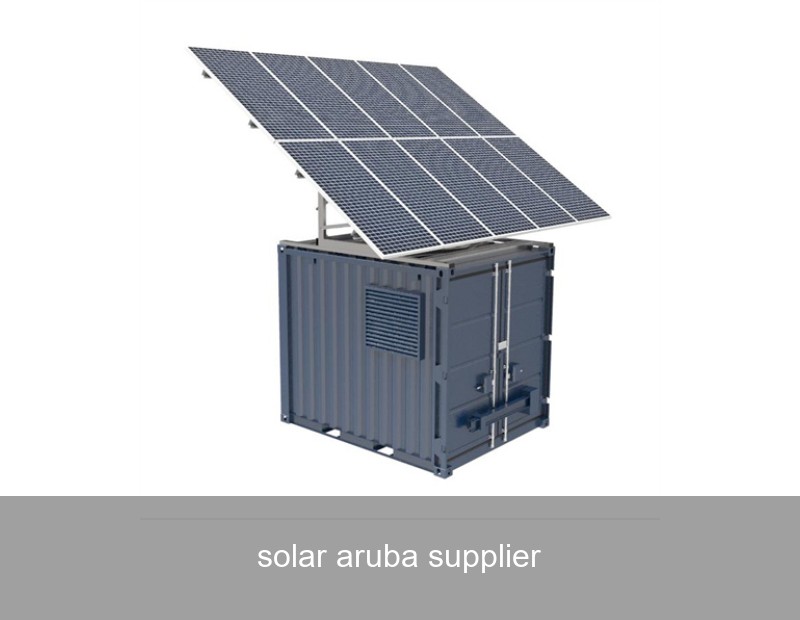
- A 1 MWh containerized battery storage system using LFP chemistry.
- A smart hybrid inverter system capable of islanding (running independently from the grid).
- Energy Cost Reduction: 65% decrease in monthly utility bills, saving over $25,000 per month.
- ROI Period: Projected payback period of under 5 years.
- Resilience: The hotel can now operate critical loads (lighting, reception, kitchens) for over 6 hours during a grid outage, ensuring guest comfort and safety.
- Emission Reduction: Offset an estimated 450 tons of CO2 annually.
This case, documented in part by the National Renewable Energy Laboratory (NREL) in its studies on island energy transitions, highlights the transformative impact of a system-level approach over a simple solar installation.

Image source: Unsplash (Representative of a commercial-scale battery storage solution)
Highjoule's Role in Aruba's Energy Future
As a global leader in advanced储能系统 founded in 2005, Highjoule is more than just a manufacturer; we are a partner in building energy resilience. For Aruba, our solutions are tailored to the island's specific needs. Our IntelliBESS commercial and industrial storage systems are engineered with LFP batteries and feature advanced grid-forming technology. This means they don't just take from the grid; they can actively support it by providing voltage and frequency regulation, which is crucial for Aruba's stability as renewable penetration grows.
For larger projects like microgrids for resorts, industrial parks, or community initiatives, Highjoule提供端到端的设计、集成和长期服务支持. Our energy management platform, Highjoule Nexus, provides operators with unparalleled visibility and control, turning a complex energy asset into a simple, profit-optimizing tool. Choosing a solar Aruba supplier that partners with technology leaders like Highjoule ensures you are getting a system built on global expertise, designed for local challenges.
Highjoule's Value Proposition for Aruba:
- Climate-Adapted Design: Systems engineered for high temperatures and coastal environments.
- Grid-Friendly Operation: Capabilities that aid WEB Aruba's renewable integration goals.
- Total Cost of Ownership Focus: Durable, low-maintenance products that deliver value for decades.
- Partner Network: We work through certified, trained local integrators to ensure expert installation and service.
Your Next Step Towards Solar Independence
The journey to energy independence in Aruba is bright, but it requires careful planning. It starts by asking the right questions: Is your prospective supplier talking only about panels, or are they presenting a holistic storage-integrated plan? Do they understand the importance of grid-supportive features? Can they provide a clear, long-term performance guarantee?
As you evaluate your options, consider this: In five years, do you want to be remembered as an early adopter who chose a resilient, smart system, or as someone who had to retrofit storage because the initial solution was incomplete?
What specific energy challenge—whether it's peak shaving, backup power, or sustainability reporting—is most critical for your business or home to solve first?
 Inquiry
 Online Chat