


The Low Voltage Distribution Board: Your Silent Guardian in the Modern Energy Ecosystem
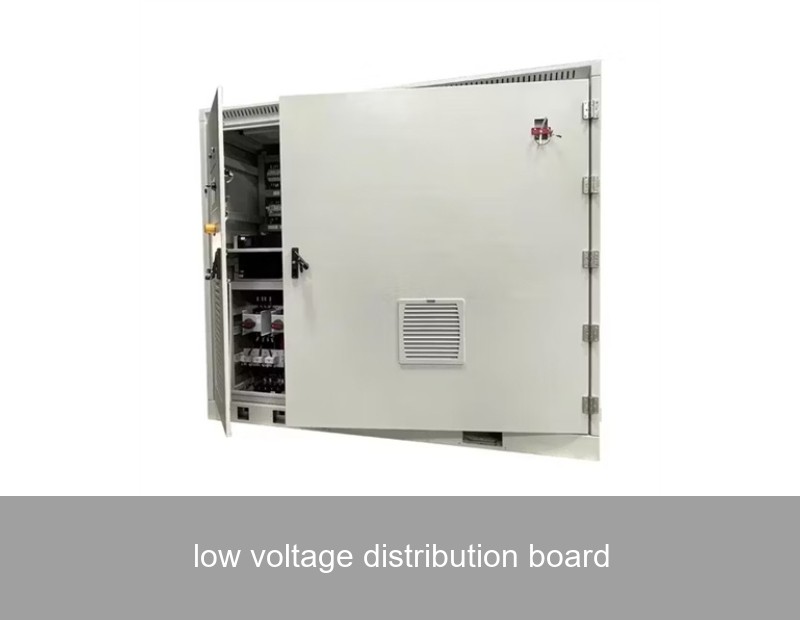
You flip a switch, and the light comes on. You plug in your EV, and it starts charging. This seamless access to power feels like magic, but it's not. It's engineered reliability, and at the heart of this system in homes, businesses, and factories lies a critical but often overlooked component: the low voltage distribution board (LVDB). Think of it as the central nervous system of your electrical installation, intelligently routing power, protecting circuits, and ensuring safety. But as we integrate more renewable energy like solar and complex loads like battery storage, is your traditional distribution board still fit for purpose? Let's explore how this humble panel is evolving into a smart energy command center.
Table of Contents
What is a Low Voltage Distribution Board?
At its core, a low voltage distribution board (typically for voltages below 1000V AC) is an enclosure that houses the vital components for electrical safety and control. Its primary job is to take the main power supply and divide it into subsidiary circuits, providing a protective fuse or circuit breaker for each. For decades, its role was straightforward: distribute grid power and prevent overloads.
A standard LVDB includes:
- Main Isolator/Switch: To disconnect all power for maintenance.
- Circuit Breakers (MCBs, RCDs/GFCls): Protect against overcurrent and earth faults.
- Busbars: Conductors that distribute current to the various circuits.
- Surge Protection Devices (SPDs): Guard against voltage spikes from lightning or grid switching.
This setup has served us well. However, the energy landscape is undergoing a radical transformation, and the passive distribution board is becoming a bottleneck.
The Modern Challenge: Renewable Energy & Two-Way Power Flow
Here's the paradigm shift: electricity is no longer a one-way street from the grid to your appliances. With rooftop solar panels, your building can generate its own power. With a battery energy storage system (BESS), you can store excess energy and use it later. This creates a complex, bi-directional flow of electricity.
Imagine this scenario: Your solar panels are producing at peak midday, powering your operations and sending surplus back to the grid. Suddenly, a cloud passes over. Production plummets, and your facility needs to draw power—instantly—from the grid or your battery. A traditional LVDB is not designed to manage this dynamic dance. It can't prioritize solar self-consumption, intelligently dispatch battery power based on tariff rates, or seamlessly island your facility during a grid outage. This is where outdated infrastructure leads to inefficiency, lost savings, and even safety risks.

This is precisely the challenge that companies like Highjoule address. We don't just see a distribution board; we see the critical integration point for a modern energy system. Our solutions are designed to bring intelligence to this node, transforming it from a passive protector into an active energy manager.
Beyond Protection: The Smart, Connected LVDB
The future of energy distribution is digital and integrated. A next-generation LVDB, or what we at Highjoule term an Intelligent Energy Distribution Panel (IEDP), incorporates several advanced layers:
- Advanced Metering & Monitoring: Real-time sensors track energy flow (import, export, generation, consumption) at every critical circuit with granularity.
- Integrated Energy Management System (EMS): A built-in digital brain that communicates with solar inverters, battery storage, and even grid signals. It can be programmed to automate energy decisions based on cost, carbon intensity, or grid stability.
- Dynamic Load Management: Prevents main breaker overload by intelligently shedding non-critical loads (like EV charging) when total demand peaks, avoiding costly grid upgrade fees.
- Seamless Microgrid Readiness: In the event of a grid failure, the system can automatically disconnect and re-energize critical loads using local solar and storage, forming an instant microgrid.
For instance, Highjoule's GridSynergy Platform is often deployed as the core intelligence within such an upgraded distribution setup. It doesn't replace your LVDB; it enhances it, providing the software and control hardware that turns a collection of breakers into a coherent, goal-oriented energy strategy executor.
Case Study: A German Bakery's Energy Transformation
Let's look at a real-world example from Bavaria, Germany. A mid-sized artisan bakery with high refrigeration and oven loads faced two problems: skyrocketing energy costs and an unreliable local grid that caused costly production stoppages.
The Solution: They installed a 120 kWp rooftop solar array and a 240 kWh Highjoule battery storage system. The key to making it all work cohesively was the upgrade of their main low voltage distribution board with Highjoule's integrated control and monitoring system.
| Metric | Before Upgrade | After Upgrade |
|---|---|---|
| Grid Energy Consumption | 100% Baseline | Reduced by 68% |
| Solar Self-Consumption Rate | N/A (No Solar) | Increased from ~40% to 92% |
| Cost from Grid Outages | ~€15,000/year | €0 (Critical loads maintained) |
| ROI Period | N/A | Estimated 4.2 years |
How it Works: The smart LVDB, governed by Highjoule's EMS, constantly optimizes energy flow. At night, it charges the batteries with low-cost grid power. At dawn, it switches loads to battery power. When the sun shines, it powers operations directly from solar, charges the battery for the evening baking shift, and only exports excess after all internal needs are met. During a brief grid outage, the system islanded in milliseconds, keeping refrigeration and essential machinery online, saving thousands in spoiled dough and halted production.
This case illustrates that the true value of solar and storage is only unlocked when paired with intelligent distribution and control—a principle central to Highjoule's integrated system approach.
Future-Proofing Your Electrical Infrastructure
Whether you're planning a new build, a renovation, or simply adding solar panels, considering the role of your distribution board is crucial. Here is a simple checklist for a future-proof electrical heart:
- Space & Scalability: Does the board have spare ways for additional circuits (future EV chargers, HVAC upgrades)?
- Monitoring Capability: Can it accommodate CT sensors on main and sub-circuits for detailed energy analytics?
- Communication Ready: Does it have a conduit or designated area for data cables to connect to an external EMS or building management system?
- Power Quality: Are there provisions for harmonic filters or advanced surge protection to protect sensitive electronics in modern equipment?
- Vendor Expertise: Are you working with a provider, like Highjoule, that understands the integration of generation, storage, and distribution as a single, optimized system?

For deeper technical standards, refer to authoritative guidelines like those from the National Fire Protection Association (NFPA) on electrical safety or the International Energy Agency (IEA) on renewable integration. The key takeaway is that your LVDB is no longer a commodity; it's a strategic asset.
What's Your Energy Distribution Blueprint?
The transition to a resilient, efficient, and sustainable energy future isn't just about generating clean power—it's about managing it intelligently at the point of use. The low voltage distribution board is where this management physically happens. By upgrading this critical node, you move from simply consuming energy to actively orchestrating it.
Is your current electrical setup ready to handle the dynamic energy flows of solar, storage, and smart loads? What would be the first circuit you'd want to monitor and control for maximum savings and reliability in your home or business?
 Inquiry
 Online Chat