


Solar Batteries Comparison: Your Guide to Choosing the Right Energy Storage
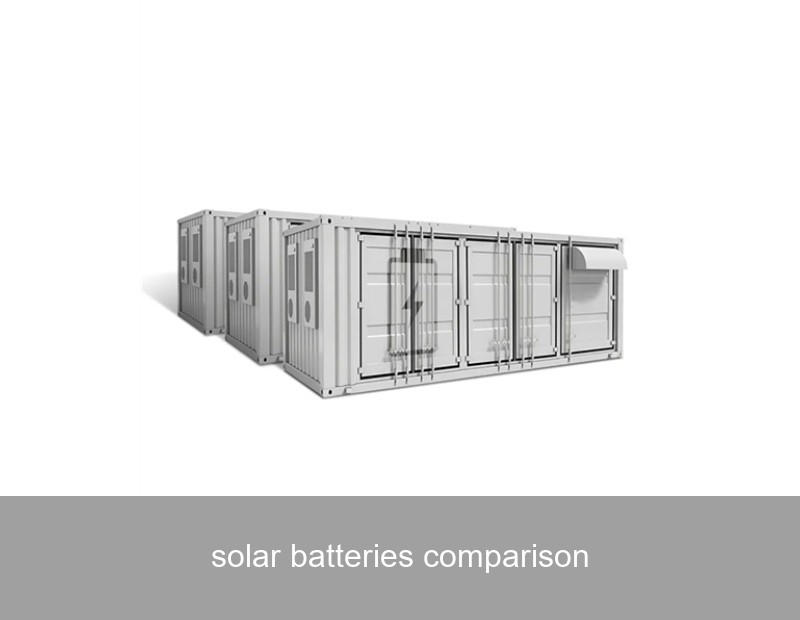
So, you've got solar panels or you're planning to get them. That's fantastic! But here's a question more and more homeowners and businesses are asking: "How do I make the sun's power work for me, even when it's not shining?" That's where a solar battery comes in. But with so many options on the market, a solar batteries comparison isn't just about price—it's about finding the right technology for your energy independence goals. This guide will cut through the complexity, using a clear framework to help you compare the key factors, from battery chemistry to real-world performance. As a leader in smart energy storage since 2005, Highjoule is here to illuminate the path to a more resilient and efficient power system for your home or business.
Table of Contents
The Phenomenon: Why Storage is Now Non-Negotiable
The shift to solar is undeniable. But the modern energy landscape introduces new challenges. Grid instability, increasing electricity rates, and a growing desire for true energy self-sufficiency are driving the demand for storage. Think about it: without a battery, excess solar energy you produce at midday often gets sold back to the grid at a low rate, only for you to buy it back at night at a much higher price. It's like growing a garden and giving away your vegetables for pennies, then buying them back from the store for dollars. A solar battery flips this script, allowing you to store your personal "harvest" of solar energy for when you need it most.

According to the International Energy Agency (IEA), global energy storage capacity is set to expand dramatically by 2030, with behind-the-meter (like home and business) systems playing a crucial role. This isn't just a trend; it's a fundamental restructuring of how we consume power.
Key Factors for Your Solar Batteries Comparison
When comparing solar batteries, it's easy to get lost in spec sheets. Let's break down the most critical elements into a clear, actionable framework.
Battery Chemistry: The Heart of the System
This is the core technology that defines performance and safety. Here are the two main contenders in today's market:
- Lithium Iron Phosphate (LFP): This has become the dominant chemistry for stationary storage. Why? Superior thermal stability, longer lifespan (often 6,000+ cycles), and excellent safety profile. It's slightly less energy-dense than other lithium types, but for a stationary home battery, safety and longevity are paramount. Most leading providers, including Highjoule, utilize LFP technology as the foundation for their residential and commercial systems.
- Other Lithium-ion (NMC): Nickel Manganese Cobalt batteries offer higher energy density (more capacity in a smaller space), which is why they're common in EVs. However, they generally have a shorter cycle life and require more sophisticated thermal management systems.
The choice is clear for long-term, safe home storage: LFP is the current industry benchmark.
Capacity & Power: The "Size" vs. "Strength" Dilemma
Don't confuse these two—it's the most common mistake in a solar batteries comparison.
| Term | What It Measures | Real-World Analogy | Why It Matters |
|---|---|---|---|
| Usable Capacity (kWh) | The total amount of electricity the battery can store. | The size of your fuel tank. | Determines how long you can run your home during an outage or how much solar you can shift to nighttime use. |
| Continuous Power (kW) | The rate at which the battery can deliver electricity at any moment. | The horsepower of your engine. | Determines how many high-power appliances (like air conditioners, ovens, well pumps) you can run simultaneously from the battery. |
A battery with high capacity but low power might keep your lights on for days but struggle to start your fridge compressor. A system like the Highjoule H-Series Home Battery is engineered to provide an optimal balance, with scalable capacity (from 10 to 30 kWh) and robust continuous power (5-10 kW) to handle real household demands seamlessly.
Efficiency, Lifespan, and Warranty
- Round-Trip Efficiency: This percentage tells you how much energy you get out versus what you put in. A 90% efficiency means for every 10 kWh you store, you get 9 kWh back. High-quality systems like Highjoule's typically achieve 90-95%, maximizing the value of your solar production.
- Lifespan & Warranty: Look for two warranty metrics: years (often 10-15) and throughput or cycles (e.g., guaranteed for 10,000 cycles or a certain MWh of energy). This is the manufacturer's promise of the battery's endurance. A strong warranty reflects confidence in the product's chemistry and build quality.
System Intelligence and Integration
A battery is more than just cells in a box. The brain—the inverter and energy management system—is what makes it "smart." Can it prioritize charging from solar? Can it respond to time-of-use rates automatically to maximize savings? Does it integrate with grid services? Highjoule's NeuralGrid™ AI Platform turns a simple battery into an intelligent asset, learning your usage patterns, optimizing for weather forecasts and utility rates, and even providing grid support if permitted, creating an additional potential revenue stream.
Case Study: A Real-World Comparison in Action
Let's look at a concrete example from Southern California, a market with high electricity rates and time-of-use billing.
Situation: The Johnson family has a 8 kW solar array. Their utility, Southern California Edison, has a steep "peak" rate from 4-9 PM ($0.45-$0.50/kWh) when their solar production is low but family usage is high.
Challenge: They were exporting most of their daytime solar at a low "off-peak" credit rate ($0.25/kWh) and buying expensive power every evening.
Solution & Data: They installed a 13.5 kWh Highjoule H-Series battery. The system was programmed to store excess daytime solar and discharge during the 4-9 PM peak window.
- Self-Consumption Increase: Rose from 35% to over 80%.
- Bill Savings: Average monthly electric bill reduced from $180 to $15 (mostly just grid connection fees).
- Payback Period: Estimated at 6-7 years, factoring in the federal Investment Tax Credit (ITC) which also applies to standalone storage in the US.
- Resilience: They now have backup power for essential loads during public safety power shutoffs.
This case shows that an effective solar batteries comparison must go beyond sticker price to calculate long-term value, savings, and peace of mind.

The Highjoule Approach: Beyond Basic Comparison
At Highjoule, we believe your energy storage system should be a perfect fit, not just an off-the-shelf component. Our products, from the residential H-Series to the commercial C-Series and microgrid-ready M-Series, are built on LFP chemistry for safety and longevity. But what truly differentiates us is integration.
We provide a complete AC-coupled solution that works seamlessly with almost any existing or new solar installation, giving you flexibility. More importantly, our NeuralGrid™ platform provides the intelligence. Imagine a system that doesn't just store energy, but also:
- Automatically switches to backup power in milliseconds during a grid outage.
- Learns your habits and pre-charges the battery before a predicted storm.
- Optimizes charge/discharge cycles based on real-time electricity prices, a feature increasingly valuable in European markets with dynamic tariffs.
Our service includes professional design, installation support, and remote monitoring, ensuring your system delivers on its promise for decades.
Making Your Choice: It's About Your Energy Profile
Your perfect battery isn't necessarily the one with the biggest number on the brochure. It's the one that matches your energy profile. Are you most concerned with backup power for outages? Maximizing financial return from solar? Or contributing to a greener grid?
Start by analyzing your last 12 months of electricity bills. Identify your baseline consumption and peak usage. Then, ask potential providers: How will your system be sized for my goals? What is the expected round-trip efficiency? What does the warranty actually cover? Can the system adapt to future changes, like adding an EV charger?
The right solar batteries comparison leads you to a partnership with a provider who understands these nuances. So, what's the first energy habit in your home you'd like a smarter battery system to transform?
 Inquiry
 Online Chat