


Understanding Solar Battery Prices in South Africa: A Smart Buyer's Guide
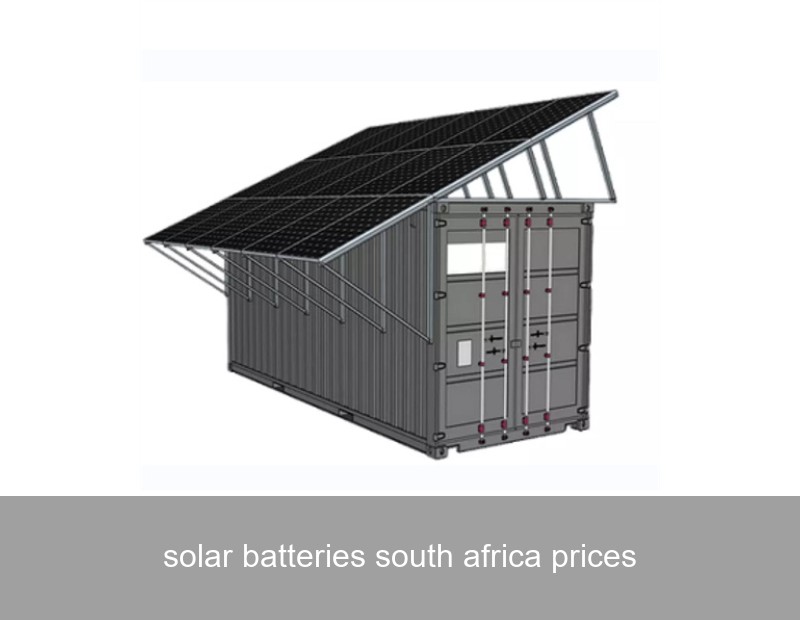
If you're a South African homeowner exploring solar power, you've likely asked the pivotal question: what drives solar batteries South Africa prices? It's more than just a number on a quote. With persistent load-shedding and rising electricity tariffs, investing in a solar battery system isn't just a purchase; it's a strategic move towards energy security and financial predictability. The initial cost can seem daunting, but understanding the components, technology, and long-term value is key to making an empowered decision. Let's demystify the market and explore what you're really investing in.
The Price Breakdown: Key Factors Influencing Solar Battery Prices
The price of a solar battery system in South Africa isn't a one-size-fits-all figure. It's a composite of several critical factors, each playing a role in performance, lifespan, and, ultimately, the value for your money.
1. Battery Capacity & Usable Energy (kWh)
This is the "fuel tank" of your system – how much energy the battery can store. Prices scale significantly with capacity. A typical home might look at systems ranging from 5 kWh to 15 kWh or more. Crucially, you must distinguish between total capacity and usable capacity. Some batteries, like lithium iron phosphate (LFP) models, allow you to use nearly 100% of their stored energy without significant degradation, while others require a buffer. More usable kWh means higher upfront cost but greater daily utility during outages.
2. Battery Chemistry: The Heart of the Matter
The chemical makeup is the core determinant of performance and price. The market has largely shifted from lead-acid to advanced lithium-ion due to superior lifespan and efficiency.
- Lithium Iron Phosphate (LFP): The current gold standard for residential storage. LFP batteries offer exceptional cycle life (often 6,000+ cycles), superior thermal stability (a crucial safety feature), and high depth of discharge. They command a premium but offer the best long-term value. This is the technology of choice for forward-thinking providers like Highjoule.
- Other Lithium-ion (NMC): Slightly higher energy density but often with a shorter lifespan and greater sensitivity to high temperatures and full discharge cycles.
3. Power Rating (kW) & Inverter Integration
Capacity (kWh) tells you how much energy you have; power rating (kW) tells you how fast you can use it. Can your battery run a kettle (2-3 kW), an air conditioner (1-2 kW), and lights simultaneously? The inverter, which converts DC battery power to AC for your home, is equally critical. An integrated, high-quality inverter-battery system ensures seamless operation and efficiency. A cheap, mismatched inverter can bottleneck your entire system's performance.
4. System Complexity & Installation
Professional installation by accredited technicians is non-negotiable for safety and warranty validation. Installation costs vary with system complexity, roof type, existing electrical work, and whether it's a new solar PV+storage installation or a retrofit to an existing solar array. Always factor this into your total project cost.

Image: A professional installation is crucial for safety and performance. (Source: Unsplash)
Case Study: A Johannesburg Household's Journey to Energy Independence
Let's move from theory to reality. Consider the Pretorius family in Johannesburg. Facing Stage 4-6 load-shedding, their 4-person household with a monthly consumption of 900 kWh decided to invest in a solution.
Their Goal: Keep lights, internet, fridge/freezer, TVs, and essential appliances running through 4-hour load-shedding slots, and reduce grid dependency.
Their Solution (2023 Installation): They opted for a high-performance 10 kWh LFP battery system with a hybrid inverter, paired with an expansion of their existing solar panels.
| Cost Component | Approximate Cost (ZAR) | Notes |
|---|---|---|
| 10 kWh LFP Battery & Hybrid Inverter | R 180,000 | Included smart energy management |
| Additional Solar Panels (2.5 kW) | R 45,000 | To adequately charge the larger battery |
| Professional Installation & Compliance | R 25,000 | COC, municipal approval, etc. |
| Total System Cost | R 250,000 |
The Outcome: Their grid consumption dropped by over 80%. They now sail through load-shedding uninterrupted. Factoring in the 2023/24 Eskom tariff increases of nearly 18%, their system payback period is calculated at under 7 years. More importantly, they have placed a tangible value on daily comfort and business continuity, which for them is priceless.
Beyond the Price Tag: Long-Term Value & ROI
Evaluating solar batteries South Africa prices purely on the initial outlay is like buying a car based only on the sticker price, ignoring fuel efficiency and maintenance. The true cost is measured over 10-15 years.
- Warranty & Lifespan: A premium LFP battery with a 10-year warranty and 6,000+ cycle life will likely outlast and outperform a cheaper alternative with a 5-year warranty and 3,000 cycles. Always read the warranty fine print – it should guarantee a minimum remaining capacity (e.g., 70%) at the end of the term.
- Efficiency: A system with 95% round-trip efficiency loses only 5% of the energy you put into it. A less efficient system (e.g., 85%) wastes more of your precious solar energy, effectively increasing your cost per usable kWh.
- Software & Smart Features: Intelligent energy management systems can learn your usage patterns, prioritize solar self-consumption, and even participate in future demand-response programs. This software intelligence, a hallmark of advanced systems like those from Highjoule, maximizes your financial return.
Highjoule's Smart Solutions for the South African Market
At Highjoule, we understand the unique energy challenges faced in South Africa. Our approach isn't just about supplying a battery; it's about delivering predictable, resilient, and intelligent power. Our product suite for the residential and commercial markets is engineered for the demands of the South African climate and grid conditions.
Our Residential Energy Hub features modular LFP battery stacks, starting from 5 kWh and expandable to meet growing needs. Coupled with our integrated hybrid inverter, the system offers:
- Ultra-Safe LFP Chemistry: Ideal for high-temperature environments, offering peace of mind and longevity.
- Advanced Self-Learning Software: Our AI-driven energy manager optimizes every kilowatt-hour, automatically shifting loads to solar or battery power to shield you from peak tariffs and outages.
- Grid-Forming Capability: A critical feature that allows your home to form a "microgrid" during a blackout, starting up seamlessly without a flicker, unlike many basic backup systems.
- Remote Monitoring & Control: Manage and monitor your system's performance and savings from anywhere via a user-friendly app.
For us, value is defined by the total cost of ownership over decades, not just the initial invoice. We partner with certified local installers across South Africa to ensure every Highjoule system is a benchmark for quality and reliability.

Image: Smart energy management turns a battery into an intelligent home asset. (Source: Unsplash)
Making the Right Choice for Your Home
So, how do you navigate the solar batteries South Africa prices landscape? Start by auditing your energy needs. What do you want to power during an outage? What is your average daily consumption? Use tools like the U.S. Department of Energy's Energy Saver guides as a reference for understanding home energy audits. Then, seek multiple quotes, but scrutinize them. Compare not just the rand amount, but the battery chemistry, usable capacity, warranty terms, inverter specifications, and the reputation of both the product brand and the installer.
The most economical system is the one that reliably meets your needs for the longest time. It's an investment in the resilience of your home and the predictability of your finances.
 Inquiry
 Online Chat