


Redeem Solar Technologies: Unlocking Their True, Reliable Potential
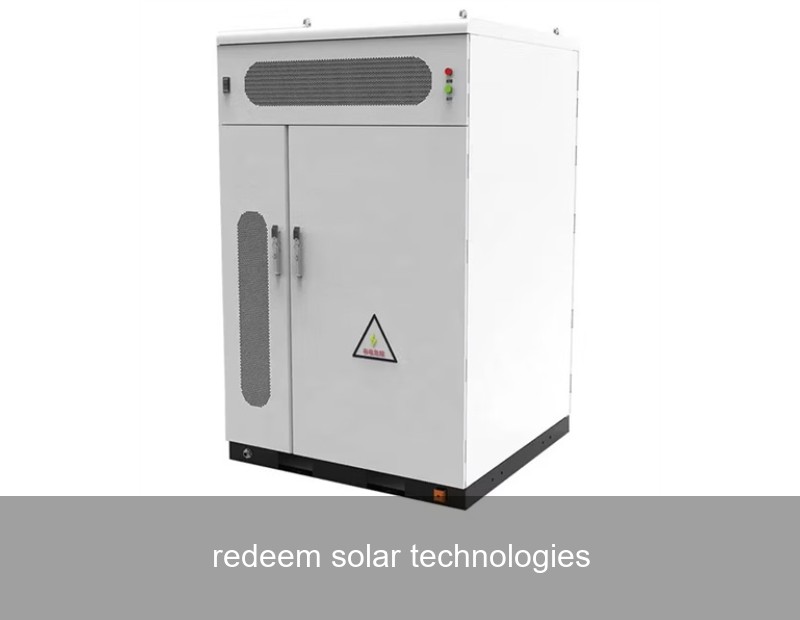
Let's be honest, the promise of solar power has always been dazzling. Imagine harnessing the sun's boundless energy, cutting electricity bills, and shrinking your carbon footprint—all at once. For years, this has been the compelling sales pitch. But if you've invested in solar panels, or are seriously considering it, you might have encountered a subtle, nagging reality. The sun, for all its power, doesn't shine on demand. This leads us to a critical concept in today's energy landscape: the need to redeem solar technologies. It's not about fixing something broken; it's about fulfilling a promise. It's about transforming solar from a part-time contributor into a dependable, 24/7 power source for your home or business.
What Does It Mean to "Redeem" Solar Technologies?
To redeem something is to fulfill its promise, to convert its potential into real, tangible value. In the context of solar, the technology's inherent promise is clean, independent, and cost-effective power. However, without the right companion technology, this promise can feel partially unfulfilled. You generate excess energy when you don't need it (during the day) and lack it when you do (at night, on cloudy days). You're still often reliant on the grid, especially during peak hours when electricity is most expensive and carbon-intensive. Redeeming solar technologies means integrating them with advanced energy storage systems. This pairing captures every kilowatt-hour produced, stores it intelligently, and dispatches it precisely when needed, turning a variable resource into a firm, dispatchable asset. It's the final, crucial step that delivers true energy independence and maximizes your return on investment.

Source: Unsplash - A modern home solar and battery storage installation. The battery is key to redeeming the solar investment.
The Unspoken Challenge: Intermittency and the Energy "IOU"
The phenomenon is clear: solar generation follows a bell curve, while energy demand often follows a different, more complex pattern. In many regions, like California or Southern Europe, we see the famous "duck curve"—a deep midday dip in net demand due to high solar production, followed by a steep evening ramp-up as the sun sets and people return home.
| Time of Day | Solar Generation | Household/Business Demand | Result without Storage |
|---|---|---|---|
| Midday (10 AM - 3 PM) | High | Moderate (Often low if occupants are away) | Excess energy sold to grid at low rates |
| Evening Peak (6 PM - 9 PM) | Low/None | High (Lighting, cooking, heating/cooling) | Energy purchased from grid at high peak rates |
| Night/Overnight | None | Baseline (Refrigeration, security, charging) | 100% reliant on grid |
This mismatch means your solar panels are, in effect, writing an "IOU" during the day—creating energy credits you can't immediately use. Then, in the evening, you "cash in" those IOUs by drawing from the grid. The problem? The rates are rarely equal. With the global shift towards time-of-use (TOU) tariffs, the price you pay for electricity in the evening can be two to three times higher than the compensation you receive for your midday surplus. This fundamental flaw in the economics of standalone solar is what demands a solution.
Storage: The Key to Unlocking Solar's Full Potential
This is where advanced battery energy storage systems (BESS) become the redeemer. Think of storage as the indispensable savings account for your solar energy. Instead of giving away your excess solar generation for pennies, you store it for your own use later, avoiding the purchase of expensive grid power. The benefits cascade:
- Maximized Self-Consumption: Use more of the solar energy you produce, sometimes increasing direct usage from 30-40% to over 80%.
- Peak Shaving: Protect yourself from high demand charges (a major cost for businesses) and residential peak rates by discharging the battery during expensive grid periods.
- Enhanced Resilience: Maintain power during grid outages. Your solar system alone typically shuts off for safety during a blackout; with a battery, your essential loads stay on.
- Grid Support: Advanced systems can provide services that stabilize the broader grid, a growing value stream.
Case Study: Redeeming Solar in a German Industrial Park
Consider a real-world example from Bavaria, Germany. A mid-sized manufacturing facility with a 500 kW rooftop solar array was facing a classic problem. Their solar production peaked during operational hours but didn't cover the full load, and significant energy was still needed after sunset for late shifts and facility conditioning. Despite a large solar investment, their grid dependence and energy costs remained higher than desired.
The solution was integrating a 372 kWh Highjoule HVC Series commercial battery storage system. The results, measured over one year, were telling:
- Solar Self-Consumption Rate increased from 51% to 89%.
- Grid Energy Draw During Peak Periods was reduced by 92%.
- Annual Energy Cost Savings exceeded €48,000, improving the ROI of both the solar and storage assets.
- The system also provided backup power for critical processes, mitigating downtime risk.
This case perfectly illustrates the redemption process. The solar capacity was no longer underutilized; its potential was fully realized through intelligent storage, delivering promised financial and operational resilience.
How Highjoule's Solutions Empower True Solar Redemption
At Highjoule, we've spent nearly two decades focusing on this exact challenge. Our mission is to provide the intelligence and hardware needed to redeem solar technologies for our clients worldwide. We don't just sell batteries; we deliver integrated, intelligent energy platforms.
Our HVS Series for residential and HVC Series for commercial & industrial applications are built with long-life, safe lithium iron phosphate (LFP) chemistry. They are managed by our proprietary Adaptive Energy Operating System (AEOS). Think of AEOS as the brain of your energy system. It doesn't just react; it learns. It analyzes your energy patterns, weather forecasts, and utility rate schedules in real-time to make intelligent decisions: when to store, when to discharge, and when to interact with the grid for optimal economic benefit.

Source: Unsplash - A large-scale battery energy storage system (BESS) similar to Highjoule's industrial solutions.
For larger-scale applications like microgrids or utility projects, our GridSynergy Platform takes this further. It can orchestrate multiple solar and storage assets, manage islanding operations, and even participate in grid-balancing markets, turning a cost center into a potential revenue stream. This level of sophistication is what allows businesses and communities to not just redeem solar, but to transform their entire energy posture.
The Future of Energy is in Redemption
The conversation is shifting. It's no longer just about installing solar panels. Forward-thinking homeowners, business leaders, and utilities are asking: "How do we build a resilient, cost-effective, and truly sustainable energy system?" The answer lies in moving beyond single technologies and creating synergistic systems. Solar is a phenomenal generator, but it needs a partner to fulfill its destiny. As battery costs continue to decline and software intelligence grows, the economic and environmental case for pairing storage with solar becomes undeniable. Research from authorities like the National Renewable Energy Laboratory (NREL) consistently highlights the added value of storage in renewable-heavy grids.
So, as you evaluate your energy future, consider this not as an added expense, but as the crucial step to redeem your solar investment. Are you ready to stop giving away your solar energy and start banking it for your own secure, clean, and affordable use? What would total energy certainty do for your home peace of mind or your business's bottom line?
 Inquiry
 Online Chat