


The Solar Battery Charge Controller: Your Gateway to Efficient Energy Independence
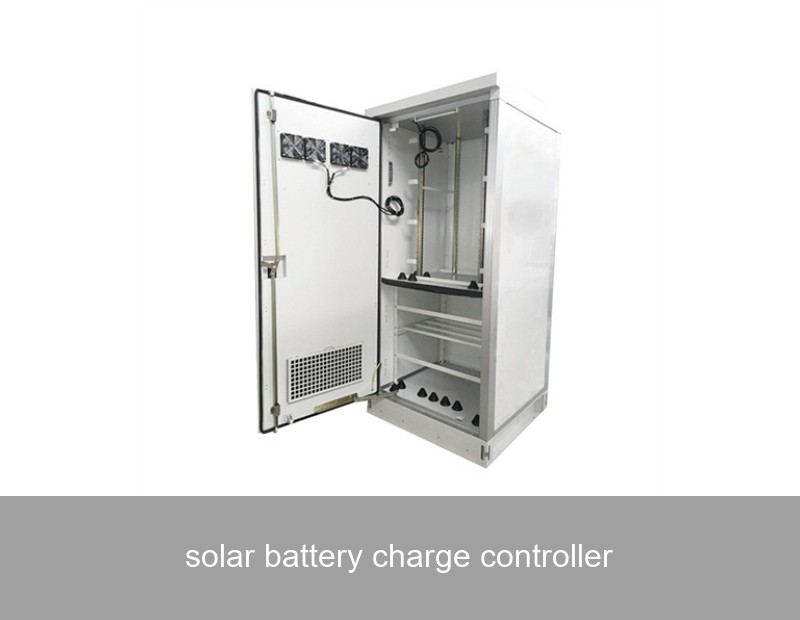
Table of Contents
Have you ever wondered what makes a solar battery system truly efficient? While solar panels and batteries get most of the attention, there's a silent guardian working tirelessly in the background: the solar battery charge controller. This unsung hero is the critical brain that manages the flow of power from your panels to your battery bank, ensuring safety, maximizing efficiency, and extending the life of your investment. Whether you're a homeowner in California looking to cut grid dependence or a business owner in Germany aiming for sustainability, understanding this component is key to unlocking the full potential of your renewable energy system.
What is a Solar Battery Charge Controller?
In simple terms, a solar charge controller is a voltage and current regulator. Its primary job is to prevent your solar batteries from overcharging. Think of it like a smart traffic cop for electricity. During the day, solar panels can produce more voltage than a battery can safely handle. Without a controller, this excess voltage would lead to overheating, excessive gassing, and ultimately, a significantly reduced battery lifespan—or even a dangerous failure.
But modern charge controllers do much more than just prevent overcharging. They manage multi-stage charging (bulk, absorption, float) to properly condition the batteries, monitor system performance, and often provide valuable data on energy harvested and consumed. For anyone serious about solar battery storage, this device is non-negotiable.

Image source: Unsplash. A modern MPPT charge controller is the intelligent hub of a solar-plus-storage system.
MPPT vs. PWM: The Heart of the Matter
When selecting a controller, you'll encounter two main technologies: Pulse Width Modulation (PWM) and Maximum Power Point Tracking (MPPT). The choice between them dramatically impacts your system's efficiency.
| Feature | PWM Controller | MPPT Controller |
|---|---|---|
| Core Function | Acts as a switch between panel and battery; reduces voltage to match battery. | Continuously tracks the panel's optimal voltage/current (MPP) and converts excess voltage into additional current. |
| Typical Efficiency | ~70-80% (can waste significant solar energy) | ~94-99% (harvests much more energy, especially in sub-optimal conditions) |
| Best For | Smaller systems, warm climates, where panel voltage is close to battery voltage. | Larger residential, commercial, and industrial systems, colder climates, or any system where panel voltage is significantly higher than battery voltage. |
| Cost | Lower initial cost. | Higher initial cost, but often delivers a faster ROI due to superior energy harvest. |
The data is clear: for most grid-tied or critical off-grid applications, especially in variable climates like those in Europe and North America, an MPPT controller is the superior choice. According to the U.S. Department of Energy, proper system components like MPPT controllers can increase overall energy harvest by 20-30% compared to simpler technologies.
Sizing and Selecting the Right Controller
Choosing the correct solar battery charge controller involves two key specifications:
- Maximum Input Voltage (Volts): Must be higher than the open-circuit voltage (Voc) of your solar array, especially on the coldest expected day (voltage increases as temperature drops).
- Maximum Output Current (Amps): Must handle the array's maximum current. This is calculated as: (Total Panel Power in Watts / Battery Voltage) * safety factor.
Undersizing can lead to damaged equipment, while oversizing adds unnecessary cost. This is where expert design pays off.
A Real-World Case Study: The German Dairy Farm
Let's look at a concrete example from Bavaria, Germany. A mid-sized dairy farm with high electricity demands for cooling and automation wanted to reduce its grid reliance and energy costs. Their existing 50kW rooftop solar array was sending excess midday energy to the grid at low feed-in tariffs, while they bought expensive power in the early morning and evening.
- They installed a 100kWh lithium-ion battery storage system.
- The system's core included a high-capacity, 3-phase MPPT solar battery charge controller capable of handling the full 50kW array input.
- Results (12-month average):
- Self-consumption of solar power increased from 35% to 82%.
- Grid energy purchases during peak hours were reduced by over 70%.
- The advanced MPPT controller provided an estimated 15% more energy harvest in winter months compared to a standard controller, crucial for shorter days.
- Projected payback period: 6-7 years, considering rising energy prices.
This case, documented in part by the Fraunhofer Institute for Solar Energy Systems, highlights how the right charge control technology is integral to economic and operational success in commercial applications.

Image source: Unsplash. Commercial solar installations, like this farm, rely on robust charge control for maximum ROI.
Beyond Basics: The Future of Charge Control
The role of the solar charge controller is evolving from a standalone protector to an integrated system conductor. Modern units, especially in systems like those from Highjoule, offer:
- Grid Interaction & Peak Shaving: Intelligently deciding when to charge from solar, discharge to the building, or even provide grid services.
- Hybrid Input Management: Some advanced systems can manage input from both solar and other DC sources (like small wind turbines).
- Cloud Connectivity & AI Optimization: Using weather forecasts and consumption patterns to pre-emptively manage battery state of charge.
Highjoule's Integrated Approach to Solar & Storage
At Highjoule, we understand that a solar battery charge controller is not an isolated component, but a vital command center within a larger ecosystem. Our advanced energy storage systems for residential, commercial, and microgrid applications are built with this holistic philosophy.
Our HPS Series for commercial and industrial use features built-in, high-efficiency MPPT controllers that are seamlessly integrated with our lithium-ion battery modules and advanced energy management system (EMS). This eliminates compatibility issues and ensures every possible watt from your solar investment is captured and stored intelligently. For residential clients, our Home Energy Hub incorporates sophisticated charge management within a sleek, user-friendly package, allowing homeowners in the US and Europe to monitor and optimize their energy flow via a simple app.
We move beyond just selling hardware; we provide a complete, intelligent, and sustainable power solution. By integrating top-tier charge control into our systems from the outset, we guarantee performance, safety, and longevity, giving our customers true energy independence and peace of mind.
Ready to Optimize Your Energy Flow?
Is your current solar setup capturing all the energy it could be, or is an inefficient component silently limiting your savings and sustainability goals? What would a 20-30% increase in your solar harvest mean for your home or business budget this year?
 Inquiry
 Online Chat