


Understanding the Renogy Solar Charge Controller: Your Gateway to Efficient Solar Energy
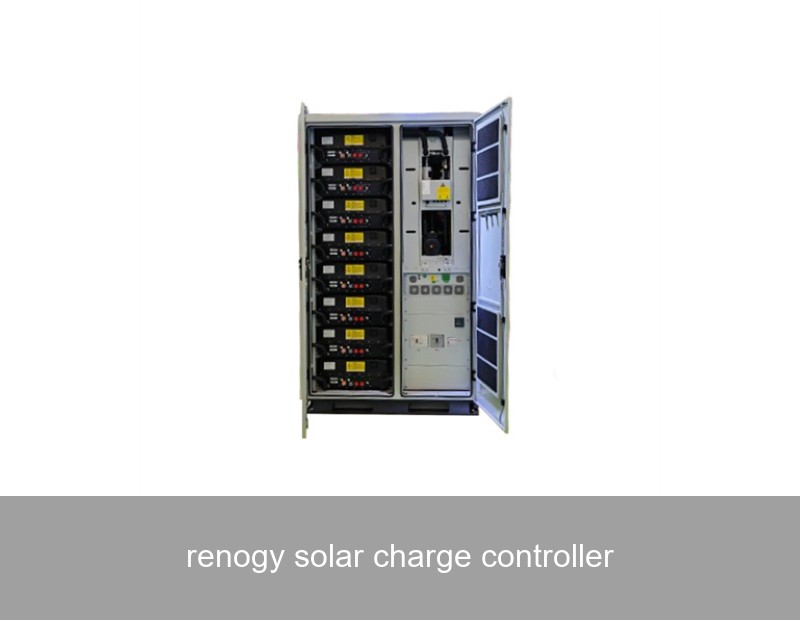
So, you've decided to harness the sun's power. You have your solar panels ready, batteries waiting to be charged, and dreams of energy independence. But there's a crucial, often overlooked component in this setup: the solar charge controller. Think of it as the intelligent brain of your solar power system, especially when using brands like Renogy, a popular choice for DIY and off-grid enthusiasts. Its job? To protect your battery investment by regulating the voltage and current from your solar panels. Without it, you risk overcharging and severely damaging your batteries. This article dives deep into the world of the Renogy solar charge controller, explaining its importance, types, and how it fits into the broader, more complex landscape of modern energy management.
Table of Contents
What is a Renogy Solar Charge Controller?
At its core, a Renogy solar charge controller is a voltage and/or current regulator. It sits between your solar panel array and your battery bank. When sunlight hits the panels, they produce electricity, but this output can be erratic—too high on bright days, too low on cloudy ones. A Renogy controller, like the popular Rover or Adventurer models, takes this raw power and intelligently modulates it to ensure your 12V, 24V, or 48V batteries are charged safely and efficiently through stages: bulk, absorption, and float. For DIY solar projects, RV setups, or small cabins, a Renogy charge controller is a reliable and accessible entry point into solar energy management.

Image Source: Unsplash (Photographer: American Public Power Association)
Why is a Quality Charge Controller Critical? The Data Behind the Protection
Let's talk numbers. A lead-acid battery (common in starter systems) overcharged by just 20% can see its lifespan cut by more than half. In financial terms, a prematurely failed $500 battery bank negates the savings from your solar panels. The phenomenon is clear: uncontrolled solar charging leads to battery degradation. The data from the National Renewable Energy Lab (NREL) consistently shows that proper charge regulation is the single biggest factor in maximizing battery cycle life in off-grid systems. A Renogy solar charge controller provides this essential protection, acting as a necessary guardian for your energy storage.
PWM vs. MPPT: Understanding the Technology in Your Renogy Controller
Renogy offers two main technologies: PWM (Pulse Width Modulation) and MPPT (Maximum Power Point Tracking). Your choice significantly impacts efficiency.
- PWM Controllers: These are the economical workhorses. They essentially connect the panel directly to the battery, then "pulse" the connection on and off to control voltage. They work best when the panel's voltage closely matches the battery bank's voltage. However, they waste potential energy, especially in cooler weather when panel voltage rises.
- MPPT Controllers: This is the advanced technology. An MPPT controller, like the Renogy Rover MPPT, is a smart DC-to-DC converter. It constantly finds the exact voltage and current at which your solar panels produce their maximum power (the "Maximum Power Point"), then converts any excess voltage into additional charging current for the battery. The result? Up to 30% more energy harvest compared to PWM, particularly in suboptimal conditions.
| Feature | PWM Controller | MPPT Controller |
|---|---|---|
| Efficiency | ~70-80% (System Matching Dependent) | ~94-99% |
| Best For | Smaller systems, warm climates, tight budgets | Larger systems, cold climates, cloudy areas, complex arrays |
| Cost | Lower | Higher (but with faster ROI) |
Beyond DIY: When Your Energy Needs Outgrow the Basics
A Renogy solar charge controller is an excellent solution for defined, smaller-scale applications. But what happens when your energy ambitions grow? Perhaps you're a business owner looking to power a warehouse, a community managing a microgrid, or a homeowner with an all-electric household and an EV. The complexity of energy management escalates dramatically. You're no longer just charging a battery; you're orchestrating multi-source energy input (solar, grid, generator), managing large-scale lithium-ion battery storage, handling high-power AC loads, and potentially feeding energy back to the grid.
This is where companies like Highjoule step in. Since 2005, Highjoule has evolved from component-level expertise to providing integrated, intelligent energy storage systems (ESS). While a charge controller manages DC power from panels to batteries, Highjoule's advanced systems, like the Highjoule HPS Series, encompass high-efficiency, bi-directional inverters, sophisticated battery management systems (BMS), and grid-interactive software. This holistic approach doesn't just protect your batteries—it optimizes every kilowatt-hour for self-consumption, peak shaving, and backup power, providing a seamless and scalable power solution for commercial, industrial, and residential applications.
Case Study: Scaling Up from a Renogy Setup to a Highjoule System
Location: A remote homestead in Colorado, USA.
Initial Setup (2019): A 2kW solar array with a Renogy MPPT charge controller and 10kWh of lead-acid batteries for basic cabin power.
The Challenge: The family expanded their home, added a workshop, and purchased an electric vehicle. The Renogy system, while reliable for its original purpose, couldn't scale. They faced frequent generator use, battery strain, and an inability to charge the EV with solar.
The Highjoule Solution (2023): Highjoule designed and deployed a turnkey 15kW solar-integrated storage system featuring:
- A Highjoule HPS-15 hybrid inverter/charger with built-in MPPT solar charging.
- A modular 25kWh Highjoule Lithium-Ion Battery Bank.
- Intelligent energy management software for load shifting and EV charging scheduling.
The Data-Driven Result: Within one year, the homestead achieved 92% energy self-sufficiency, up from 35%. Generator usage dropped by 95%. The system's intelligent controls allow them to charge the EV directly from excess solar, and the robust lithium-ion battery, managed by Highjoule's integrated technology, carries a 10-year warranty for peace of mind. This case illustrates the natural progression from a component-focused solution to an integrated, intelligent energy ecosystem.

Image Source: Unsplash (Photographer: Vivint Solar)
Choosing for Today, Planning for Tomorrow
Starting with a Renogy solar charge controller for your cabin, van, or starter home system is a smart, practical choice. It teaches you the fundamentals of energy flow and protection. However, as you plan for the future—whether it's achieving true energy independence, building resilience against grid outages, or managing commercial energy costs—thinking in terms of a complete system rather than individual components is crucial.
Highjoule's expertise lies in designing these future-proof systems. Our services extend from initial consultation and system design to installation support and remote monitoring. We provide the intelligence that goes beyond charging, enabling you to not only store solar energy but to use it in the most economical and reliable way possible.
Your Energy Journey
Whether you're meticulously programming your Renogy controller for a weekend camping trip or a facility manager evaluating megawatt-scale storage, the principle remains the same: intelligent control is the key to unlocking the full value of renewable energy. What is the one energy goal that your current setup cannot yet achieve, and what would it mean for your home or business to overcome that limitation?
 Inquiry
 Online Chat