


Why a Solar Battery for Generator Backup is the Smart Upgrade for Energy Independence
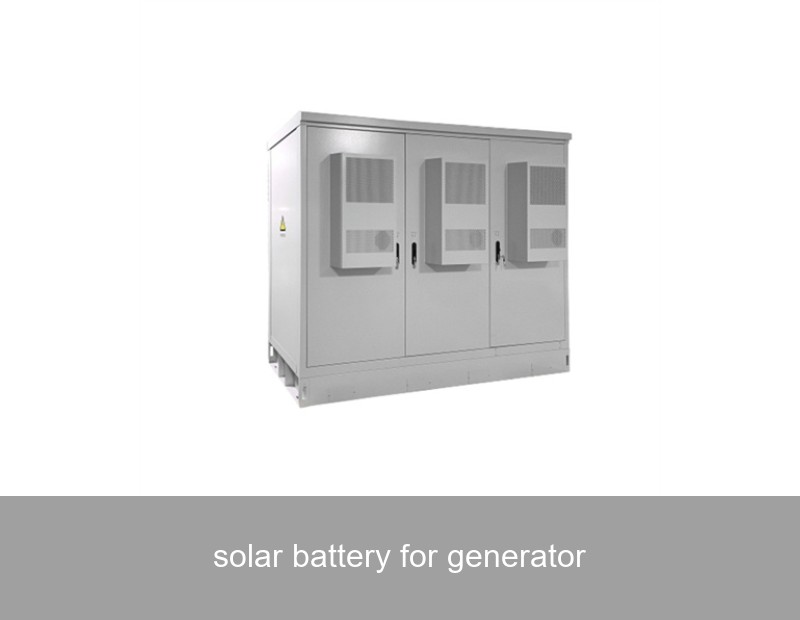
For years, the familiar roar of a diesel or gas generator has been the default answer to power outages. Whether for a home in California facing PSPS events, a farm in rural Germany, or a critical business operation, generators have provided a sense of security. But a significant shift is happening. More homeowners and businesses are asking: "Is there a better, cleaner, and ultimately more intelligent way to ensure backup power?" The answer increasingly lies in integrating a solar battery for generator systems, creating a hybrid solution that maximizes reliability while minimizing cost and environmental impact. This isn't about replacing your generator overnight; it's about enhancing it with smart, renewable technology to create a resilient and sustainable energy ecosystem.
Table of Contents
- The Generator Dilemma: Reliability at a Cost
- The Solar Battery Advantage: Silent, Instant, and Smart
- The Best of Both Worlds: Creating a Hybrid Power Solution
- Real-World Case Study: A German Dairy Farm's Resilience Story
- Highjoule's Intelligent Integration: The Harmony Energy System
- Making the Switch: Is a Solar Battery Backup Right for You?

Image: A modern home energy setup combining solar and battery storage. Credit: Unsplash
The Generator Dilemma: Reliability at a Cost
Let's be honest: traditional generators work. When the grid fails, they start (usually), and they power your essential loads. But this reliability comes with well-documented pain points that many users experience firsthand:
- Operational Noise and Emissions: Generators are loud and produce exhaust fumes, making them a nuisance for neighbors and a pollutant for the environment.
- Fuel Dependency and Cost Volatility: You are tied to the supply chain and price fluctuations of diesel, propane, or gasoline. During extended outages, like those seen after major storms, fuel can become scarce and expensive.
- Maintenance Requirements: Regular exercise runs, oil changes, and part replacements are necessary to ensure they start when needed.
- Non-Instantaneous Response: There's often a brief but critical delay (from a few seconds to minutes) for automatic transfer switches to engage and the generator to stabilize power.
According to a U.S. Department of Energy report, while standby generators provide backup power, their ongoing fuel and maintenance costs can be significant over time. This has led savvy energy consumers to look for a supplemental or primary backup layer.
The Solar Battery Advantage: Silent, Instant, and Smart
Enter the modern solar battery storage system. When paired with existing or new solar panels, it creates a fundamentally different backup power source. Think of it as a silent, automated, and renewable energy reservoir sitting in your home or business.
Here’s how a solar battery system changes the game:
| Feature | Traditional Generator | Solar Battery System |
|---|---|---|
| Response Time | Seconds to minutes | Milliseconds (seamless) |
| Operation | Loud, emits fumes | Silent, zero emissions |
| Fuel Source | Purchased fossil fuels | Stored solar energy (free) |
| Maintenance | High (regular servicing) | Very low (solid-state) |
| Daily Utility | Only during outages | Daily load shifting, reducing bills |
The key insight is that a solar battery isn't just for outages. It works daily, storing excess solar energy produced at noon to power your home in the evening, dramatically increasing your self-consumption of solar power and reducing reliance on the grid. This daily financial benefit helps offset the system's cost, something a generator can never do.
The Best of Both Worlds: Creating a Hybrid Power Solution
The most resilient and cost-effective approach isn't necessarily a binary choice. For many, especially those with critical loads or in areas with frequent, prolonged outages, the optimal solution is a hybrid system integrating a solar battery with an existing generator.
In this intelligent setup, the solar battery acts as the first responder. When the grid fails:
- The battery instantaneously takes over, powering essential circuits without interruption.
- If the outage persists and the battery depletes, the system can then automatically start the generator to both power the home and recharge the battery.
- Once the battery is sufficiently recharged, the generator can shut off, conserving fuel and minimizing runtime. This cycle can repeat as needed.
This synergy delivers unparalleled benefits: you get seamless backup, the generator runs only when absolutely necessary (saving 50-80% on fuel and maintenance during an outage), and you maintain energy independence for days or even weeks. The solar battery becomes the intelligent manager of your backup ecosystem.
Real-World Case Study: A German Dairy Farm's Resilience Story
Consider the practical application for a business where power is non-negotiable. A dairy farm in Lower Saxony, Germany, faced challenges with grid reliability and the high cost of running its 50kVA diesel generator during frequent, albeit short, grid disturbances. Each outage risked spoiling milk and stressing livestock.
Their solution was to install a 40 kWh solar battery system alongside their existing 80 kWp solar array and generator. The system was designed with logic to prioritize battery discharge and only engage the generator for high-power tasks (like milking machines) or prolonged battery depletion.
- Generator Runtime Reduction: Generator usage for backup dropped by 92%, from an average of 45 hours per month to less than 4 hours.
- Fuel Savings: Saved approximately 2,800 liters of diesel annually.
- Increased Solar Self-Consumption: On-site usage of their solar power rose from 35% to over 80%, slashing grid electricity purchases.
- ROI: The combined savings on fuel, grid electricity, and generator maintenance projected a full return on investment in under 7 years.
This case, documented in part by the Fraunhofer Institute for Solar Energy Systems, highlights the tangible economic and operational benefits of the hybrid model for commercial applications.

Image: An industrial-scale battery energy storage system (BESS). Credit: Unsplash
Highjoule's Intelligent Integration: The Harmony Energy System
At Highjoule, we have been at the forefront of this energy evolution since 2005. We understand that every energy profile is unique. Our approach isn't just about selling hardware; it's about designing intelligent, integrated power ecosystems. For customers looking to augment their generator with solar battery technology, our Harmony Energy System is the ideal solution.
The Harmony system features our high-capacity, long-life lithium iron phosphate (LiFePO4) battery cabinets, known for their safety and durability. What truly sets it apart is the Advanced System Controller. This brain of the operation doesn't just monitor solar production, battery state of charge, and home consumption; it can be seamlessly configured to communicate with and control your automatic generator transfer switch (ATS).
With Highjoule's technology, you can set precise parameters: "Only start the generator if the battery falls below 20% charge and the outage has lasted more than 12 hours." Or, "Use the generator to quickly recharge the battery to 80% during a storm warning." This level of control transforms your backup power from a reactive expense into a proactive, optimized asset. Our systems are deployed across Europe and North America, providing resilient power for homes, businesses, and critical microgrids.
Key Highjoule Services for Hybrid System Owners:
- Energy Resilience Audit: We analyze your load profile, outage history, and existing assets (solar, generator) to design the optimally sized battery system.
- Seamless Integration: Our certified technicians ensure your Highjoule battery, existing solar inverter, and generator ATS communicate flawlessly.
- Remote Monitoring & Management: Our platform allows you to track system performance, energy savings, and backup readiness from anywhere in the world.
Making the Switch: Is a Solar Battery Backup Right for You?
Evaluating your need for a solar battery as a generator companion involves a few key questions:
- How frequent and how long are your typical power outages?
- Do you already have, or are you planning to install, solar panels?
- What are the "cannot-lose" loads in your home or business (refrigeration, medical equipment, sump pumps, etc.)?
- What is the current annual cost of generator fuel and maintenance?
The journey towards a smarter, cleaner, and more economical backup power solution is clearer than ever. The technology is proven, the economics are improving, and the value extends far beyond the next storm. It's about taking true control of your energy destiny.
What would the ability to power your critical loads silently and without fuel for the first 24-48 hours of an outage mean for your peace of mind or business continuity? How much could you save if your generator only ran as a last resort, not as the first line of defense?
 Inquiry
 Online Chat