


Your Guide to Choosing the Right Solar Battery Storage Suppliers
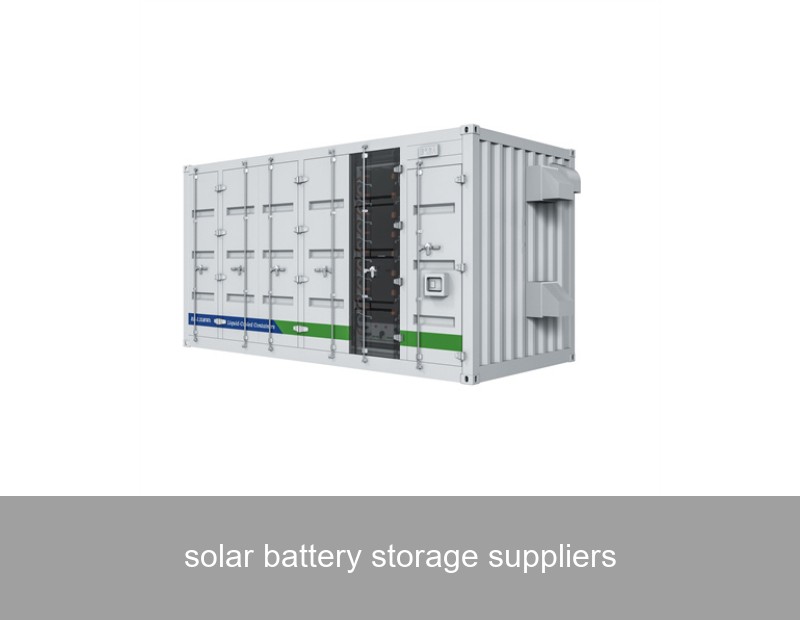
So, you've decided to harness the sun's power with a solar panel system. That's a fantastic step towards energy independence and sustainability. But here's a question many savvy homeowners and business operators are now asking: "What happens when the sun goes down, or on those cloudy days?" This is where solar battery storage comes in, transforming your system from a daylight-only producer into a 24/7 personal power plant. Choosing the right solar battery storage suppliers is the critical next step in this journey. It's not just about buying a box with batteries; it's about selecting a partner for a resilient, efficient, and intelligent energy future. This guide will walk you through the key considerations, backed by data and real-world examples, to help you make an informed decision.
Table of Contents
- The Phenomenon: From Solar Panels to Energy Hubs
- The Data: Why Storage is No Longer Optional
- Key Criteria for Evaluating Solar Battery Storage Suppliers
- A Case Study: Resilience in Action - A California Winery
- The Highjoule Difference: Intelligent Storage Solutions
- Future-Proofing Your Investment
The Phenomenon: From Solar Panels to Energy Hubs
For years, the standard solar setup sent excess daytime electricity back to the grid, often for a credit. This model worked, but it had a fundamental limitation: dependence on the grid. When grid power failed, most solar systems would also shut down for safety reasons—leaving you in the dark even on a sunny day. Furthermore, the value of exported electricity fluctuates, with some regions reducing feed-in tariffs significantly.
The modern energy consumer wants control. This shift in mindset, coupled with technological advancements and changing grid economics, has created a surge in demand for battery storage. Your solar installation is no longer just a set of panels on the roof; it's the heart of a comprehensive energy hub. The right solar battery storage suppliers understand this holistic view, offering solutions that integrate generation, storage, and smart management.
The Data: Why Storage is No Longer Optional
Let's look at the numbers. According to the U.S. Energy Department's Solar Energy Technologies Office, the cost of lithium-ion batteries has fallen by nearly 90% since 2010. This dramatic price drop has made battery storage accessible to a much wider audience.
In Europe, driven by the energy crisis and ambitious decarbonization goals, the energy storage market is booming. A SolarPower Europe report highlights that the EU installed a record 17.2 GWh of battery storage in 2023, a 94% increase from the previous year. For the individual, the financial rationale is clear:
- Maximizing Self-Consumption: Store your cheap solar energy for use in the expensive evening peak hours, slashing your utility bills.
- Backup Power: Provide seamless power during outages, protecting your home, business, or critical operations.
- Grid Services: In some markets, advanced systems can even participate in grid-balancing programs for additional revenue.

Image Source: Unsplash - A modern home energy system integrating solar and storage.
Key Criteria for Evaluating Solar Battery Storage Suppliers
Not all suppliers are created equal. When vetting solar battery storage suppliers, move beyond just the price per kWh. Here’s what truly matters:
1. Technology & Product Quality
Dive into the battery chemistry (Lithium Iron Phosphate, or LFP, is renowned for its safety and long life), cycle life, depth of discharge, and round-trip efficiency. A high-quality battery from a reputable manufacturer is a non-negotiable foundation.
2. System Intelligence & Software
The battery hardware is just one component. The brain—the energy management system (EMS)—is what unlocks true value. Can it learn your consumption patterns? Can it be programmed for different modes (e.g., maximize savings, maximize backup)? Is the user interface intuitive?
3. Integration Capabilities
The best systems are agnostic and flexible. Does the storage solution work seamlessly with a variety of solar inverters, or is it a closed ecosystem? Can it integrate with future technologies like EV chargers or smart home devices?
4. Warranty & Long-Term Support
A strong warranty (often 10+ years) reflects the manufacturer's confidence in their product. But also consider the supplier's track record. Will they be around in 15 years to honor it? What does their technical support and service network look like?
| Criteria | What to Look For | Why It Matters |
|---|---|---|
| Battery Chemistry | Lithium Iron Phosphate (LFP) | Superior safety, longevity, and thermal stability. |
| Warranty | 10+ years, guaranteed throughput or capacity | Protects your investment and ensures performance. |
| Software Features | Time-based control, outage readiness, monitoring | Maximizes savings and provides peace of mind. |
| Scalability | Modular design for easy expansion | Allows you to add capacity as your needs grow. |
A Case Study: Resilience in Action - A California Winery
Let's look at a real-world application. A premium winery in Napa Valley, California, faced a critical challenge: wildfire season and associated Public Safety Power Shutoffs (PSPS) threatened to disrupt not only daily operations but also the precise temperature control essential for wine fermentation and storage. A power outage could ruin an entire vintage, representing a massive financial and reputational loss.
They partnered with a leading supplier to deploy a 500 kWh containerized battery energy storage system (BESS), coupled with their existing solar array. The results were transformative:
- Zero Operational Downtime: During a 48-hour grid outage, the system provided seamless backup power, maintaining critical refrigeration and facility operations.
- Financial Savings: By strategically discharging the battery during peak utility rate periods (4-9 pm), they reduced their monthly demand charges by over 60%.
- Sustainability Leadership: The system increased their on-site renewable consumption to over 85%, significantly shrinking their carbon footprint.
This case underscores that for commercial and industrial entities, the right storage solution is both a risk mitigation tool and a strategic asset. It moves beyond cost-saving to business continuity.
The Highjoule Difference: Intelligent Storage Solutions
At Highjoule, we've been at the forefront of this energy transition since 2005. We understand that the journey doesn't end at the sale of a battery unit. Our philosophy is to provide intelligent, integrated systems that empower our customers. Our flagship product, the Highjoule Hive, embodies this approach.
The Hive is more than just a battery; it's a modular, scalable energy storage platform built with industry-leading LFP cells. What sets it apart is the Highjoule Neuron energy management platform. This AI-driven software continuously analyzes weather forecasts, electricity tariffs, and your unique consumption patterns to autonomously optimize energy flow—storing when it's cheap or sunny, discharging when it's expensive or the grid is down.
Whether for a residential homeowner seeking independence, a commercial business aiming to cut operational costs and ensure resilience, or a complex industrial or microgrid application, Highjoule designs solutions that fit. We work with a network of certified installers across Europe and the U.S. to ensure expert design, installation, and lifelong support. Our goal is to be your long-term partner in energy resilience, not just another one of the many solar battery storage suppliers.

Image Source: Unsplash - A professional monitoring a commercial-scale battery storage installation.
Future-Proofing Your Investment
The energy landscape is evolving rapidly. Vehicle-to-Grid (V2G) technology, virtual power plants (VPPs), and new tariff structures are emerging. When you evaluate suppliers, consider their roadmap. Is their system software-upgradable to participate in these new opportunities? A flexible, intelligent platform like the Highjoule Hive is designed to adapt, ensuring your investment continues to deliver value for decades.
Choosing a solar battery storage system is a significant decision. It requires balancing technical specifications, financial considerations, and trust in a supplier's longevity. By focusing on quality, intelligence, integration, and support, you can select a partner that will deliver not just a product, but true energy freedom.
What's the first question you will ask your potential solar battery storage supplier to test their expertise and long-term commitment to your energy goals?
 Inquiry
 Online Chat