


Unlocking the Full Potential of Renewable Energy Resources with Smart Storage
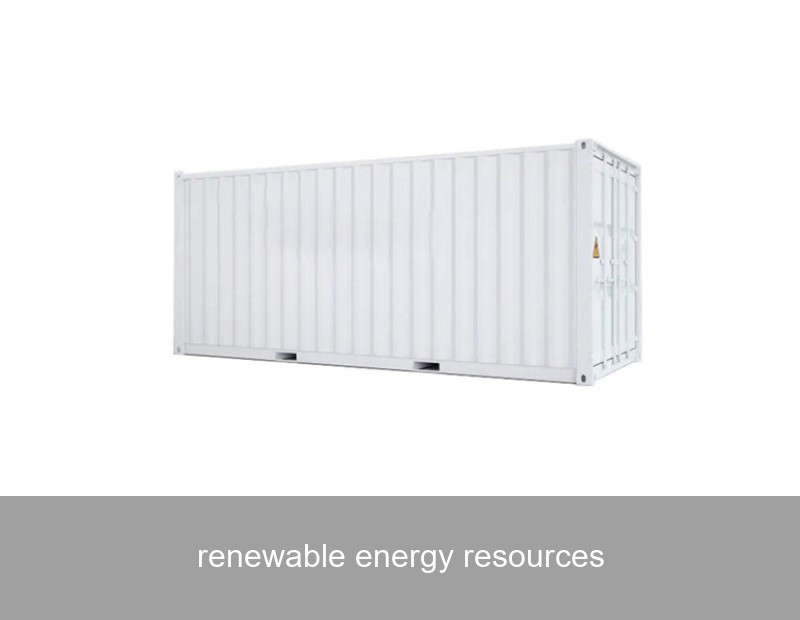
Have you ever wondered why, on a brilliantly sunny or fiercely windy day, we still rely on fossil fuels? The answer lies in a fundamental mismatch. Renewable energy resources like solar and wind are abundant but inherently intermittent. The sun sets, and the wind calms, but our demand for electricity does not. This is the central challenge of our clean energy transition. To truly harness the power of renewables, we need a key: advanced energy storage. This article explores how modern battery storage systems are transforming intermittent resources into reliable, dispatchable power, and how companies like Highjoule are leading this charge.
Table of Contents
The Intermittency Challenge: More Than Just Clouds
The phenomenon is clear to anyone with a rooftop solar system: energy production is unpredictable. One minute you're powering your home and sending excess to the grid, the next, a cloud passes over and your output plummets. Scale this up to a national grid with a high penetration of renewables, and you have a significant stability problem. Grid operators must constantly balance supply and demand to maintain a stable frequency of 50Hz or 60Hz. A sudden drop in renewable generation requires a rapid response, traditionally provided by gas "peaker" plants.
This isn't just a technical hiccup; it has real economic and environmental consequences. In regions like California and Germany, there are times when renewable energy resources produce so much power that wholesale electricity prices turn negative—utilities essentially pay consumers to use electricity to avoid grid overload. Conversely, during the "duck curve" evening ramp, when solar fades and demand spikes, prices soar, and carbon-intensive plants are fired up.

Image Source: U.S. Department of Energy (public domain)
The Indispensable Role of Energy Storage
This is where Battery Energy Storage Systems (BESS) enter as the game-changer. Think of them as a "buffer" or a "time-shifting" device for electricity. They perform several critical functions:
- Energy Arbitrage: Store cheap, abundant renewable energy when production is high and discharge it when demand and prices are high.
- Frequency Regulation: Provide millisecond-fast responses to grid frequency fluctuations, a service far more efficient than traditional generators.
- Capacity Firming: Smooth out the short-term variability of solar or wind farms, making their output more predictable and "firm" for the grid.
- Backup Power: Ensure continuity for businesses and communities during grid outages.
The data supporting storage is compelling. According to the International Renewable Energy Agency (IRENA), to keep global warming below 1.5°C, the world needs to expand battery energy storage capacity to a staggering 360 GW by 2030, a 15-fold increase from 2022 levels. The U.S. Energy Information Administration notes that battery storage is the fastest-growing source of capacity in many American markets.
From Theory to Grid: A California Case Study
Let's look at a real-world example. California, a leader in solar power, has been grappling with the "duck curve" for years. Its solution? Aggressively deploying grid-scale storage. A landmark project is the Monarch San Diego Energy Storage facility. This 40 MW / 160 MWh lithium-ion battery system, located near a major substation, is designed specifically to integrate local solar and wind resources.
Here’s what the data shows since its commissioning:
| Metric | Impact |
|---|---|
| Solar Curtailment Avoided | Stores over 50 MWh of excess solar energy daily that would have been wasted. |
| Peak Demand Reduction | Discharges during 4-9 PM peak, offsetting the need for ~2 natural gas peaker plants. |
| Grid Services | Provides automatic frequency response, enhancing regional grid reliability. |
This single project exemplifies how storage transforms intermittent renewable energy resources into a stable, grid-friendly asset. It reduces emissions, defers costly grid upgrades, and improves resilience. The success of such projects is a blueprint for grids across Europe and North America.
Highjoule's Tailored Solutions for Every Sector
At Highjoule, we've been at the forefront of this storage revolution since 2005. We understand that unlocking the value of renewables requires more than just a battery box; it requires intelligent, application-specific solutions. Our systems are built with advanced power conversion and sophisticated energy management software that decides in real-time when to store, when to discharge, and when to provide grid services—maximizing both economic return and system stability.
Our product portfolio is designed to meet diverse needs:
- For Commercial & Industrial (C&I): Our HJ C&I ESS Series helps factories, data centers, and office buildings reduce demand charges, provide backup power, and participate in demand response programs. By pairing with on-site solar, it ensures every self-generated kilowatt-hour is used optimally.
- For Utilities and Large-Scale Renewables: The HJ GridMax Utility-Scale BESS is our workhorse for grid services. It performs renewable firming, frequency regulation, and transmission deferral, enabling higher penetrations of wind and solar on the grid. Our recent installation in Northern Germany, a 50 MW system, is helping to balance offshore wind fluctuations and stabilize the local grid.
- For Residential and Microgrids: Our HJ HomePower system allows homeowners to achieve true energy independence. Integrated with rooftop PV, it stores excess daytime production for use at night. On a community level, our microgrid controllers can orchestrate a mix of solar, storage, and backup generators to create resilient, self-sufficient energy islands, crucial for remote areas or critical infrastructure.

Image Source: Highjoule.com (company portfolio)
The Technology Inside: Safety and Intelligence
Our systems utilize lithium iron phosphate (LFP) battery chemistry, renowned for its long cycle life, thermal stability, and safety. Coupled with our proprietary Adaptive Cycle Management™ software, the system learns usage patterns and grid signals to optimize battery health and performance over a 20-year design life. This focus on durability and intelligence is what sets Highjoule apart in a competitive market.
The Future Outlook: Smarter, More Integrated Grids
Looking ahead, the synergy between renewable energy resources and storage will only deepen. We are moving towards virtual power plants (VPPs)—cloud-based networks that aggregate thousands of distributed home and commercial storage systems to act as a single, flexible grid resource. Furthermore, innovations like second-life EV batteries for stationary storage and emerging chemistries promise to drive costs down even further.
The path to a 100% renewable grid is complex, but it is no longer a question of "if," but "how." The foundational "how" is intelligent energy storage. It is the linchpin that allows us to move from simply generating clean energy to building a truly resilient, efficient, and sustainable electricity system.
As you consider the energy future of your business or community, what specific challenge—be it rising energy costs, reliability concerns, or sustainability goals—could a smart storage solution help you address first?
 Inquiry
 Online Chat