


Unlocking Energy Independence: The Rise of Solar BESS in South Africa
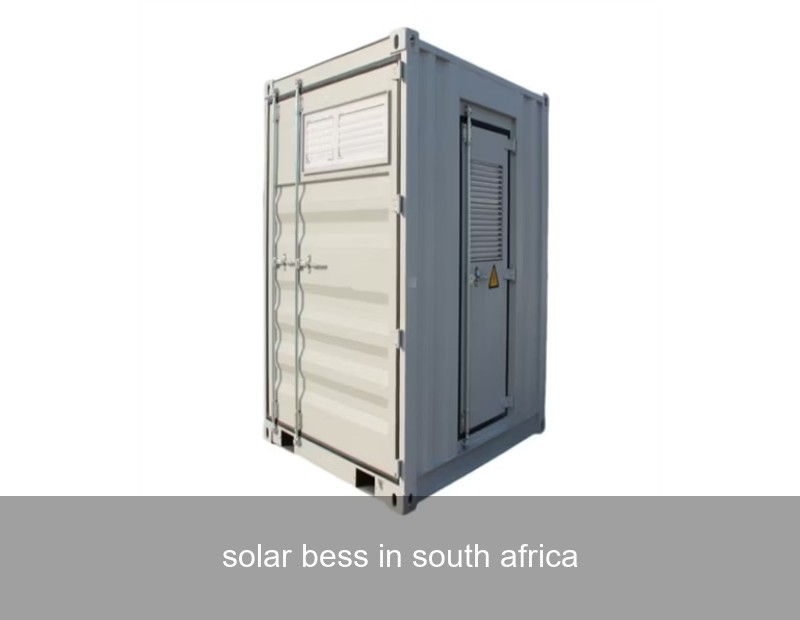
Imagine a world where load-shedding is a distant memory, where businesses operate without interruption, and homes are powered by the sun even after it sets. This isn't a fantasy; it's the reality being built across South Africa today, powered by a critical technology: Solar Battery Energy Storage Systems (Solar BESS). For a nation blessed with abundant sunshine yet plagued by persistent grid instability, the combination of solar PV and advanced battery storage is more than an upgrade—it's a revolution in energy security and economic resilience. Let's explore why South Africa has become a global hotspot for this technology and how it's transforming the energy landscape.
Table of Contents
- The Phenomenon: From Sun-Drenched to Power-Starved
- The Data: Quantifying the Crisis and the Solar BESS Surge
- The Solution: How Modern Solar BESS Works
- Case Study: A South African Hospital's Journey to Energy Resilience
- Highjoule's Role: Intelligent Storage for a Complex Market
- The Future: Grids, Microgrids, and Beyond
The Phenomenon: From Sun-Drenched to Power-Starved
South Africa presents a stark energy paradox. It is one of the sunniest countries on earth, with solar irradiance levels that are the envy of many European nations. Yet, for over a decade, its citizens and businesses have endured rolling blackouts—known locally as load-shedding—due to an aging, unreliable coal-fired power fleet operated by the state utility, Eskom. These scheduled power cuts, sometimes exceeding 10 hours a day, cripple productivity, disrupt daily life, and pose severe risks to healthcare and security. This constant vulnerability has triggered a massive grassroots movement towards self-generation. Initially, solar panels alone were a popular choice. However, homeowners and facility managers quickly realized a critical flaw: when the grid failed at night or on cloudy days, their solar systems shut down too. The missing piece? Battery storage.
The Data: Quantifying the Crisis and the Solar BESS Surge
The numbers tell a compelling story. In 2023 alone, South Africa experienced over 200 days of load-shedding, with energy deficits often surpassing 6,000 MW (source: Eskom Data Portal). This instability has a devastating economic impact, costing the country an estimated R900 million per day in lost GDP. In response, the private sector has surged ahead. The South African Photovoltaic Industry Association (SAPVIA) reports that the installed capacity of rooftop solar PV skyrocketed from 983 MW in March 2022 to over 4,400 MW by September 2023. While exact figures for battery storage are harder to pin down, industry analysts agree that the majority of new commercial and high-end residential solar installations now include a storage component. The market is shifting from "solar for savings" to "solar BESS for security."

Credit: Rooftop solar installations are becoming a common sight across South Africa. (Photo from Unsplash)
The Solution: How Modern Solar BESS Works
A Solar BESS is an integrated system that does more than just store energy. It's an intelligent energy manager. Here's a simple breakdown:
- Energy Capture: Solar panels convert sunlight into direct current (DC) electricity.
- Conversion & Management: An inverter converts DC to usable alternating current (AC) for your property. The system's brain, the energy management system (EMS), decides where the power goes in real-time.
- Intelligent Storage & Discharge: Excess solar energy is stored in a high-performance battery bank (like lithium-ion). When solar production drops or the grid fails, the EMS seamlessly draws power from the batteries, keeping your lights on.
Modern systems offer sophisticated features like time-of-use optimization (charging batteries with cheap grid power or solar to avoid expensive peak tariffs) and backup power prioritization (ensuring critical loads like refrigerators and routers stay on).
Key Components of a Robust Solar BESS
| Component | Role | Consideration for South Africa |
|---|---|---|
| Solar PV Panels | Primary energy generation | High heat tolerance, reliable performance in dusty conditions. |
| Hybrid Inverter | Converts DC to AC, manages grid/battery/solar interaction | Must comply with local grid codes, handle frequent voltage fluctuations. |
| Battery Storage | Stores energy for use when needed | Cycle life (to handle daily charging/discharging), thermal management, safety certifications. |
| Energy Management System (EMS) | The intelligent control center | Must be programmable for complex load-shedding schedules and tariff structures. |
Case Study: A South African Hospital's Journey to Energy Resilience
Consider the real-world example of Midland Medical Centre (a pseudonym for confidentiality) in Gauteng. Facing Stage 4-6 load-shedding, the hospital's diesel generators were becoming prohibitively expensive to run and unreliable for sustained outages. Patient safety and surgical schedules were at constant risk.
In 2023, they deployed a 500 kW solar PV array coupled with a 1 MWh battery storage system. The system was designed with three key modes:
- Solar Self-Consumption: During the day, the facility runs primarily on solar, reducing grid draw.
- Peak Shaving: The BESS discharges during evening peak tariff hours, slashing demand charges.
- Critical Backup: During any grid outage, the system islanded, powering the entire critical load block (operating theaters, ICU, lighting) for over 8 hours without starting a diesel generator.
- Grid electricity costs reduced by 62%.
- Diesel generator runtime and fuel costs reduced by 90%.
- Carbon emissions lowered by an estimated 450 tonnes.
- Most importantly, zero medical procedures were cancelled due to power outages.
This case underscores that for critical infrastructure, a solar BESS isn't just about cost savings; it's about ensuring operational continuity and saving lives.
Highjoule's Role: Intelligent Storage for a Complex Market
Navigating South Africa's unique energy challenges requires more than just off-the-shelf hardware. It demands deep technical expertise and adaptable solutions. This is where Highjoule, as a global leader with nearly two decades of experience, steps in. We understand that a hospital in Johannesburg, a winery in the Western Cape, and a manufacturing plant in Durban have vastly different load profiles and resilience needs.
Our approach is to provide intelligent, integrated storage solutions built around our core HPS (Highjoule PowerStack) battery systems. These modular, liquid-cooled lithium-ion battery cabinets are designed for durability and high cycle life—perfect for the daily charge/discharge demands of load-shedding. They are paired with our advanced Energy Management Platform, which can be configured to respond automatically to Eskom's load-shedding stages, optimize for municipal time-of-use tariffs, and even participate in future grid services.
For South African businesses and large residential estates, Highjoule doesn't just sell a product; we deliver energy certainty. Our services include detailed site assessment, financial modeling to calculate ROI, system design, and ongoing remote monitoring to ensure performance for years to come.

Credit: Advanced, modular battery systems like Highjoule's PowerStack are key to reliable storage. (Photo from Unsplash)
The Future: Grids, Microgrids, and Beyond
The proliferation of solar BESS is doing more than keeping individual lights on. It's laying the foundation for a more resilient and democratic energy future. Communities and industrial parks are beginning to pool their resources to form microgrids—localized grids that can operate independently from the national network. Furthermore, as battery costs continue to fall and virtual power plant (VPP) software evolves, thousands of distributed solar BESS installations could one day provide stabilizing services to the struggling national grid, turning a problem into a collective solution.
The journey in South Africa is a powerful blueprint for other regions facing grid constraints. It proves that when technology meets necessity, innovation thrives. The question for facility managers, homeowners, and city planners is no longer if they should consider energy storage, but how quickly they can implement a solution tailored to their specific needs.
What would the first step look like for your organization? Could a detailed energy audit reveal the precise size and potential return on investment a solar BESS could bring to your operations in South Africa or beyond?
 Inquiry
 Online Chat