


Understanding the Cost of Solar Panels in Barbados: A Smart Investment for Energy Independence
If you're a homeowner or business owner in Barbados, you've likely felt the sting of high electricity bills and wondered about a more sustainable, cost-effective solution. The conversation inevitably turns to solar energy. But the big question on everyone's mind is: what is the real cost of solar panels in Barbados, and is it worth the investment? Beyond the initial price tag, it's about long-term savings, energy security, and contributing to the island's green future. Let's demystify the economics and explore how modern technology makes this transition smoother than ever.
Table of Contents
Breaking Down the Cost: More Than Just Panels
When evaluating the cost of solar panels in Barbados, it's crucial to look at the complete system. A functional, efficient, and safe solar power system comprises several key components, each contributing to the overall investment:
- Solar Photovoltaic (PV) Panels: These are the most visible part, capturing sunlight. Prices vary based on efficiency and technology (monocrystalline, polycrystalline).
- Inverters: The brain of the operation. They convert the direct current (DC) produced by panels into the alternating current (AC) used by your appliances. Their quality dictates system efficiency and longevity.
- Battery Energy Storage System (BESS): This is the game-changer for energy independence. Batteries store excess solar energy generated during the day for use at night or during cloudy periods, drastically reducing reliance on the grid.
- Mounting, Wiring, and Balance of System (BOS): All the hardware and electrical components that securely install and connect the system.
- Installation & Professional Services: The expertise of certified installers is invaluable for optimal performance, safety, and compliance with local utility (Barbados Light & Power - BL&P) regulations.
While a simple grid-tied system without storage has a lower upfront cost, the true value for Barbados—with its abundant sunshine and desire for resilience—lies in systems that include intelligent storage.
The Data: Solar Investment vs. BL&P Tariffs
To understand the value, we must look at the alternative: continuing to purchase 100% of electricity from the grid. As of 2023, Barbados has some of the highest electricity tariffs in the Caribbean, often exceeding US $0.30 per kWh for residential customers and even more for commercial users. These rates have historically been volatile, tied to global fossil fuel prices.
In contrast, the "fuel" for solar is free and abundant. The initial investment in a solar PV system secures a fixed electricity cost for 25+ years, the typical warranty period for premium panels. A simple payback period analysis often shows Barbadian homeowners and businesses recouping their investment in 5-8 years, depending on system size and consumption. After that, the energy produced is essentially free, leading to decades of significant savings. According to the International Renewable Energy Agency (IRENA), the global levelized cost of electricity from solar PV has fallen by over 80% in the past decade, making it highly competitive.
A Barbados Case Study: From High Bills to Net Zero
Let's make this real with a local example. A medium-sized guesthouse in St. James was facing monthly electricity bills averaging BBD $3,800 (approx. US $1,900), with peaks during the high tourist season straining their operational budget.
The Challenge: Reduce operational costs, achieve energy resilience during occasional grid fluctuations, and enhance their sustainability marketing appeal.
The Solution: A turnkey 25kW solar PV system coupled with a 40kWh integrated battery storage system. The system was designed to cover nearly 100% of the property's daytime load (powered directly by the sun) and a significant portion of the evening load (powered by the batteries).
The Results (18 Months Post-Installation):
| Metric | Before Installation | After Installation |
|---|---|---|
| Average Monthly Bill | BBD $3,800 | BBD $450* |
| Annual Savings | - | BBD $40,200+ |
| Estimated Payback Period | - | 6.2 years |
| Carbon Footprint Reduction | - | ~22 tonnes CO2/year |
*The remaining bill covers periods of extended cloudy weather or exceptional demand, ensuring uninterrupted guest comfort.
This case highlights that the cost of solar panels in Barbados is better viewed as a capital investment with a clear, quantifiable return, not just an expense.

Credit: Photo by American Public Power Association on Unsplash - A representation of a commercial solar installation.
The Key to True Savings: It's Not Just About Panels
Many focus solely on the per-watt price of panels. However, the inverter and battery technology are what unlock reliability and maximum self-consumption. An advanced, all-in-one energy storage system manages when to use solar power, when to charge the batteries, and when to draw from the grid seamlessly. This intelligent management is what squeezes every cent of value from your investment.
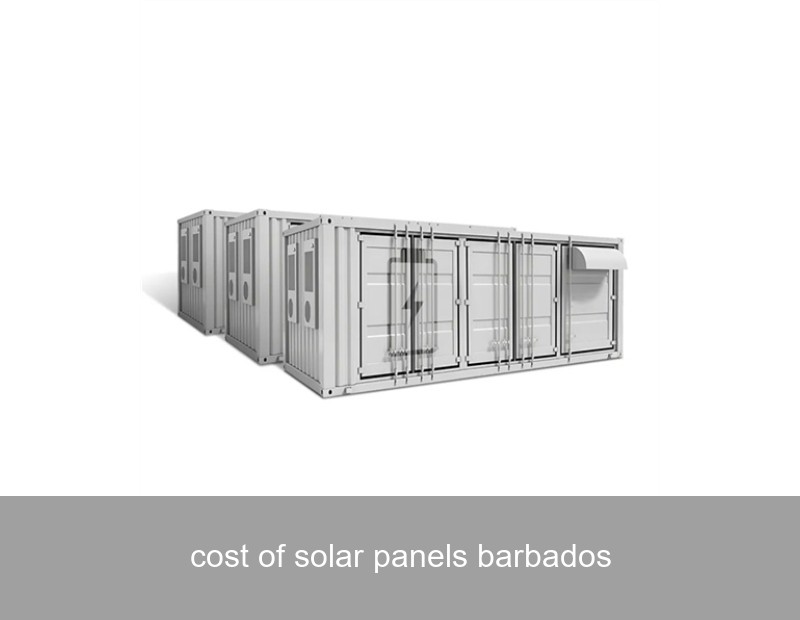
This is where companies with deep system integration expertise add immense value. Highjoule, for instance, doesn't just supply components; we provide intelligent, integrated storage solutions. Our Highjoule HPS Series for commercial and industrial applications is a modular, containerized battery storage system that can be seamlessly paired with new or existing solar arrays. For residential and smaller commercial sites, our VoltStack Home+ system offers a sleek, user-friendly unit combining inverter, battery, and intelligent energy management in one. These systems are designed to maximize the utility of every kilowatt-hour your solar panels produce, directly addressing the high cost of solar panels in Barbados by ensuring none of that precious energy goes to waste.
How Highjoule's Expertise Elevates Barbados Solar Projects
Since 2005, Highjoule has been at the forefront of advanced battery energy storage systems (BESS) globally. Our experience across Europe, North America, and now the Caribbean gives us unique insight into the specific needs of island grids like Barbados's. We understand the importance of grid compliance, cyclone-resilient design, and software that can adapt to changing utility policies.
For Barbadian partners and customers, Highjoule offers:
- Technology Agnostic Design: We integrate with high-quality solar panels of your choice, ensuring the best overall system fit.
- Advanced Energy Management Software (EMS): Our AI-driven platform forecasts energy production and consumption, optimizing battery cycles to deliver the highest possible return on investment.
- Professional Services & Support: From initial feasibility studies and system design to commissioning and remote monitoring, we support local installers to ensure project success and longevity.
By focusing on the entire system's lifecycle performance, we help de-risk the investment in solar and storage, making the long-term economics even more compelling. You can learn more about grid integration challenges and solutions from resources like the National Renewable Energy Laboratory (NREL).
Looking Ahead: The Future of Solar in Barbados
With the Barbados government's ambitious target of achieving 100% renewable energy and carbon neutrality by 2030, the landscape is supportive. While incentives are always evolving, the fundamental driver remains: locking in low, predictable energy costs in the face of uncertain global fossil fuel markets.

Credit: Photo by Andreas Gücklhorn on Unsplash - Inside a modern battery energy storage system.
The next generation of solar + storage projects will likely involve microgrids for communities or business parks, further enhancing resilience. Companies like Highjoule are already deploying these solutions globally, where our systems not only provide backup power but also enable energy sharing and more stable local grids.
So, what's the next step for you?
The cost of solar panels in Barbados is a starting point for a more profound conversation about energy independence and financial prudence. The most insightful question to ask your solar provider isn't just "how much per watt?" but rather, "How will you design a system to maximize my energy autonomy and savings over the next 25 years, and what intelligent storage solution will make that possible?"
 Inquiry
 Online Chat