


The Strategic Guide to Solar BESS Installations: Maximizing Your Renewable Investment
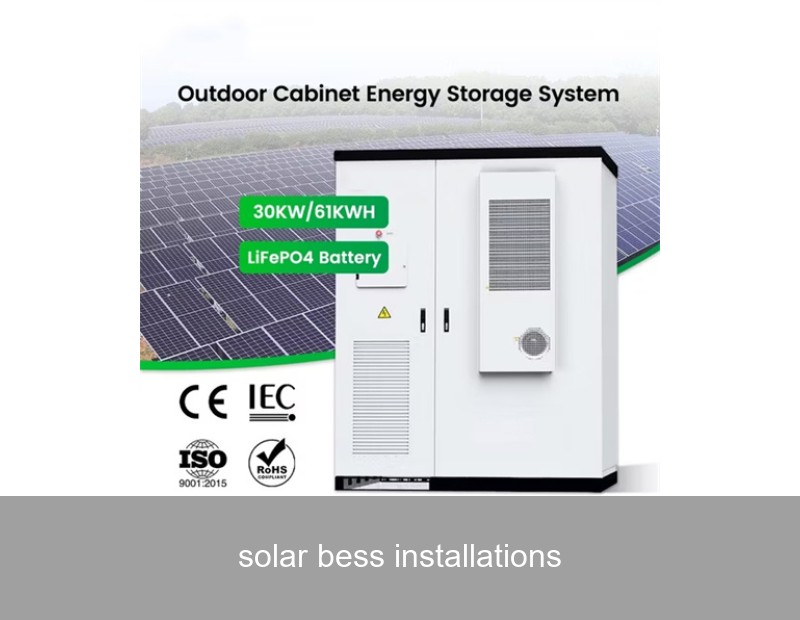
Have you ever looked at your solar panels on a brilliantly sunny day and wondered, "Is all this fantastic energy going to waste when I'm not home to use it?" You're not alone. This common experience highlights a pivotal challenge in our clean energy transition: the mismatch between solar energy production and consumption. The solution is increasingly becoming a standard part of a modern solar setup: the solar BESS installation—a Battery Energy Storage System that captures surplus solar power for use anytime. For businesses and homeowners across Europe and the US, integrating a BESS is no longer just an add-on; it's the key to unlocking true energy independence, resilience, and financial savings. Let's explore how a strategic approach to solar BESS installations can transform your relationship with energy.
Table of Contents
The Phenomenon: Solar's Intermittency and the Grid Pressure Cooker
Solar power is wonderfully predictable in its daily cycle but notoriously unpredictable for grid operators managing real-time supply and demand. In regions like California and Southern Europe, we now see the "duck curve" phenomenon—a deep midday dip in net electricity demand as solar floods the grid, followed by a steep evening ramp-up as the sun sets and people return home. This drastic swing strains traditional power plants and can lead to grid instability, and in some cases, utilities having to curtail (waste) solar energy. The phenomenon creates a clear problem: your solar panels are most productive when your energy consumption might be at its lowest. Without storage, a significant portion of that clean, self-generated power is exported to the grid, often at a low feed-in tariff, only for you to buy back expensive power hours later.

Image Source: U.S. Department of Energy (Public Domain)
The Data: The Compelling Economics Behind Solar BESS Installations
The business case for adding storage to solar has never been stronger. Let's look at some key drivers:
- Falling Costs: The cost of lithium-ion battery packs has plummeted by over 90% since 2010, making storage a viable investment for a wider audience. BloombergNEF reports continued price declines, albeit at a slower pace.
- Rising Electricity Prices: Volatile fossil fuel markets and infrastructure upgrades are pushing retail electricity rates higher across the US and Europe. Locking in your own stored solar power provides a predictable cost hedge.
- Changing Incentives: Net metering policies, which credit solar owners for grid exports, are being phased out or reduced in many areas (e.g., California's NEM 3.0). New policies incentivize solar BESS installations by offering rewards for dispatching stored energy during peak grid stress periods.
- Resilience Demand: With increasing frequency of extreme weather events causing power outages, the value of having backup power has surged. A survey by Solar Power World indicates over 40% of new solar customers now inquire about battery storage.
| Driver | Impact on Solar ROI | With BESS Addition |
|---|---|---|
| Low Solar Export Rates | Low value for excess energy | High self-consumption, less export |
| High Peak-Time Rates | Pay high fees in evening | Use stored solar, avoid peak charges |
| Grid Outages | Production stops, no power | Seamless backup, continuous operation |
Case Study: Müller Bakery, Germany – Baking Resilience with Solar BESS
Let's examine a real-world application. Müller Bakery, a mid-sized family business in Bavaria, Germany, installed a 120 kWp solar array in 2018. While it reduced daytime energy costs, their ovens and refrigeration operated heavily in the early mornings and evenings, relying on expensive grid power. In 2022, they partnered with a local integrator to deploy a solar BESS installation featuring a Highjoule HJ-Commercial 100 system.
- System Specs: 120 kWp Solar PV + Highjoule HJ-Commercial 100 (105 kWh usable capacity, 50 kW continuous power).
- Strategy: The system is programmed to charge fully from midday solar surplus. It then discharges during the high-price evening period (6-10 PM) to power ovens for the next day's prep and to offset refrigeration loads. It also provides critical backup to cold storage.
- Results (12-month period):
- Self-consumption of solar increased from 35% to 82%.
- Grid energy costs reduced by an additional 68% post-storage.
- ROI Timeline: Projected payback period improved from 9 years (solar only) to 6.5 years (solar + BESS), thanks to Germany's peak-shaving opportunities and a KfW storage grant.
"The storage system turns our solar panels into a 24-hour power plant," said Klaus Müller, owner. "We're not just saving money; we're ensuring our dough never stops rising because of a blackout."
Planning Your Solar BESS Installation: A Logical Step-by-Step Framework
Jumping into a solar BESS installation requires careful planning. Here’s a logical framework to follow:
Step 1: Analyze Your Energy Profile
You must understand your "load profile." When do you use energy? Look at your utility bills for peak demand charges (crucial for businesses) and time-of-use rates. A high evening load with daytime solar production is a classic sign you need storage.
Step 2: Define Your Primary Goal
Is your main driver:
- Financial ROI (maximizing self-consumption, demand charge reduction)?
- Resilience (whole-home/business backup during outages)?
- Grid Services (participating in utility virtual power plant programs)?
Step 3: Sizing the System Correctly
This is critical. An undersized battery won't meet your needs; an oversized one hurts ROI. Key metrics are usable energy capacity (kWh)—how much energy it can hold—and power rating (kW)—how much power it can deliver at once. Running a large air conditioner requires high power; backing up essential lights and outlets requires less power but may need longer duration (more capacity).

Image Source: National Renewable Energy Laboratory (NREL), Public Domain
Step 4: Technology and Partner Selection
Choose battery chemistry (Li-ion phosphate, or LFP, is now the standard for safety and longevity), inverter compatibility (AC-coupled vs. DC-coupled), and most importantly, a reputable provider. The system's intelligence—its energy management software—is what turns a simple battery into a smart financial and resilience tool.
Intelligent Energy Storage: How Highjoule Powers Smarter Solar BESS Installations
At Highjoule, with nearly two decades of experience, we've moved beyond simply providing hardware. We deliver integrated, intelligent energy solutions. For a successful solar BESS installation, the seamless dialogue between solar panels, batteries, inverters, and the grid is paramount. Our systems are engineered for this.
Our HJ-Residential Series offers scalable LFP battery solutions from 10 to 30 kWh, designed for seamless integration with existing or new solar arrays. Their compact, modular design allows homeowners to start with what they need and expand later. The intuitive Highjoule Energy Hub app lets users monitor production, consumption, and storage in real-time and set preferences for backup or savings.
For commercial and industrial clients, our HJ-Commercial Modular Rack Systems (from 50 kWh to multi-MWh scale) are the workhorses. They feature advanced thermal management and built-in safety protocols. Coupled with our GridSync IQ™ software platform, these systems can autonomously perform peak shaving, participate in demand response programs, and create microgrids for critical facilities. The software can forecast weather and load patterns to optimize charge/discharge cycles, squeezing maximum value from every kilowatt-hour.
Whether for a family home in Texas seeking outage protection or a manufacturing plant in Italy aiming to cap its demand charges, Highjoule provides the technological backbone for a future-proof solar BESS installation.
The Future: Beyond the Single Installation
The true potential of solar BESS installations is realized when they are aggregated. Imagine thousands of Highjoule systems across a city, forming a "virtual power plant" (VPP). During a heatwave, the utility could call upon these distributed batteries to discharge simultaneously, stabilizing the grid and preventing brownouts, while compensating the owners. This turns individual assets into a community-wide resource. The U.S. Department of Energy is actively promoting VPPs as a key grid reliability tool, and similar initiatives are underway in the EU.
Ready to Transform Your Solar Investment?
Your solar panels are a great first step. But are you truly maximizing their potential, or are you still at the mercy of the grid's price swings and vulnerabilities? The logical next step is clear. What would uninterrupted power during an outage or dramatically lower monthly energy bills mean for you or your business? The conversation around energy is shifting from mere generation to intelligent management. Where will you position yourself in this new energy landscape?
 Inquiry
 Online Chat