


Understanding Solar Cell Price in the Philippines: A Guide to Smart Investment
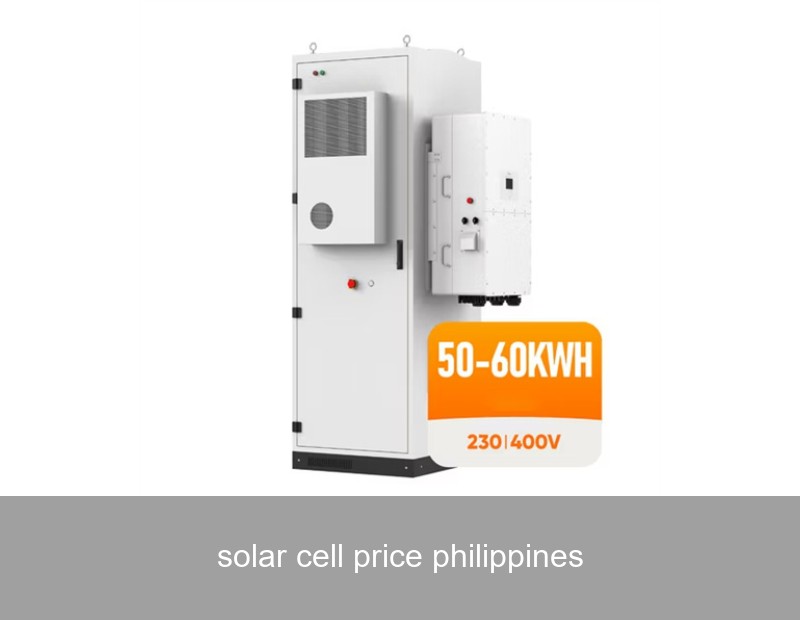
If you're looking into solar power in the Philippines, the first thing you'll search is likely "solar cell price Philippines." You'll find a dizzying array of quotes, from surprisingly low to eye-wateringly high. But here's the crucial insight: focusing solely on the per-panel cost is like buying a car based only on the tire price. The true value—and your long-term savings—lies in the complete system's performance, durability, and intelligence. This article will demystify the factors behind solar pricing and guide you toward a solution that maximizes your return under the Philippine sun.
Table of Contents
- The Price Paradox: Low Initial Cost vs. Long-Term Value
- Key Factors Influencing Solar Cell Prices in the Philippine Market
- Looking Beyond the Panel: The System is the Solution
- A Real-World Case: Commercial Solar-Storage in Cebu
- The Highjoule Approach: Intelligent Energy Resilience
- How to Future-Proof Your Solar Investment
The Price Paradox: Low Initial Cost vs. Long-Term Value
The Philippine energy landscape is unique. With some of the highest electricity rates in Southeast Asia and a grid susceptible to outages, the drive for solar is economic and practical. A common phenomenon we see is "sticker shock" followed by a search for the lowest possible solar cell price Philippines offers. This can lead to compromises on component quality, system design, and after-sales service.
Consider this data: A premium, high-efficiency panel may produce 20% more energy over its lifetime in the same roof space compared to a budget panel. In a country where roof real estate is often limited, this efficiency directly translates to higher savings. The levelized cost of energy (LCOE), which spreads total system cost over its energy production, is a far better metric than upfront panel price alone.
Key Factors Influencing Solar Cell Prices in the Philippine Market
Why does the quoted price vary so much? Let's break it down:
- Panel Technology & Efficiency: Monocrystalline panels (higher efficiency, better performance in heat) typically command a higher price than polycrystalline. Newer technologies like N-type or heterojunction cells offer even better performance but at a premium.
- System Scale & Complexity: A simple residential on-grid system has a different cost structure than a large commercial or industrial hybrid system with battery storage.
- Balance of System (BOS): This includes inverters, mounting structures, cables, and monitoring systems. The inverter, in particular, is the brain of your system. A cheap inverter can cripple the performance of even the best panels.
- Installation & Soft Costs: Reputable installers with certified engineers, proper permitting, and grid compliance ensure a safe, reliable system. This expertise is part of the value.
- Import Duties & Logistics: As an archipelago, logistics to different islands can affect final project costs.
| Component | Budget-Option Impact | Quality-Option Impact |
|---|---|---|
| Solar Panels | Lower efficiency, faster degradation, shorter warranty | Higher energy yield, longer lifespan, 25+ year performance warranty |
| Inverter | Lower conversion efficiency, single point of failure, basic monitoring | High efficiency, modular or hybrid design, advanced grid-management & remote monitoring |
| Installation | Potential for roof damage, suboptimal angle, voided warranties | Engineered design, certified installation, full warranty preservation |
Looking Beyond the Panel: The System is the Solution
For true energy independence in the Philippines, solar panels are just the beginning. The real magic happens when they are integrated with advanced battery storage and smart energy management. This is where companies like Highjoule redefine the value proposition. We don't just sell panels; we provide integrated Battery Energy Storage Systems (BESS) that turn sunlight into a reliable 24/7 power source.
Think about it: without storage, your solar system shuts off during a grid outage (for safety reasons), and any excess energy you don't use instantly is exported to the grid at a lower rate. With a Highjoule system, that excess energy charges your battery. When the sun sets or the grid fails, your battery powers your home or business seamlessly. This transforms your solar array from a cost-reduction tool into a resilience asset.

Our HPS系列 (Highjoule PowerStack) for commercial/industrial applications and HRS系列 (Highjoule Residential Solution) are built with lithium iron phosphate (LFP) battery chemistry, known for its safety, longevity, and excellent performance in warm climates like the Philippines. Coupled with our AI-driven energy management platform, these systems learn your consumption patterns, optimize charging/discharging cycles, and ensure you get the maximum financial return on every peso invested.
A Real-World Case: Commercial Solar-Storage in Cebu
Let's move from theory to practice. A medium-sized seafood processing plant in Cebu was facing monthly electricity bills exceeding ₱500,000 and frequent voltage fluctuations that damaged sensitive freezing equipment. Their goal was to reduce costs and ensure production continuity.
The Challenge: A low-cost, panels-only quote would have addressed only 30% of their daytime load and done nothing for night shifts or outages.
The Highjoule Solution: We designed and installed a 250 kW solar canopy system integrated with a 500 kWh Highjoule PowerStack (HPS) BESS. The system was configured for peak shaving (reducing draw from the grid during expensive peak hours) and backup power.
The Data-Driven Outcome: Within the first year:
- Overall energy costs reduced by 68%.
- The system provided full backup for critical freezing lines during 12 grid outages, preventing an estimated ₱2M in product spoilage.
- Peak demand charges from the utility were slashed by over 40%.
The client's initial question about solar cell price Philippines evolved into a discussion about total cost of ownership and risk mitigation. The integrated storage solution delivered a payback period of under 5 years, with decades of operation ahead. The International Energy Agency highlights the critical role of storage in unlocking solar's full potential in island grids.
The Highjoule Approach: Intelligent Energy Resilience
Founded in 2005, Highjoule brings nearly two decades of global expertise to the Philippine market. We understand that your energy system must be an asset, not a liability. Our philosophy is centered on three pillars:
- Intelligence: Our systems are software-defined, allowing for remote updates, granular monitoring, and participation in future energy programs (like virtual power plants). Efficiency: We optimize every link in the chain, from panel orientation to inverter conversion rates and battery round-trip efficiency, ensuring minimal energy waste.
- Sustainability: We design for the long haul. Using durable, repurposable components and LFP chemistry, we minimize environmental impact over the system's entire lifecycle.

For the Philippine context, this means our products are tested and specified for high-temperature, high-humidity operation. We partner with local engineering firms to provide lifetime support, ensuring your investment is protected. As IRENA's analysis suggests, the future of solar is in smart, integrated systems, not just commodity panels.
How to Future-Proof Your Solar Investment
So, how should you proceed? When evaluating quotes for a solar system in the Philippines, shift the conversation from "solar cell price Philippines" to "total system performance and value." Ask these questions:
- Does the design include provisions for adding storage in the future, or is it a closed system?
- What is the guaranteed annual energy production of the system, not just the panel wattage?
- What battery chemistry is proposed, and what is its cycle life warranty under Philippine climate conditions?
- Can the system provide backup power during an outage, and if so, to which critical loads?
By focusing on these aspects, you invest in a solution that not only lowers your bill today but also protects your home or business from rising energy costs and unreliable grid supply for decades. The most expensive system is often the one that fails to meet your long-term needs.

Given the rapid evolution of energy technology and policy, what specific energy challenge—be it unpredictable bills, grid instability, or a sustainability goal—is driving your search for solar power today, and how can a truly intelligent system solve it for tomorrow?
 Inquiry
 Online Chat