


Solar District Cooling: A Sustainable Revolution and How Companies Like Solar District Cooling Group Berhad Lead the Way
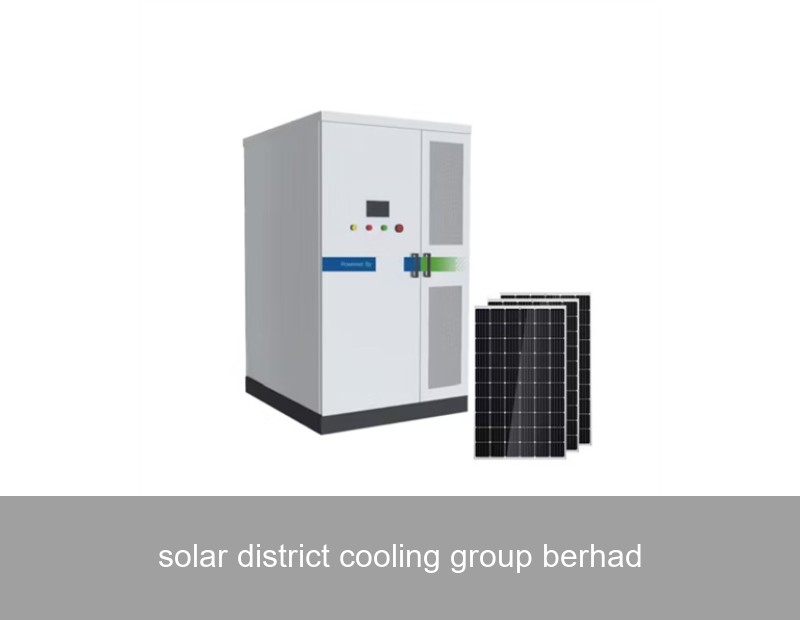
Imagine a city on a scorching summer day. Buildings are humming, air conditioners are working overtime, and the electricity grid is straining under peak demand. Now, imagine a system that harnesses the sun's abundant energy—the very source of the heat—to power the cooling that provides relief. This isn't science fiction; it's the innovative reality of solar district cooling, a field where pioneering entities like Solar District Cooling Group Berhad are making significant strides. This technology represents a powerful synergy between renewable energy and intelligent thermal management, offering a sustainable path to combat rising temperatures and energy costs. For forward-thinking communities and businesses, integrating such solutions with advanced electrical energy storage systems is the key to unlocking true energy independence and resilience.
Table of Contents
What is Solar District Cooling (SDC)?
At its core, Solar District Cooling is a large-scale, centralized cooling system that uses solar thermal energy as its primary power source. Unlike traditional electric chillers, which consume vast amounts of grid electricity, an SDC system typically uses solar thermal collectors to heat a fluid. This heat is then used to drive absorption or adsorption chillers, which produce chilled water. This chilled water is then pumped through an insulated network of pipes—a district cooling network—to multiple buildings, providing air conditioning and process cooling.
The advantages are compelling:
- Sustainability: Drastically reduces reliance on fossil-fuel-generated electricity.
- Efficiency: Centralized production is often more efficient than hundreds of individual AC units.
- Cost Stability: Mitigates exposure to volatile electricity prices, especially during peak hours.
- Reduced Peak Load: Alleviates the greatest strain on the electrical grid, which occurs on hot, sunny days.

Image Source: Unsplash - A field of solar thermal collectors, the engine for large-scale solar cooling.
The Challenge: Peak Demand and Grid Strain
Let's talk about the "why." The phenomenon is universal: as temperatures rise, so does the demand for cooling. In regions like the Middle East, Southern Europe, and the Sun Belt in the USA, this creates a dramatic peak in electricity consumption. The U.S. Energy Information Administration (EIA) notes that air conditioning can account for over 20% of annual electricity use in an average American home, with peaks much higher. This peak demand often forces utilities to activate less efficient, more polluting "peaker plants," driving up costs and carbon emissions.
The data is clear: our current cooling paradigm is unsustainable. It creates a vicious cycle where heat increases fossil fuel consumption, which exacerbates climate change, leading to more heat. Breaking this cycle requires a fundamental shift in how we generate cooling energy.
The Solution: Solar Thermal and Smart Storage
The beauty of SDC is its elegant alignment. Solar irradiance is highest exactly when the demand for cooling is greatest. However, a key challenge remains: the sun doesn't shine 24 hours a day, but cooling is often needed well into the evening. This is where the solution evolves from a simple solar thermal plant to an integrated smart energy system. The most effective SDC plants incorporate thermal energy storage (TES), such as large chilled water or ice storage tanks, to shift cooling production to sunny hours for use later.
But there's another layer: the entire facility—pumps, control systems, auxiliary equipment—requires reliable, high-quality electrical power. This is where the marriage of solar thermal and advanced battery energy storage systems (BESS) becomes a game-changer. A BESS can optimize the plant's own electrical consumption, store excess solar PV energy (if paired with photovoltaic panels), and ensure seamless, grid-independent operation.
A Real-World Case Study: The Middle East's Pioneering Plant
Consider the groundbreaking project at the King Abdullah University of Science and Technology (KAUST) in Saudi Arabia. The university's district cooling plant is integrated with one of the world's largest solar thermal cooling systems. According to project data, the solar thermal system provides an estimated 10-15 MW of thermal energy for cooling, significantly offsetting the campus's massive cooling load, which can exceed 70 MW at peak. The system includes over 20,000 square meters of solar collectors and substantial thermal storage capacity.
This case is a powerful testament for companies like Solar District Cooling Group Berhad, demonstrating the technical and commercial viability of such systems in high-demand environments. It proves that solar district cooling is not a niche concept but a scalable, real-world solution for urban centers, industrial parks, and large campuses worldwide.

Image Source: Unsplash - A modern, clean district energy plant facility.
The Critical Role of Battery Storage: Highjoule's Expertise
This is where Highjoule's mission aligns perfectly with the vision of solar district cooling pioneers. A solar thermal cooling plant is itself a critical infrastructure asset. To ensure its reliability, efficiency, and ability to provide grid services, a sophisticated electrical backbone is essential. Highjoule's advanced battery energy storage systems are designed to be that backbone.
For a large-scale SDC plant, integrating a Highjoule BESS offers transformative benefits:
- Energy Arbitrage & Cost Reduction: Store cheap grid or on-site solar PV electricity during off-peak hours to power the plant's systems during expensive peak periods.
- Enhanced Resilience: Provide backup power for critical pumps and controls, ensuring cooling supply continuity even during grid outages—a vital feature for data centers or healthcare facilities on the network.
- Grid Support & Stability: The BESS can provide frequency regulation and smooth out the intermittent power from any coupled solar PV arrays, making the entire facility a more grid-friendly asset. The U.S. Department of Energy highlights the value of BESS for grid reliability and modernization.
- Optimized Self-Consumption: Maximize the use of any on-site renewable generation, moving the plant closer to net-zero operational emissions.
Highjoule's H-Series commercial and industrial storage systems, known for their high cycle life, safety, and intelligent energy management software, are ideally suited to support these demanding applications. Our solutions help turn a solar district cooling plant from a consumer of grid power into a smart, flexible node in the energy ecosystem.
Integrating the Pieces: A System View
| System Component | Primary Function | Highjoule's Value Addition |
|---|---|---|
| Solar Thermal Field | Converts sunlight to heat to drive chillers | BESS ensures reliable power for tracking systems, pumps, and controls. |
| Absorption Chiller | Uses heat to produce chilled water | Provides stable auxiliary power, improving overall system efficiency and uptime. |
| Thermal Storage Tank | Stores chilled water for later use | BESS optimizes the charging cycle of pumps and compressors based on electricity prices. |
| Distribution Network | Pumps chilled water to buildings | Offers backup power for critical distribution pumps, ensuring service continuity. |
The Future Outlook for District Cooling
The International Energy Agency (IEA) recognizes efficient cooling as a critical pillar of the energy transition. As urban populations grow and temperatures rise, the demand for district cooling is projected to expand significantly. The next generation of these systems will not only be solar-powered but will also be fully digitized and integrated with multi-form storage solutions. As a global leader in advanced energy storage, Highjoule is committed to partnering with innovators like Solar District Cooling Group Berhad, engineering firms, and utilities to build these resilient, sustainable thermal networks. Research from institutions like the National Renewable Energy Laboratory (NREL) continues to underscore the potential of combining thermal and electrical storage for decarbonization.

Image Source: Unsplash - An engineer overseeing modern, integrated energy systems.
The journey towards sustainable cooling is a complex but solvable engineering challenge. It requires a shift from thinking in silos—power generation, cooling, building management—to thinking in integrated systems. So, as you consider the future of your community, industrial park, or large-scale development, we leave you with this question: How will you integrate smart energy storage to unlock the full potential of your renewable thermal or cooling projects, ensuring they are not just sustainable, but also resilient and economically optimal?
 Inquiry
 Online Chat