


Solar E Storage How Much? Unpacking the Real Cost of Energy Freedom
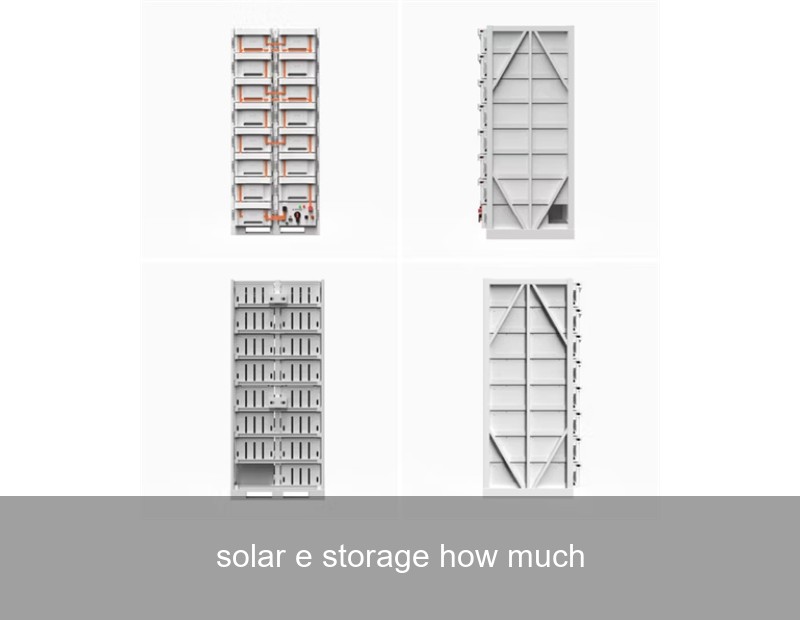
So, you're thinking about solar panels and a battery. The first question on everyone's mind is a simple one: "Solar e storage how much?" It's a fair starting point. But as a product technology expert at Highjoule, I've learned this question is often a shortcut for a deeper set of concerns. What people really want to know is: "What's the investment for true energy independence?" and "How quickly will this system pay for itself?" Let's move beyond the sticker shock and explore what goes into the cost of a solar and storage system, and more importantly, the value it delivers.
Beyond the Price Tag: What Are You Really Asking?
"How much?" is about more than dollars and cents. It's about understanding the shift from being a passive utility customer to an active energy manager. The initial investment secures a long-term asset that locks in your energy costs for decades, protects against rising utility rates, and provides resilience during outages. When you ask "solar e storage how much," you're asking for the entry price to a smarter, more sustainable, and more controllable energy future.

Image Source: Unsplash (Photographer: Andreas Gücklhorn)
Breaking Down "Solar E Storage How Much?": The Key Components
Think of a solar-plus-storage system as a team where each player has a role and a cost. Here’s the breakdown:
1. The Solar Photovoltaic (PV) Array
This is your power plant. Costs vary by region, panel efficiency, and system size (measured in kilowatts, kW).
- Equipment: High-efficiency monocrystalline panels, mounting hardware, DC/AC wiring.
- Key Cost Factor: System size. A typical residential system in the U.S. ranges from 6kW to 12kW.
2. The Energy Storage System (ESS) – The Heart of Independence
This is the battery, the brain (inverter/controller), and the safety systems. It's the most variable part of the "how much" equation.
- Battery Capacity: Measured in kilowatt-hours (kWh). It dictates how much solar energy you can save for later. More capacity = higher cost, but greater self-sufficiency.
- Battery Chemistry: Lithium-ion phosphate (LFP) is now the industry standard for safety, longevity, and value. It's what Highjoule uses exclusively in our EverSafe and GridMaster Pro series.
- Power Rating (kW): How much power the battery can deliver at once. Critical for running large appliances during an outage.
- Inverter/System Architecture: Hybrid inverters (managing both solar and battery) or AC-coupled systems (adding storage to existing solar). Highjoule's Smart Hybrid Hub is designed for seamless integration and intelligent energy flow.
3. The "Soft Costs" & Installation
Permitting, interconnection fees, design, and skilled labor. These can be significant but are where a seasoned provider like Highjoule adds immense value through streamlined processes and certified installer networks.
4. Incentives & Rebates (The Game Changer!)
This dramatically alters the final "how much." In the U.S., the federal Investment Tax Credit (ITC) (source: U.S. Department of Energy) can cover 30% of the total system cost, including storage! Many states and utilities offer additional rebates. In Europe, programs vary by country but often include VAT reductions, grants, or favorable feed-in tariffs.
Real-World Numbers: A U.S. & European Cost Snapshot
Let's put some indicative ranges on the table. Remember, these are pre-incentive estimates, and a precise quote requires a site assessment.
| Component | Typical Range (Pre-Incentive) | Notes |
|---|---|---|
| Residential Solar PV (6-8 kW) | $15,000 - $25,000 | Highly dependent on roof complexity and local labor rates. |
| Battery Storage (10-15 kWh usable capacity) | $8,000 - $15,000 | Based on LFP chemistry. Includes inverter/management system. |
| Typical Combined System | $23,000 - $40,000 | Before any tax credits or rebates. |
| Estimated Cost After 30% U.S. ITC | $16,100 - $28,000 | Final investment can be significantly lower. |
For commercial & industrial (C&I) applications, the scale is larger, but the economics of scale and demand charge management often lead to faster payback periods. Highjoule's GridMaster Pro C&I solutions are engineered specifically for these complex, high-ROI scenarios.
From Bill to Savings: A German Bakery's Story
Let's move from theory to practice with a real case from our European operations. A family-owned bakery in Bavaria, Germany, faced high electricity costs, especially during pre-dawn baking hours. They had solar panels but were exporting most of their midday solar yield at low rates, only to buy expensive power from the grid later.
The Problem: High grid dependency during peak usage, low self-consumption of solar energy.
The Highjoule Solution: We installed a 25 kWh EverSafe C&I battery storage system, integrated with their existing solar PV.
The Data-Driven Outcome (First 12 Months):
- Self-Consumption of Solar: Increased from 35% to over 80%.
- Grid Electricity Purchases: Reduced by 65%.
- Payback Period: Estimated at under 7 years, thanks to German KfW support programs and drastically reduced energy bills.
- Added Value: The bakery now operates critical refrigeration during brief grid outages, protecting inventory.
This bakery didn't just ask "solar e storage how much?"—they asked "how much can we save?" The answer was transformative for their business resilience and bottom line.

Image Source: Unsplash (Photographer: ELEVATE)
The Highjoule Perspective: Calculating Value, Not Just Cost
At Highjoule, founded in 2005, we engineer systems where the cost is understood as an investment in value. Our IntelliManage software platform is a core part of this value proposition. It doesn't just store energy; it learns your usage patterns, weather forecasts, and utility rate schedules to autonomously optimize every kilowatt-hour for maximum savings.
When evaluating "how much," consider these value pillars we build into every system:
- Resilience: What is the cost of a single power outage to your home or business? Our systems provide seamless backup power.
- Rate Arbitrage: In areas with Time-of-Use (TOU) rates, you can avoid buying expensive peak power and instead use your stored solar.
- Future-Proofing: As you add an electric vehicle or heat pump, your storage system becomes the integrating core of your electrified life.
- Sustainability: Maximizing self-consumption of renewable energy is the ultimate goal for reducing your carbon footprint. The International Energy Agency (IEA) highlights the synergy between EVs, solar, and storage for grid stability.
Is Your Property Ready for the True Cost-Benefit Analysis?
The question "solar e storage how much?" is your starting line, not the finish. The true answer is unique to your roof, your energy bills, your local climate, and your goals for independence.
Instead of searching for a generic online quote, why not start with a more powerful question: What would my last 12 months of electricity bills look like if I had a Highjoule system optimizing my energy flow every single day? Discovering that answer is the first step toward turning a cost question into a value proposition for your energy future.
 Inquiry
 Online Chat