


Phocos Any Grid Inverter: The Key to Unlocking True Energy Resilience
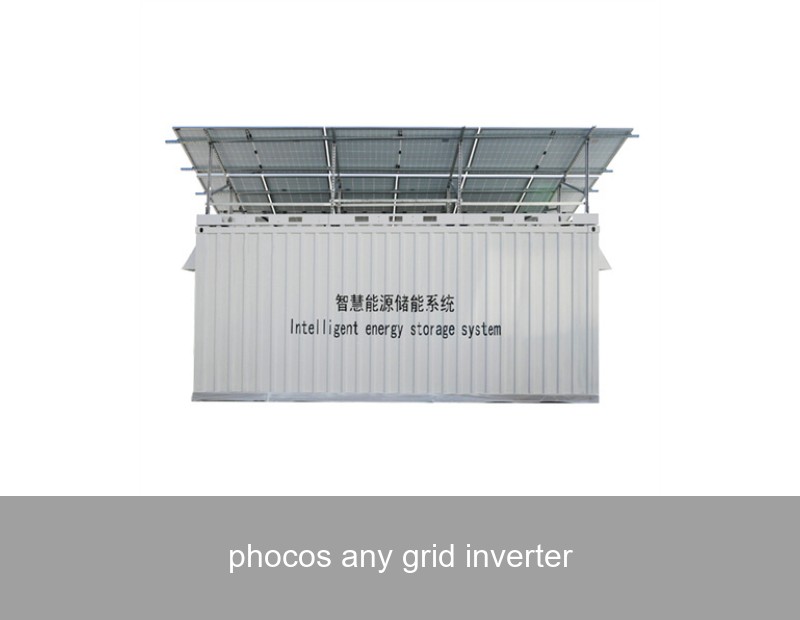
Imagine a power system that doesn't just connect to the grid but intelligently navigates it—and operates flawlessly when it's gone. This isn't future fantasy; it's the practical reality enabled by advanced Phocos any grid inverter technology. In an era of increasing grid volatility and a pressing need for sustainable solutions, the conversation is shifting from simple solar panels to sophisticated energy management. At its heart lies a critical component: the inverter that can handle "any grid" condition. As a product technology expert at Highjoule, I've seen how the right inverter transforms a basic installation into a resilient, intelligent, and cost-saving energy asset. Let's explore how this technology works and why it's becoming indispensable for homes and businesses across Europe and the U.S.
What is an "Any-Grid" Inverter?
Traditional solar inverters have a straightforward job: convert the Direct Current (DC) from your solar panels into Alternating Current (AC) for your home and the main grid. They are, in essence, grid-following. They require a stable grid signal to synchronize and shut down if the grid fails—leaving you with panels on the roof but no power during a blackout.
An any-grid inverter flips this script. It's a grid-forming inverter. Think of it as the intelligent conductor of your personal energy orchestra. It can:
- Connect to the Main Grid: Operate normally, exporting excess solar energy.
- Island from the Grid: Detect a grid failure in milliseconds and automatically create a stable, independent "microgrid" powered by solar and batteries.
- Manage Multiple Sources: Seamlessly blend power from solar PV, battery storage, and even backup generators.
- Provide Grid Services: In some configurations, help stabilize the main grid by regulating voltage and frequency.
This capability is the cornerstone of true energy independence. It's not just backup power; it's a continuous, intelligent power flow tailored to your needs and the grid's health.
Phocos Any-Grid Inverter: A Closer Look
Phocos, a respected name in off-grid and hybrid technology, has developed robust any-grid inverter solutions. Their systems are engineered for environments where grid reliability is a concern or where no grid exists at all. Key features often include:
- High surge capacity for starting heavy appliances (like well pumps or air conditioners).
- Robust design for operation in wide temperature ranges.
- Advanced battery charging algorithms to extend the life of various battery chemistries, including lithium-ion and lead-acid.
While Phocos offers excellent core technology, the real-world performance of an any-grid inverter depends on its integration into a complete, optimized system. This is where expertise matters most. At Highjoule, we evaluate components like the Phocos any grid inverter for their merits and integrate them into solutions that are greater than the sum of their parts, ensuring reliability, safety, and maximum return on investment for our clients.
The Challenge: Grid Instability and Energy Independence
The push for any-grid technology isn't driven by a desire for fancy gadgets. It's a direct response to two powerful phenomena:
- Climate-Induced Grid Stress: More frequent and severe wildfires, storms, and heatwaves are testing the limits of aging grid infrastructure. Public Safety Power Shutoffs (PSPS) in California and storm-related outages across Europe are stark examples.
- The Renewable Energy Paradox: As more intermittent solar and wind feed into the grid, maintaining stability becomes more complex. There are times of excess and times of deficit. A smart, any-grid system at the local level is part of the solution, absorbing excess and discharging during deficit.
Homeowners and business operators are no longer asking, "How do I save on my bill?" They're asking, "How do I keep my lights on, my operations running, and my family safe, regardless of what happens to the grid?"
Data & Insights: The Rise of Resilient Power
The numbers tell a compelling story. According to the U.S. Energy Information Administration (EIA), the average U.S. electricity customer experienced just over seven hours of power interruptions in 2021, with major events being a primary driver. In Europe, the push for energy security following recent geopolitical events has accelerated investment in decentralized power. A report by Wood Mackenzie highlights the global market for residential solar-plus-storage is set to grow exponentially, with any-grid capability being a key selling feature.
The insight is clear: Energy storage is no longer an add-on; it's essential. And the inverter that manages that storage and generation in all grid scenarios is the brain of the entire operation. It turns a passive consumer into an active prosumer, in control of their energy destiny.

Image: A modern home equipped with solar and battery storage—the physical components managed by an any-grid inverter. Source: Unsplash
Case Study: A German Winery's Success Story
Let's make this concrete with a real example from one of our projects in the Rhine Valley, Germany.
The Client: A family-owned winery with critical refrigeration needs for wine storage and a desire to reduce its carbon footprint and energy costs.
The Problem: Occasional grid fluctuations during peak agricultural seasons threatened sensitive temperature control systems. Even a brief outage could compromise an entire vintage.
The Highjoule Solution: We designed and installed a tailored solar-plus-storage system featuring a high-capacity any-grid inverter at its core. While not a Phocos unit in this specific case (we selected a different inverter best suited for this commercial scale), the any-grid principle was identical. The system included:
| Component | Role |
|---|---|
| 120 kW Solar Array | Primary generation, covering rooftops and unused land. |
| 240 kWh Lithium-Ion Battery Bank | Energy storage for nighttime operation and backup. |
| Any-Grid Inverter/Controller | The system's brain, managing all energy flows and grid interaction. |
The Results (Data from 12 Months of Operation):
- Energy Independence: Achieved 92% self-consumption of solar energy.
- Resilience: Successfully rode through 4 minor grid outages (longest was 5 hours) with zero interruption to refrigeration.
- Financial: Reduced grid electricity purchases by 86%, with an estimated return on investment in under 7 years.
- Sustainability: Cut the winery's operational carbon emissions by an estimated 74 tonnes annually.
This winery now views energy not as a volatile cost, but as a managed, strategic asset. Their any-grid system provides peace of mind that is priceless for their business continuity.
Highjoule's Role: Integrating Innovation into Complete Systems
Since 2005, Highjoule has moved beyond simply supplying components. We engineer intelligent, efficient, and sustainable power solutions. Our expertise lies in selecting the right technology—be it a Phocos any grid inverter for a rugged off-grid application or another top-tier hybrid inverter for a suburban home—and making it work optimally within a complete system.
For our commercial, industrial, and residential clients, this means:
- Custom Design: We analyze your load profiles, energy goals, and site conditions to specify the perfect combination of solar, storage, and inverter technology.
- Smart Integration: Our systems often include advanced energy management software (EMS) that provides monitoring, control, and even revenue generation through grid service programs where available.
- Future-Proofing: We design with scalability in mind. Adding more solar or battery capacity in the future should be straightforward.
- Global Support: With a presence in key markets, we provide reliable service and support, ensuring your system performs for decades.
Think of us as your partner in energy resilience. We provide the technical depth to navigate complex products and the practical experience to deliver a system that just works, day in and day out.

Image: Advanced energy management software visualizing power flows—a key part of a Highjoule system. Source: Unsplash
The Future of Power: Your Questions Answered
The energy landscape is transforming from a centralized, one-way street to a decentralized, intelligent network. The Phocos any grid inverter and technologies like it are the enabling hardware. But the real value is unlocked through thoughtful design, integration, and a deep understanding of the end-user's needs.
So, as you consider your path to energy security, ask yourself this: Is your current power system a passive appliance, or is it an active partner in your financial and operational resilience? What would the ability to create your own reliable microgrid mean for your home or business during the next major storm or grid event?
We invite you to explore what a truly intelligent energy system, designed around the principle of "any-grid" operation, could look like for you. The first step towards energy independence is a conversation.
 Inquiry
 Online Chat