


Solar Electricity Generators: Powering a Sustainable Future, Day and Night
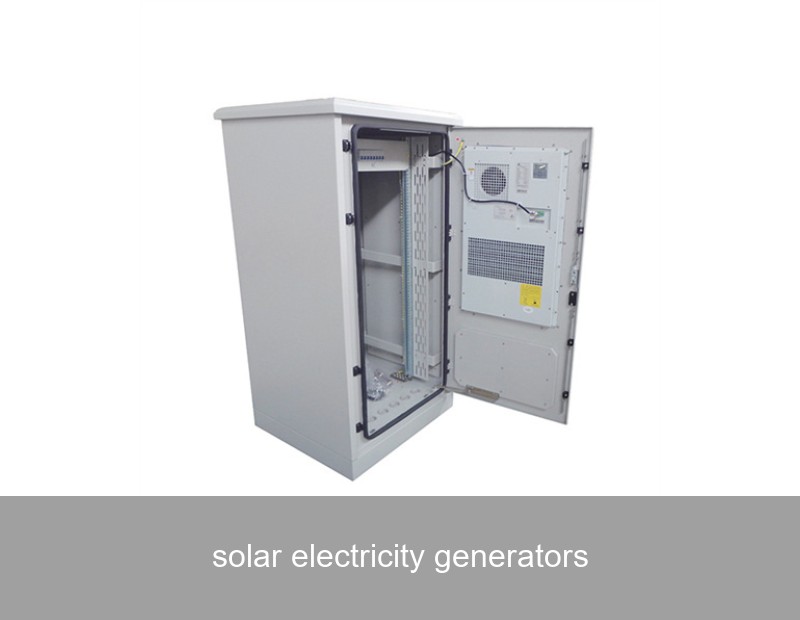
Imagine a world where your home or business is powered by clean, abundant sunshine. This is the promise of solar electricity generators, a technology that has moved from niche to mainstream. But as more homeowners and businesses in Europe and the US make the switch, a common question arises: "What happens when the sun goes down?" The answer lies not just in generating solar power, but in mastering its flow. This is where the true revolution in energy independence begins.
Table of Contents
- The Solar Phenomenon and the Intermittency Challenge
- Beyond Generation: The Critical Role of Energy Storage
- Data Drives Efficiency: The Smart Grid Integration
- Case Study: A German Manufacturing Plant's Journey to 24/7 Solar
- Highjoule's Integrated Solutions: Intelligence Meets Storage
- Navigating the Future Energy Landscape
The Solar Phenomenon and the Intermittency Challenge
Solar photovoltaic (PV) panels are fantastic solar electricity generators. They convert sunlight directly into electricity with no moving parts, minimal maintenance, and ever-increasing efficiency. The growth is staggering. In the US, solar accounted for 53% of all new electricity-generating capacity in 2023 (SEIA, 2024). Similarly, the EU saw a record rollout in 2023, with solar driving a significant drop in fossil fuel generation.
But here's the catch: solar generation is inherently intermittent. The duck curve—a famous graph used by grid operators—visually represents this challenge. It shows a deep dip in net electricity demand during sunny afternoons (when solar floods the grid) and a sharp peak in the evening (when the sun sets but demand remains). This mismatch can strain traditional grids and limit the full potential of your solar investment.

Image Source: U.S. Department of Energy - Illustrating the "Duck Curve" and grid management challenge.
Beyond Generation: The Critical Role of Energy Storage
To truly unlock the value of solar electricity generators, we must shift from thinking about generation to thinking about energy management. This is where battery energy storage systems (BESS) become the cornerstone of a modern energy setup. Think of it this way: solar panels are the source of your income (energy), but the battery is your savings account.
- Energy Time-Shifting: Store excess solar power produced at noon for use at night.
- Backup Power: Provide critical electricity during grid outages, keeping lights on and operations running.
- Grid Services: For larger systems, help stabilize the local grid, potentially creating revenue streams.
- Maximized Self-Consumption: Dramatically increase the percentage of your own solar energy you use, reducing reliance on the utility.
Not all storage is created equal. Key considerations include cycle life (how many charge/discharge cycles it can handle), depth of discharge, thermal management, and, crucially, system intelligence.
Data Drives Efficiency: The Smart Grid Integration
Modern solar-plus-storage systems are not just hardware; they are data-driven energy platforms. Advanced inverters and energy management systems (EMS) act as the "brain," making real-time decisions to optimize your energy flow.
| System Component | Traditional Role | Smart, Integrated Role |
|---|---|---|
| Solar Panels | Generate DC electricity | Generate data on performance and degradation |
| Inverter | Convert DC to AC power | Act as a grid communicator, managing voltage and frequency |
| Battery System | Store and release energy | Respond autonomously to price signals or grid commands |
| Energy Manager | N/A | Learns consumption patterns, forecasts weather, and optimizes for cost or carbon |
This intelligence is what transforms a simple solar electricity generator into a resilient, cost-optimizing power asset for your home or business.
Case Study: A German Manufacturing Plant's Journey to 24/7 Solar
Let's look at a real-world example. A mid-sized automotive parts manufacturer near Stuttgart, Germany, faced rising energy costs and corporate sustainability targets. They installed a 500 kW rooftop solar array, which covered ~40% of their daytime load. However, they were still importing expensive grid power during mornings, evenings, and cloudy days.
Their solution was integrating a Highjoule HI-Cube 500 commercial battery storage system. Here are the results after one year of operation:
- Self-Consumption of Solar: Increased from 40% to over 85%.
- Grid Energy Cost Reduction: Achieved a 68% reduction in peak-time grid electricity purchases.
- ROI Timeline: Projected payback period of just under 6 years, factoring in German incentive programs.
- Resilience: The system now provides seamless backup for critical assembly lines during grid disturbances.
"The goal was never just to generate solar power," explained the plant's facility manager. "It was to control our energy destiny. The Highjoule system's software allows us to set strategies—like avoiding grid imports during the most expensive periods—and it executes them automatically. It's like having a full-time energy trader on our team." This case exemplifies the transition from passive generation to active, intelligent energy management.
Highjoule's Integrated Solutions: Intelligence Meets Storage
As a global leader in advanced energy storage since 2005, Highjoule understands that the future belongs to integrated systems. Our products are designed to be the perfect partner to your solar electricity generators, maximizing their value and your peace of mind.
For residential customers in the US and Europe, our HomePower Stack series offers scalable, wall-mounted lithium iron phosphate (LFP) battery systems. Paired with our Energy Hub Inverter, it creates a unified system that manages solar, storage, grid, and even EV charging from a single, user-friendly app. You can prioritize backup for essential circuits, track your carbon savings, and even participate in virtual power plant programs where available.

Image Source: Highjoule - A Highjoule HomePower Stack installation in a modern home.
For commercial and industrial (C&I) applications, our HI-Cube containerized and HI-Rack modular systems provide utility-grade storage. These solutions are engineered for high cycle life and feature our proprietary JouleMind AI energy management platform. JouleMind doesn't just react; it forecasts weather, energy prices, and consumption patterns to develop the most economical strategy for your operation. Whether you're aiming for peak shaving, demand charge reduction, or microgrid formation, Highjoule provides the hardware and intelligence to make it happen.
Navigating the Future Energy Landscape
The evolution of solar electricity generators is a story of increasing sophistication. We're moving from simple feed-in-tariff models to complex, interactive energy ecosystems. With the rise of electric vehicles and heat pumps, the electrical load on homes and businesses is only growing. A smart solar-storage system becomes the central command post for this new electrified reality.
Choosing the right components is crucial. Look for storage with safe, long-lasting LFP chemistry, a proven track record from a reputable manufacturer, and, most importantly, a software platform that is intuitive for you but powerful enough to handle the complex algorithms of energy arbitrage. It's about finding a partner, not just a product supplier.
So, as you consider harnessing the sun's power, we leave you with this question: Is your solar investment designed just to generate electricity, or is it engineered to deliver true energy independence and intelligent control for the next two decades?
 Inquiry
 Online Chat