


What is a Solar Electrification System? A Complete Guide to Powering Your Future
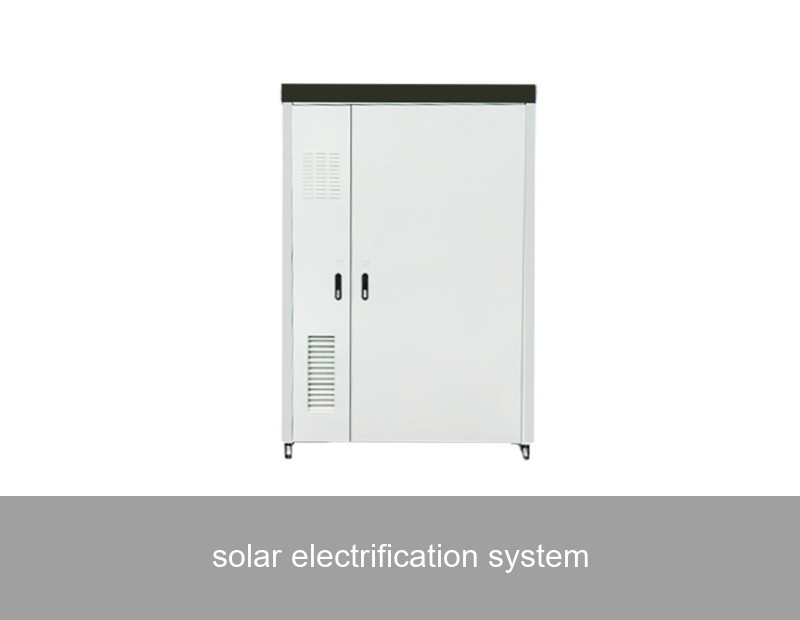
Imagine a home or business that not only generates its own clean electricity but also stores it for use anytime—day or night, rain or shine. This is the powerful reality enabled by a modern solar electrification system. More than just rooftop panels, it's an integrated energy solution that is fundamentally changing how we produce, manage, and consume power. For homeowners and businesses across Europe and the U.S., the shift towards energy independence is accelerating, driven by rising utility costs, grid instability, and a collective push for sustainability. Let's explore how this technology works and why it's becoming an essential part of our energy landscape.
Table of Contents
- What is a Solar Electrification System?
- Key Components of a Modern System
- The Data: Why Solar Electrification is Booming Now
- Real-World Impact: A Case Study from California
- How Highjoule's Smart Solutions Elevate Your System
- Future Trends and Your Next Steps
What Exactly is a Solar Electrification System?
A solar electrification system is a comprehensive setup that captures solar energy, converts it into usable electricity, and often stores it for later use. Think of it as your personal, on-site power plant. The core idea is integration. While photovoltaic (PV) panels are the most visible component, the true intelligence lies in the balance of system components—inverters, batteries, and energy management software—that work in harmony to maximize efficiency, reliability, and savings.
Image Source: Unsplash - A modern residential solar installation.
Key Components of a Modern System
Understanding the parts helps you appreciate the whole. Here’s what a top-tier solar electrification system comprises:
1. Solar Photovoltaic (PV) Panels
These are the primary energy harvesters. Modern panels, like monocrystalline silicon, offer high efficiency (often above 20%), meaning they convert more sunlight into electricity even in less-than-ideal light conditions common in parts of Europe.
2. Solar Inverters: The Brain of the Operation
Inverters convert the direct current (DC) produced by panels into the alternating current (AC) that powers your appliances. Advanced models, such as hybrid inverters, also manage battery charging and discharging.
3. Battery Energy Storage System (BESS)
This is the game-changer. Storage allows you to use solar power after sunset or during a grid outage. Lithium-ion batteries, particularly Lithium Iron Phosphate (LFP), are the industry standard due to their long lifespan, safety, and declining costs.
4. Energy Management System (EMS)
Smart software that optimizes your energy flow. It decides when to charge the batteries, power your home, or export to the grid based on weather forecasts, electricity rates, and your consumption patterns.
5. Monitoring & Control
User-friendly apps and portals give you real-time visibility into your energy production, storage levels, and consumption, putting you in complete control.
The Data: Why Solar Electrification is Booming Now
The trend isn't just anecdotal; it's backed by compelling data. According to the International Energy Agency (IEA), renewable capacity additions soared by almost 50% in 2023, with solar PV accounting for three-quarters of this growth. In the U.S., the Solar Energy Industries Association (SEIA) reports that the residential solar segment has seen consistent growth, even amidst economic fluctuations. What's driving this?
- Economic Sense: The levelized cost of solar electricity is now lower than retail electricity prices in most major markets. Pair it with storage, and you lock in energy costs for decades.
- Grid Reliability: From heatwaves in Texas to winter storms in the Northeast, grid vulnerabilities are prompting homeowners and businesses to seek backup power solutions.
- Policy Support: Incentives like the U.S. Investment Tax Credit (ITC) and various European Union grants and feed-in tariffs significantly reduce upfront costs.
- Sustainability Goals: Both corporations and individuals are setting ambitious carbon reduction targets, and on-site solar is a verifiable, effective step.
Real-World Impact: A Case Study from California
Let's move from theory to practice. Consider a mid-sized manufacturing facility in Fresno, California. The facility faced two major challenges: high time-of-use electricity charges during peak afternoon hours and frequent grid "flex alerts" requesting reduced consumption.
The Solution: They installed a 500 kW solar array coupled with a 750 kWh battery storage system. The system was designed not just for backup, but for intelligent peak shaving.
The Data-Driven Results (First Year):
| Metric | Result |
|---|---|
| Annual Electricity Bill Savings | 68% |
| Peak Demand Charge Reduction | 92% |
| Self-Consumption of Solar Power | Increased from 35% to 85% |
| Carbon Footprint Reduction | Equivalent to taking 110 cars off the road |
The battery system automatically dispatches stored solar energy during the 4 PM to 9 PM peak window, avoiding exorbitant grid prices. During a planned grid outage for maintenance, the facility operated seamlessly on its solar+storage system for over 6 hours, avoiding any production downtime. This case exemplifies how a well-designed solar electrification system delivers both immediate financial returns and long-term operational resilience.
How Highjoule's Smart Solutions Elevate Your System
As a global leader in advanced energy storage since 2005, Highjoule understands that a system is only as strong as its most intelligent component. While we partner with top-tier solar panel manufacturers, our core expertise lies in delivering the brains and backbone of your solar electrification system: the storage and control technology.
For residential clients, our Home Energy Hub is a seamlessly integrated AC-coupled battery system. Its modular design allows you to start with a base capacity and expand as your needs grow. The intuitive Highjoule app provides real-time insights and lets you customize modes—like "Maximize Self-Consumption" or "Storm Watch"—to match your goals.

Image Source: Unsplash - A technician inspecting a commercial battery storage system.
For commercial and industrial (C&I) applications, our C&I Battery Energy Storage Systems (BESS) are engineered for scale and durability. They feature industry-leading LFP battery chemistry and our proprietary Adaptive Grid Integration (AGI) software. This platform doesn't just store energy; it performs revenue-grade functions like demand response, frequency regulation (where market structures allow), and sophisticated load management, turning your energy asset into a strategic financial tool.
Highjoule's systems are designed for the specific challenges of the European and North American markets, complying with stringent local grid codes and safety standards like UL 9540 in the U.S. and the relevant IEC standards in Europe.
Future Trends and Your Next Steps
The evolution of solar electrification systems is moving towards even greater intelligence and grid interaction. We're seeing the rise of virtual power plants (VPPs), where thousands of distributed home systems are aggregated to act as a single, grid-stabilizing resource. Furthermore, bidirectional charging with electric vehicles (Vehicle-to-Home or V2H) is on the horizon, where your EV battery becomes an integral part of your home's energy resilience.
The technology is proven, the economics are compelling, and the need for energy independence is clear. The question is no longer if you should consider a solar electrification system, but how to design the right one for your specific energy profile, location, and goals.
What is the single biggest energy challenge—be it cost, reliability, or sustainability—that your home or business faces today, and how might a smarter approach to managing your power change that equation?
 Inquiry
 Online Chat