


Understanding the Solar Energy Generation Process: From Sunlight to Your Socket
Have you ever looked at the sleek solar panels on a rooftop and wondered, "How exactly does that turn sunlight into my morning coffee power?" You're not alone. The solar energy generation process is a marvel of modern physics and engineering, a silent, clean operation that's reshaping our energy landscape. For homeowners and businesses across Europe and the US, grasping this process is the first step to unlocking energy independence and contributing to a sustainable grid. Let's pull back the curtain on this fascinating journey from photon to electron.
Table of Contents
The Core Phenomenon: It Starts with a Photon
The entire solar energy generation process hinges on a fundamental physical principle: the photovoltaic effect. Discovered in 1839 by Edmond Becquerel, it's the process where certain materials generate an electric current when exposed to light. Modern solar panels are built with semiconductor materials, typically silicon, engineered into a positive (p-type) and negative (n-type) layer. When sunlight—composed of tiny energy packets called photons—strikes the panel, it can knock electrons loose from the silicon atoms. The internal electric field at the p-n junction then pushes these free electrons in a specific direction, creating a flow of direct current (DC) electricity. Think of it as a sophisticated, light-powered electron pump.
Step-by-Step Breakdown of the Solar Energy Generation Process
While the photovoltaic effect is the heart of the operation, delivering usable AC power to your home involves several key stages. Here’s a detailed look at the journey.
1. Energy Capture: The Solar Array
Multiple solar panels (modules) are wired together to form a solar array on your roof or ground mount. The size and efficiency of this array determine the total potential DC power output. Factors like panel orientation, tilt, and, crucially, shading can dramatically impact this first critical stage.
2. Current Conversion: The Role of the Inverter
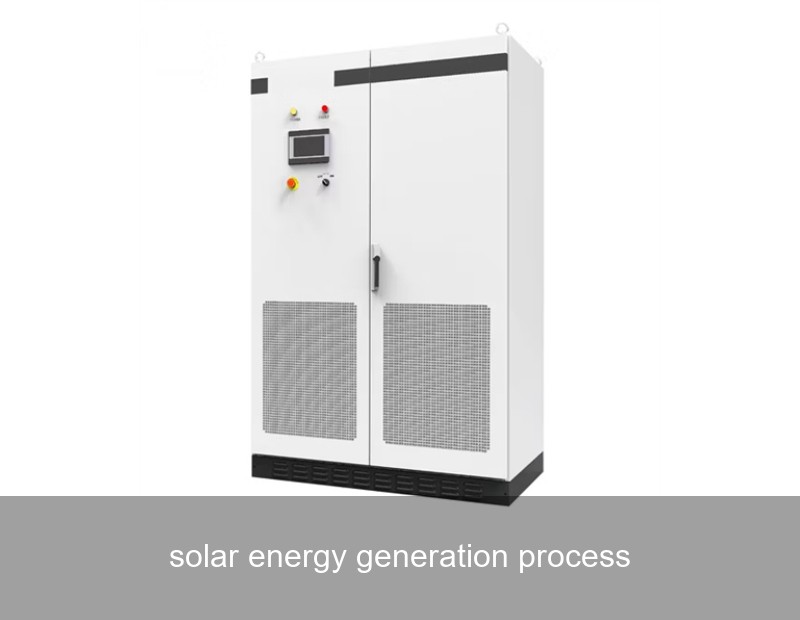
The DC electricity produced by your panels is not compatible with the grid or most home appliances, which run on alternating current (AC). This is where the inverter, often called the brain of the system, comes in. It converts the DC power into clean, grid-synchronized AC power. Modern inverters also perform maximum power point tracking (MPPT) to constantly optimize the voltage and current from the panels for the highest possible yield, even on cloudy days.
3. Energy Distribution & Utility Interaction
The freshly converted AC power now flows to your home's main electrical panel (breaker box), powering your lights, devices, and appliances in real-time. A critical component here is the bi-directional utility meter. If your system generates more electricity than you consume, the excess is fed back into the grid. In many regions, this earns you credits through net metering policies, effectively causing your meter to spin backwards.
| Stage | Key Component | Primary Function | Impact on Efficiency |
|---|---|---|---|
| 1. Capture | Solar PV Panels | Convert photons to DC current | Panel efficiency rating (18-23% for typical monocrystalline) |
| 2. Conversion | Inverter (String, Micro, or Hybrid) | Convert DC to usable AC power; system monitoring | Inverter efficiency (often 97-99%); MPPT accuracy |
| 3. Distribution | Main Panel & Utility Meter | Route power to home/grid | Net metering policy; home wiring integrity |
| 4. Storage (Optional) | Battery Energy Storage System (BESS) | Stores surplus energy for later use | Battery round-trip efficiency (85-95%); depth of discharge |
Beyond the Panel: Why the "Balance of System" is Crucial
Focusing solely on panel efficiency is a common mistake. The true performance and ROI of your solar installation depend heavily on the "balance of system" (BOS)—all the components besides the panels. This includes the inverter, wiring, mounting, and, most importantly, an energy storage system. Without storage, surplus energy generated on a sunny afternoon is exported to the grid, leaving you drawing power (often at higher rates) in the evening when the sun is down. This is where the modern solar energy generation process evolves from a one-way street into a resilient, self-sufficient loop.

Image Source: Unsplash - A modern inverter and battery system is key to maximizing solar self-consumption.
Real-World Impact: A Case Study from Bavaria
Let's move from theory to practice. Consider a mid-sized dairy farm in Bavaria, Germany. The farm installed a 50 kW rooftop solar array in 2020. Initially, without storage, they were self-consuming only about 30% of their generation, exporting the rest. Their goal was to power their cooling systems and milking operations around the clock, especially during early morning and evening peaks.
In 2022, they integrated a Highjoule HJ-Commercial 40 battery storage system. The results were transformative:
- Self-Consumption Rate: Increased from 30% to over 80%.
- Grid Dependence: Reduced peak grid draw by 95%, protecting them from volatile time-of-use rates.
- ROI Timeline: The combined system payback period was reduced by an estimated 2 years due to optimized self-use and reduced demand charges.
- Resilience: The system provides backup power for critical refrigeration, a vital safeguard for their perishable goods.
This case illustrates that the true potential of the solar energy generation process is fully realized only when paired with intelligent storage, transforming a variable energy source into a reliable, 24/7 power solution.
Maximizing Your Solar Investment with Intelligent Storage
This is where Highjoule's expertise becomes pivotal. As a leader in advanced energy storage since 2005, we don't just understand the solar energy generation process; we specialize in completing it. Our solutions are designed to capture every kilowatt-hour your panels produce.
For residential clients, the Highjoule HomePower series features scalable lithium-iron-phosphate (LiFePO4) battery systems with integrated energy management. Our AI-driven software learns your consumption patterns, automatically deciding when to store solar energy, power your home, or export strategically. For commercial and industrial applications, our HJ-Commercial and HJ-Industrial platforms offer modular, high-power storage that manages demand charges, provides uninterrupted power supply (UPS), and enables participation in grid services. For microgrids and utility-scale projects, our containerized HJ-Mega systems provide the grid stability needed to support higher penetrations of renewable generation.

Image Source: Unsplash - Utility-scale solar farms increasingly pair with BESS for grid stability.
By adding a Highjoule system, you move from being a passive producer to an active manager of your energy ecosystem. You're not just generating power; you're harnessing it on your own terms, ensuring it's available when and where you need it most. For deeper technical insights into photovoltaic technology, resources like the National Renewable Energy Laboratory (NREL) PV Research page offer authoritative information.
The Future-Proof Question
Now that you understand the journey from sunlight to socket, ask yourself this: Is your current or planned solar system simply exporting value back to the grid, or is it building true energy resilience and independence for your home or business? What would it mean for you to have reliable, clean power not just when the sun shines, but through the night and during the next grid interruption?
 Inquiry
 Online Chat