


How Solar Energy Organizations Are Powering a Sustainable Future
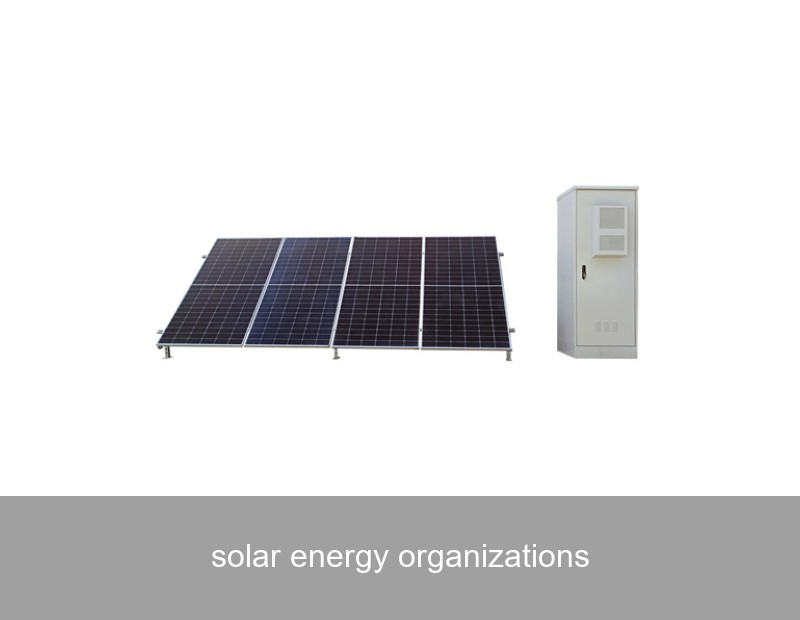
If you're involved with a solar energy organization, you know the landscape is shifting. The conversation is no longer just about generating clean power; it's about what to do with it when the sun isn't shining. This is the critical challenge and opportunity facing solar associations, non-profits, and advocacy groups today. As these organizations guide communities and policymakers, integrating smart energy storage has become a central pillar for achieving true energy independence and grid resilience. Let's explore how forward-thinking solar energy organizations are leading this charge and the technologies making it possible.
Table of Contents
- The Storage Imperative: Beyond the Solar Panel
- The Data Tells the Story: Why Storage is Non-Negotiable
- Case Study: Brighton Community Solar Co-op's Success
- The Highjoule Role: Intelligent Storage for Solar Organizations
- Future Collaborations: Where Do We Go From Here?
The Storage Imperative: Beyond the Solar Panel
For years, the primary goal of solar energy organizations was deployment—getting more panels on more roofs. Mission accomplished in many ways, with solar being one of the fastest-growing energy sources globally. But a new, more complex phase has begun. The intermittent nature of solar power creates a mismatch between supply and demand. Energy is often produced abundantly midday but is needed most in the early morning and evening. This "duck curve" phenomenon, famously identified in California, poses a real challenge for grid stability.
This is where the strategic vision of modern solar energy organizations expands. They are now championing solar-plus-storage systems as the default, not the exception. It's a holistic approach: generation and management must go hand-in-hand. By advocating for and implementing battery energy storage systems (BESS), these organizations ensure that every kilowatt-hour of clean solar energy is captured, stored, and used effectively, maximizing both economic and environmental returns for their members and communities.

Image: A solar-plus-storage installation, showcasing the integration of generation and battery units. Source: Unsplash
The Data Tells the Story: Why Storage is Non-Negotiable
Let's look at the numbers. According to the U.S. Energy Department's Solar Energy Technologies Office, pairing storage with solar can increase the value of solar energy by 20-40% by shifting power to higher-demand periods. In Europe, the story is similar. A 2023 report by SolarPower Europe highlighted that the EU's battery storage market is set to multiply, driven by the need to integrate record levels of renewable energy.
Consider these key data points:
- Grid Demand Smoothing: Storage can reduce peak demand charges for commercial entities by up to 30%, a direct financial benefit for businesses going solar.
- Increased Self-Consumption: Homeowners with solar-plus-storage can increase their consumption of self-generated electricity from 30-50% to over 80%.
- Backup Power: In regions prone to outages, storage provides critical resilience, keeping lights on for hours or even days.
For solar energy organizations, these aren't just statistics; they are powerful tools for advocacy and member education. They form the bedrock of compelling arguments for updated policies, favorable tariffs, and consumer adoption.
Case Study: Brighton Community Solar Co-op's Success
A concrete example brings this to life. The Brighton Community Solar Co-operative in the UK had a problem common to many community solar gardens. Their 500 kW solar array was feeding the grid during the day, but the financial returns (through the UK's Smart Export Guarantee) were modest. The co-op's members wanted to maximize the community benefit of their asset.
In 2022, they partnered with Highjoule to integrate a centralized battery storage solution. The project involved a Highjoule HiveStack BESS with a capacity of 250 kWh/100 kW. Here’s what changed:
| Metric | Before Storage | After Storage Integration |
|---|---|---|
| Self-Consumption of Solar Power | ~35% (used on-site by adjacent facility) | Over 85% |
| Revenue from Grid Services | None | ~£8,000 annually (frequency response) |
| Project Payback Period | Estimated 12 years | Reduced to under 9 years |
"The Highjoule system wasn't just a battery; it was an intelligent energy manager for our entire site," said the co-op's project manager. "It automatically decides when to store, when to discharge for peak shaving, and when to participate in grid balancing programs. It turned our solar array from a simple generator into a smart, revenue-optimizing asset." This case is a blueprint for solar energy organizations worldwide, demonstrating tangible financial and operational benefits.
The Highjoule Role: Intelligent Storage for Solar Organizations
As a global leader in advanced energy storage since 2005, Highjoule understands the unique needs of solar energy organizations. Our solutions are designed to be the perfect partner to solar generation, whether for a single home, a large commercial facility, or a community microgrid.
For solar associations and installers, we provide more than just hardware. We provide a comprehensive partnership:
- Highjoule HiveStack for C&I: Our scalable commercial and industrial battery systems are engineered for high cycle life and seamless integration with new or existing solar PV. Their modular design allows for growth as energy needs evolve.
- Highjoule HomePower: A sleek, user-friendly residential storage solution that pairs perfectly with rooftop solar. Its intelligent software learns household patterns to maximize self-consumption and provide reliable backup power.
- GridSync Inverter Technology: Our proprietary inverter platform ensures flawless communication between solar arrays, batteries, and the grid, enabling advanced functions like virtual power plant (VPP) participation.
- Energy Management Software (EMS): The brain of the operation. Highjoule's EMS uses AI-driven forecasting to make real-time decisions that optimize energy costs, participate in utility programs, and ensure system health.
For a solar energy organization recommending solutions to its network, this translates to reliability, maximum ROI for end-users, and fewer operational headaches. It’s about providing a future-proof answer to the energy transition.

Image: A technician performing maintenance on a commercial battery energy storage system. Source: Unsplash
Future Collaborations: Where Do We Go From Here?
The path forward for solar energy organizations is incredibly exciting. The integration of storage opens doors to concepts like community microgrids, where neighborhoods can share and trade stored solar energy, enhancing local resilience. It also positions solar advocates at the forefront of grid modernization discussions, advocating for fair market access for distributed energy resources.
According to the International Energy Agency, energy storage is the linchpin for secure, flexible, and sustainable power systems. Solar energy organizations that embrace this truth are not just installers; they become essential energy planners and community resilience builders.
An Open Question for Solar Leaders
As you look at your organization's roadmap for the next five years, how will you evolve your messaging and projects to make "solar-plus-storage" the undeniable standard? What partnerships do you need to forge to bring this integrated vision to every community you serve?
 Inquiry
 Online Chat