


The 24V 50Ah Lithium Battery: Your Compact Powerhouse for Modern Energy Needs
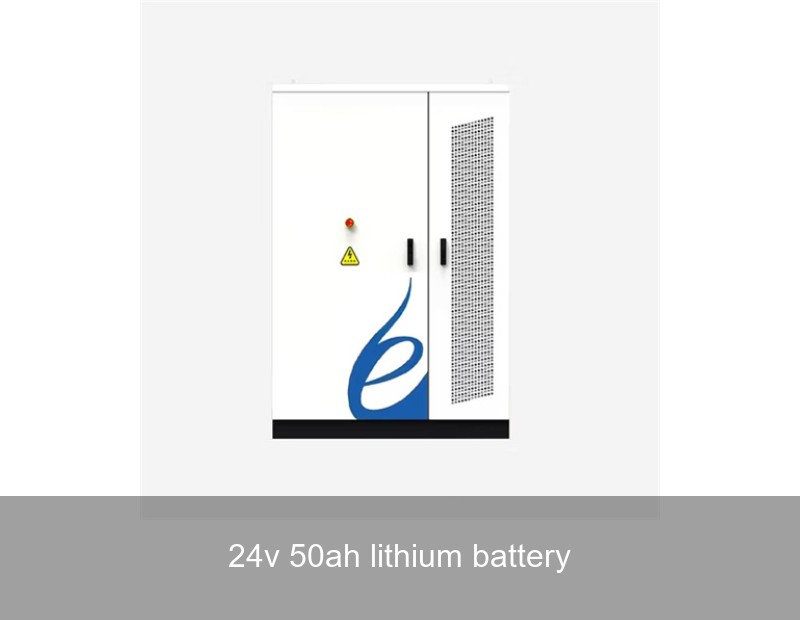
If you're designing an off-grid cabin, upgrading a marine system, or integrating a backup power unit, you've likely encountered the specification: 24V 50Ah lithium battery. This isn't just another battery size; it represents a sweet spot in the energy storage world, balancing substantial power capacity with a manageable, versatile form factor. But what makes this specific configuration so compelling, especially as we move away from traditional lead-acid? The answer lies in a combination of voltage suitability, ample energy storage, and the revolutionary advantages of lithium-ion technology. For professionals and homeowners across Europe and the U.S., understanding this unit is key to building resilient, efficient, and sustainable power systems.

Image Source: Unsplash - Representative image of a modern lithium-ion battery system.
Why Lithium Chemistry is a Game Changer
Let's be honest, the "Ah" (Amp-hour) rating only tells part of the story. The real transformation comes from the chemistry inside. Compared to the bulky lead-acid batteries of the past, lithium iron phosphate (LiFePO4) – the dominant chemistry for stationary storage – offers fundamental benefits that make a 24V 50Ah lithium unit far more capable than its numbers suggest.
- Depth of Discharge (DoD): You can safely use 90-100% of a lithium battery's stated capacity (50Ah) without damaging it. A lead-acid battery typically must not be discharged beyond 50%, meaning a "50Ah" unit only gives you about 25Ah of usable energy.
- Cycle Life: A quality LiFePO4 battery can deliver 3,000 to 6,000 charge cycles while retaining 80% of its capacity. That's years, even decades, of daily use, dwarfing the 300-500 cycles of lead-acid.
- Efficiency & Speed: Lithium batteries charge significantly faster and with higher round-trip efficiency (often >95%). This means less solar energy is wasted as heat during charging, a critical factor for renewable systems.
- Maintenance & Space: They require zero maintenance, are significantly lighter, and have a compact footprint. This simplifies installation in vans, boats, and utility cabinets.
As noted by the U.S. Department of Energy, the cost of lithium-ion batteries has plummeted by nearly 90% since 2010, making this superior technology accessible for a wide range of applications.
Real-World Applications: Where a 24V 50Ah Lithium Battery Shines
So, what can you actually power with a 1.2 kWh (24V x 50Ah = 1200Wh) unit? The versatility is impressive. This capacity is ideal for systems that need reliable, clean power without the bulk of a full-scale home battery.
| Application Sector | Typical Use Case | Why 24V 50Ah Lithium is Ideal |
|---|---|---|
| Marine & RV | Powering navigation systems, lighting, water pumps, and small appliances overnight. | Lightweight, safe (no off-gassing), handles deep discharges from overnight use. |
| Off-Grid & Backup | Core component for small solar setups in sheds, cabins, or as a home telecom/network backup. | High cycle life matches daily solar charge/discharge cycles; efficient energy use. |
| Industrial & Mobility | Power source for electric trolling motors, small utility vehicles, or specialized medical carts. | 24V is a common standard for motors; provides high burst power and long runtime. |
| Microgrids & Telecom | Modular building block in larger scalable battery energy storage systems (BESS). | Modules can be串联 (series) for higher voltage or并联 (parallel) for higher capacity. |
Case Study: Powering a Remote Alpine Weather Monitoring Station
Let's look at a concrete example from the European Alps. A research institute needed to power a high-altitude weather station collecting critical data on snowfall and temperature. The challenges were severe: temperatures dropping to -20°C, limited space for equipment, and no possibility for maintenance for months at a time.
A solution was built using a solar array, a charge controller, and a 24V 50Ah LiFePO4 battery bank (comprising two 24V 50Ah units in parallel for 100Ah total capacity). The lithium batteries were chosen specifically for their:
- Cold-Weather Performance: With low-temperature cut-off protection, they safely managed charging in freezing conditions.
- Longevity & Reliability: The station previously used lead-acid, requiring bi-annual replacement. The lithium system has been operational for over 4 years with no degradation in data continuity.
- Space Efficiency: The compact size allowed the entire power system to fit into a small, insulated enclosure.
The data is clear: the station now achieves over 99.8% operational uptime year-round, a testament to the reliability of a well-designed lithium-based power system in harsh environments. Similar principles apply to remote telecom sites in the Scottish Highlands or off-grid homes in rural America.
Choosing the Right 24V Battery System: Beyond the Spec Sheet
Not all 24V 50Ah batteries are created equal. When selecting a unit, you must consider the integrated Battery Management System (BMS), safety certifications, and the provider's expertise. The BMS is the brain of the battery; it protects against overcharge, deep discharge, short circuits, and ensures cell balancing. A weak BMS can turn a premium battery into a liability.
Furthermore, think about scalability. Will your energy needs grow? Choosing a battery designed to be easily connected in parallel for more capacity is a wise long-term decision. This modular approach is at the heart of modern, flexible energy storage solutions.

Image Source: Unsplash - Technician working on a modular energy storage installation.
Highjoule's Intelligent 24V Solutions: Engineered for Performance and Simplicity
At Highjoule, with nearly two decades of experience since 2005, we understand that a battery is more than just cells in a case. It's the core of a reliable energy ecosystem. Our approach to the 24V 50Ah lithium battery segment is built on intelligent design and system integration.
Our HJ-PowerStack 24V Series is engineered for the demanding applications we've discussed. These aren't just commodity batteries; they are smart power modules featuring:
- Advanced LiFePO4 Chemistry: For unmatched safety, cycle life, and stable performance.
- High-Fidelity BMS: With real-time monitoring, Bluetooth connectivity for system diagnostics, and robust protection layers.
- True Modular Design: Seamless plug-and-play parallel capability allows you to scale from 50Ah to hundreds of Amp-hours without complex reconfiguration.
- Wide Temperature Range: Engineered to perform reliably in diverse climates, from Mediterranean heat to Scandinavian winters.
For commercial and industrial clients, Highjoule integrates these robust battery modules into complete, smart Battery Energy Storage Systems (BESS). Our systems include sophisticated energy management software that optimizes consumption, stores renewable energy, and provides grid services. Whether it's for peak shaving at a small factory in Germany, ensuring backup power for a water treatment plant in California, or forming the storage layer of a community microgrid, we provide the hardware and intelligence to make it work seamlessly.
Looking Ahead: The Role of Modular Storage
The future of energy is decentralized and digital. A 24V 50Ah lithium battery is a fundamental building block in this new landscape. As highlighted by the International Energy Agency (IEA), the rapid deployment of energy storage is crucial for integrating renewables and enhancing grid flexibility. From a single module powering a vital sensor to a warehouse of them stabilizing a local grid, the principles of reliability, efficiency, and scalability remain the same.

Image Source: Unsplash - Modern home with solar panels, a key use case for battery storage.
Is your current power solution limiting the potential of your solar investment, or are you designing a new system where reliability cannot be left to chance? What would a 99.8% uptime mean for your operation?
 Inquiry
 Online Chat