


The Solar Energy Storage Cabinet 2024: Your Key to Unlocking Energy Independence
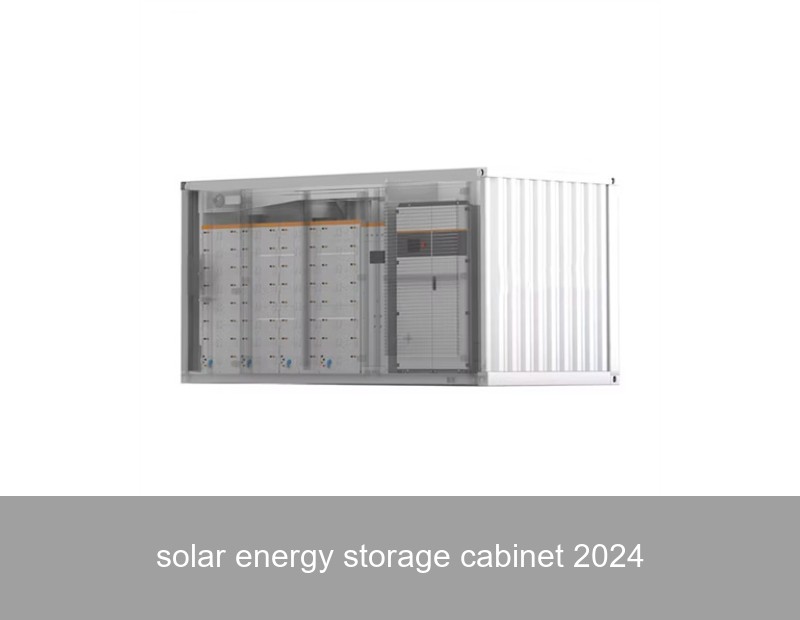
Have you ever watched your solar panels working hard on a sunny day and wondered, "Where does all that extra power go?" For many homeowners and businesses, the answer is, unfortunately, back to the grid for a modest credit. But what if you could capture that sunshine in a box and use it on your terms? That's precisely the promise of the modern solar energy storage cabinet. In 2024, this technology isn't just a backup battery; it's the intelligent heart of a self-sufficient energy system. Let's explore how this innovation is reshaping our relationship with solar power.
Table of Contents
The Phenomenon: Solar's Intermittency Challenge
Solar energy is beautifully predictable in its daily cycle but frustratingly misaligned with our energy needs. The sun peaks at midday, while household demand often spikes in the early morning and evening. This creates the infamous "duck curve" – a graph that utilities dread, showing a deep midday dip in net demand followed by a steep evening ramp-up. For the individual, this mismatch means you're exporting cheap power when the sun is shining and importing expensive power from the grid at night. The solar energy storage cabinet 2024 is engineered specifically to solve this temporal disconnect, turning your solar array into a truly 24/7 power plant.
The Data: Why Storage is No Longer Optional
The economic and practical case for adding storage has never been stronger. Consider these compelling data points:
- Falling Feed-in Tariffs (FiTs): In many European countries, payments for exported solar power have dropped by over 50% in the last decade (IEA Renewables 2023 Report). Self-consumption is now far more valuable.
- Rising Retail Electricity Prices: With volatile energy markets, grid power costs in the US and EU remain high. Storing your own solar power provides a direct hedge against these price fluctuations.
- Grid Service Value: Advanced systems can participate in grid-balancing programs. In some US regions, virtual power plant (VPP) participation can generate hundreds of dollars in annual revenue for storage owners.
The simple equation is clear: maximizing the use of every kilowatt-hour you generate is the fastest path to ROI on your solar investment.

Image Source: Unsplash - A modern home solar and storage setup.
The 2024 Storage Cabinet: More Than Just a Battery
So, what defines a cutting-edge solar energy storage cabinet this year? It's a fully integrated system, not just battery cells in a box.
- Intelligent Energy Management System (EMS): The true brain of the operation. It learns your consumption patterns, weather forecasts, and even real-time electricity tariffs to optimize charge/discharge cycles automatically.
- High-Density, Safe Battery Chemistries: While Lithium Iron Phosphate (LFP) remains the dominant, safe choice for homes, we're seeing advancements in energy density and longevity, with warranties now regularly extending to 10 years or 10,000 cycles.
- Scalable & Modular Design: Need more capacity? 2024's cabinets are designed for easy, plug-and-play expansion. Start with what you need and grow your storage as your needs evolve.
- Grid-Forming Inverter Technology: This is a game-changer for resilience. In a blackout, these advanced inverters can "form" a microgrid, allowing your solar and storage system to power your home independently, even without the main grid as a reference.
Highjoule's Role: Engineering Intelligent Storage Solutions
At Highjoule, with nearly two decades of expertise since 2005, we've engineered our HeliosCore series of storage cabinets to embody these 2024 advancements. Our systems are built for the specific demands of the European and North American markets. The HeliosCore cabinet integrates our proprietary Adaptive Charge Logic software, which doesn't just react—it anticipates. By analyzing local weather data and your historical usage, it can pre-charge the battery before a predicted cloudy day or selectively power non-essential loads during peak grid stress. For commercial applications, our MegaCore industrial cabinets offer scalable, containerized solutions that turn large-scale solar installations into dispatchable assets, providing critical services like peak shaving and demand charge reduction for factories and retail complexes.
A Real-World Case: The German Bakery Story
Let's look at a concrete example from Bavaria, Germany. Bäckerei Schmidt (a mid-sized family bakery) installed a 50 kWp solar rooftop system in 2020. While it cut daytime grid use, their biggest costs were the early morning oven pre-heating and evening lighting, all powered by expensive grid electricity. Their solar export tariff was a mere €0.08/kWh.
In early 2023, they installed a Highjoule HeliosCore Commercial 50 storage cabinet with 100 kWh of capacity. Here are the results after one year:
| Metric | Before Storage (2022) | After Storage (2023) | Change |
|---|---|---|---|
| Solar Self-Consumption | 35% | 89% | +154% |
| Monthly Grid Import (Peak Hours) | 2,100 kWh | 320 kWh | -85% |
| Annual Energy Cost | €18,500 | €6,200 | €12,300 saved |
| ROI Period | Estimated at 4.2 years | ||
"The system pays for itself," the owner noted. "But beyond savings, knowing our ovens will run even during a blackout protects our daily production. That's priceless." This case underscores how a modern storage cabinet transforms solar from a partial solution into a comprehensive energy strategy.

Image Source: Unsplash - Commercial bakery environment.
The Future Outlook and Your Next Step
Looking ahead, the solar energy storage cabinet will become even more integrated. We're moving towards seamless vehicle-to-home (V2H) integration, where your EV battery can supplement your home storage. AI-driven optimization will further refine energy arbitrage, and participation in automated VPPs will become standard. The cabinet is evolving from a household appliance into an active node in a decentralized, resilient energy network.
The technology is ready, the economics are compelling, and the need for energy resilience is clearer than ever. The question is no longer if you should pair storage with your solar, but how to choose the right system for your specific energy profile and goals.
 Inquiry
 Online Chat