


Solar Energy UK: How Much Can You Really Save and Generate?
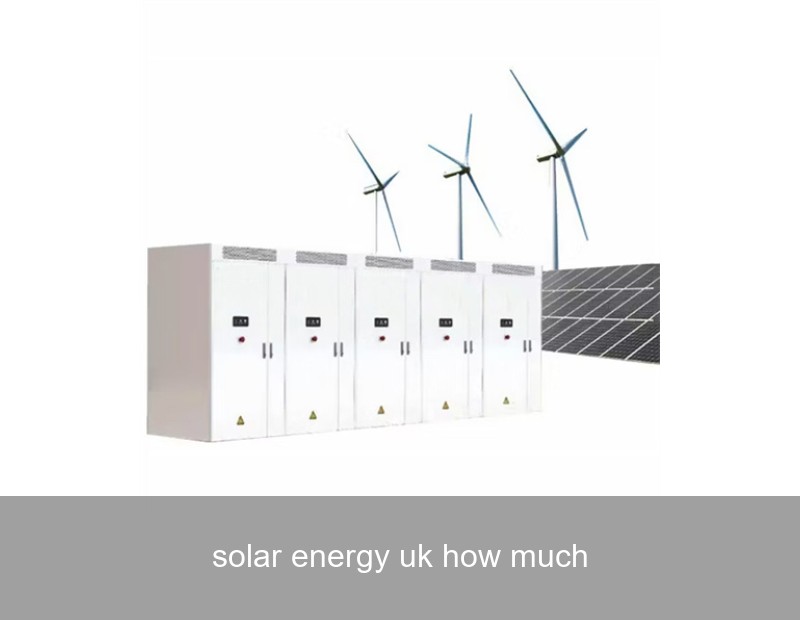
If you're a homeowner in the UK considering solar panels, the question isn't just "are they worth it?" but a more specific and crucial one: Solar energy UK, how much? How much can you save on bills, how much can you earn, and how much does it all cost? The answer is more exciting than ever. With rising energy prices and significant technological advancements, solar power has moved from a niche eco-choice to a mainstream financial strategy. This article breaks down the numbers, explores real-world performance, and shows how pairing solar with intelligent storage, like solutions from Highjoule, unlocks its full potential.
The Investment: Upfront and Ongoing Costs
Let's address the first part of "how much": the initial outlay. For a typical UK 4kWp domestic system, prices can range from £6,000 to £10,000. This variation depends on panel quality, inverter type, and installation complexity. While it's a significant investment, costs have fallen over 60% in the last decade. Maintenance is minimal – think occasional cleaning and an inverter check every few years – usually costing under £200 annually. The real focus shifts from cost to return on investment.
Breaking Down the System Components
| Component | Typical Cost Range (for a 4kW system) | Purpose & Notes |
|---|---|---|
| Solar Panels (Photovoltaic) | £2,500 - £4,500 | Converts sunlight to DC electricity. Efficiency rates now commonly exceed 20%. |
| Inverter | £800 - £1,500 | Converts DC electricity to usable AC for your home. A critical component for system efficiency. |
| Mounting & Installation | £2,000 - £3,500 | Labour, scaffolding, and hardware. MCS-certified installers are essential for quality and eligibility for schemes. |
| Optional: Battery Storage | £3,000 - £8,000+ | Stores excess solar energy for use at night, dramatically increasing self-consumption. This is where companies like Highjoule excel. |
The Savings: Slashing Your Energy Bills
Here's where it gets compelling. A properly sized 4kW system in southern England can generate approximately 3,400 to 3,800 kWh of electricity annually. With the average UK household consuming around 2,700 kWh of electricity (Ofgem, nofollow), a well-utilised system can cover a substantial portion of your needs. The key is self-consumption – using the solar power you generate directly. Without a battery, typical self-consumption is 30-50%. This means you save money by not buying 30-50% of that generated amount from the grid at your retail rate (now often 25-30p/kWh).
So, how much? If you use 40% of your 3,600 kWh generation directly, that's 1,440 kWh you don't buy from the grid. At 28p/kWh, that's over £400 in annual savings, and this figure rises as grid prices climb.

Image Source: Unsplash (Representative image of UK solar installation)
The Earnings: Getting Paid for Your Power
What about the sunny afternoon power you don't use? This is exported to the grid. Under the Smart Export Guarantee (SEG), energy suppliers pay you for this exported electricity. Tariffs vary but typically range from 5p to 15p per kWh. Assuming you export the remaining 60% (2,160 kWh) at 10p/kWh, you could earn around £216 per year. Combined with bill savings, your total annual benefit can be £600+. However, there's a smarter way to handle that excess power than exporting it at a low rate.
Real-World Case: A Family Home in Surrey
Let's look at real data. The Thompson family in Surrey installed a 4.2kW solar array in 2020. In their first year, they generated 3,850 kWh.
- Without Storage: They consumed ~35% directly (1,347 kWh), saving ~£377. They exported 2,503 kWh, earning ~£125 (at 5p/kWh SEG). Total benefit: ~£502.
- After Adding a Battery (2022): They integrated a Highjoule HomePower 10 battery system. Their self-consumption soared to 80%. They now use 3,080 kWh of their own solar, saving ~£862. They only export 770 kWh, earning ~£39. Total benefit: ~£901.
By adding storage, they nearly doubled their annual financial benefit, slashed their grid dependence, and gained resilience against power cuts. Their payback period for the combined system is now projected under 10 years, with over 15 years of nearly free electricity thereafter.
The Game Changer: How Battery Storage Maximises Value
The Thompsons' story highlights the critical answer to "solar energy UK, how much?" – the value multiplies with storage. A battery allows you to store cheap, self-generated solar power for use in the expensive evening peak. This simple shift transforms the economics:
- Increase Self-Consumption: Jump from 50% to 80% or more.
- Avoid High Tariffs: Use stored solar at night instead of buying grid power.
- Participate in Flexibility Schemes: Some suppliers offer incentives for using stored power during grid stress.
- Provide Backup Power: A crucial benefit for areas prone to outages.
Suddenly, the question isn't just about solar panels, but about an integrated solar-plus-storage system.

Image Source: Unsplash (Representative image of a home battery storage unit)
Highjoule's Integrated Solar & Storage Systems
This is where Highjoule's expertise becomes vital. As a global leader in advanced energy storage since 2005, we don't just sell batteries; we provide intelligent, integrated power solutions. For UK homeowners, our HomePower Series is designed to seamlessly pair with new or existing solar arrays.
Our systems feature high-density, safe lithium iron phosphate (LiFePO4) batteries, sophisticated energy management software, and an intuitive app that lets you monitor and control your home's energy flow. You can set preferences to maximise savings, ensure backup power for essential circuits, or even charge from the grid during ultra-low off-peak rates to use during peak times—a process known as 'arbitrage'.
For larger properties, commercial sites, or community projects, our Industrial and Microgrid Solutions offer scalable, robust storage that manages higher energy demands, integrates with multiple generation sources, and provides critical grid services. Whether it's a home, a farm, or a factory, Highjoule's technology ensures you extract the maximum possible value from every kilowatt-hour of solar energy you generate.
Why Choose Highjoule for Your UK Solar Project?
- Proven Durability: Engineered for the long haul, with a lifespan exceeding 6,000 cycles.
- Intelligent Software: Our AI-driven platform optimises for weather, tariffs, and usage patterns automatically.
- Scalable Design: Start with what you need and expand your storage capacity as your needs grow.
- Full System Integration: We work with certified solar installers to deliver a turnkey, high-performance system.
Is Your Home Ready for the Solar Question?
So, back to the original query: Solar energy UK, how much? The financial equation is clear: substantial bill savings, modest export earnings, and a transformative boost from battery storage. The environmental impact—reducing your carbon footprint by several tonnes of CO2 annually—is the invaluable bonus. With technology like Highjoule's, you're not just installing panels; you're building a personal, resilient power station.
The final calculation is personal. How much energy do you use? What's your roof's orientation? What are your goals: pure savings, energy independence, or backup power? We encourage you to get a detailed quote from an MCS-certified installer and ask them specifically about integrating storage. What would a 70% or 80% reduction in your grid electricity purchases mean for your household budget and your peace of mind?
 Inquiry
 Online Chat