


Power Your Home Appliances with Solar: A Smart Homeowner's Guide
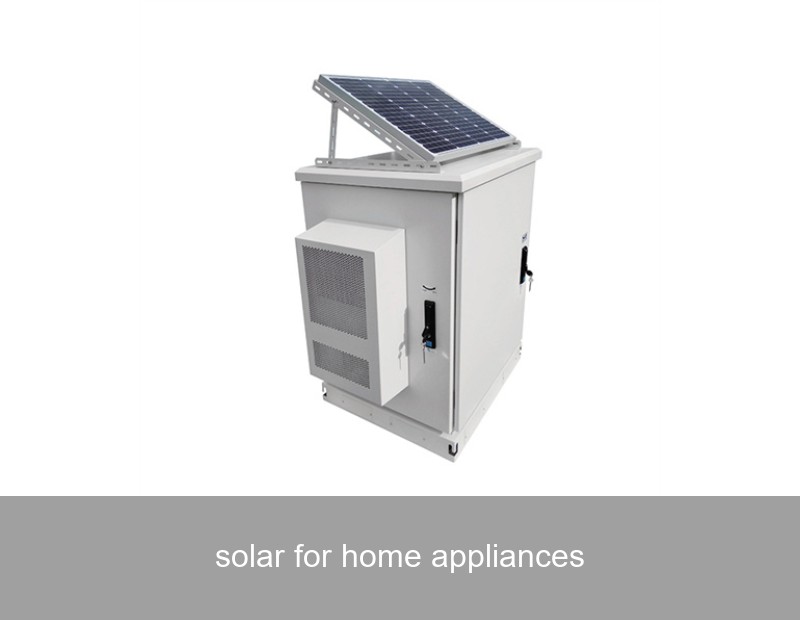
Have you ever looked at your monthly electricity bill and wondered, "What if my refrigerator, washing machine, and air conditioner could run on sunshine?" You're not alone. Across Europe and the US, homeowners are increasingly turning to solar for home appliances as a powerful solution to rising energy costs and environmental concerns. This isn't just about powering a light bulb; it's about intelligently matching the clean energy you produce with the devices that consume the most power in your home. Let's explore how modern solar and storage systems can transform the way you use energy, making your home more resilient, efficient, and independent.
Table of Contents
- The Phenomenon: Home Energy Demand is Shifting
- The Data: The True Cost of Running Your Home
- The Solution: Smart Solar Systems for Modern Homes
- How Highjoule Enables Appliance-Centric Solar Power
- A Real-World Case: The Schmidt Family in Germany
- Future Trends: The Intelligent, Solar-Powered Home
- Your Next Step Towards Energy Independence
The Phenomenon: Home Energy Demand is Shifting
Gone are the days when a home's biggest energy draw was a handful of incandescent bulbs. Today's households are filled with always-on and high-power appliances. From the constant hum of the fridge and freezer to the surge required by an electric dryer or induction cooktop, our demand for electricity is more substantial and complex. Add in the rising adoption of electric vehicles (EVs) and heat pumps, and the grid's traditional model is being challenged. This shift creates a perfect opportunity for a targeted approach: using solar energy not just as a generic supplement, but as a primary power source for your most critical and energy-intensive appliances.
The Data: The True Cost of Running Your Home
Let's break down the numbers. According to the U.S. Energy Information Administration (EIA), space cooling, water heating, and refrigeration account for nearly half of a typical U.S. home's energy consumption. In the EU, similar patterns exist, with appliances and lighting representing a significant portion of household electricity use. Here’s a simplified table showing the average power draw of common home appliances:
| Appliance | Average Power Draw (Watts) | Typical Daily Use (kWh) |
|---|---|---|
| Refrigerator/Freezer | 150-400 | 3-5 kWh |
| Air Conditioner (Central) | 3000-5000 | 15-30 kWh |
| Electric Clothes Dryer | 1800-5000 | 3-5 kWh per load |
| Electric Oven | 2000-5000 | 2-3 kWh per hour |
| Heat Pump | 1000-5000 | 10-20 kWh |
Source: Compiled from U.S. Department of Energy and European Commission data.
The key insight? These high-demand periods often coincide with peak sunlight hours. An air conditioner runs hardest on hot, sunny afternoons—precisely when your solar panels are producing maximum power. Without a storage system, this synchronicity is good. But with storage, you can extend that benefit to power your evening appliance use, like running the dishwasher or dryer after the sun sets.
The Solution: Smart Solar Systems for Modern Homes
So, how do you effectively direct solar energy to your appliances? The answer lies in a three-part system:
- High-Efficiency Solar Panels: Your primary energy harvesters. Modern panels convert more sunlight into electricity than ever, even on cloudy days common in parts of Europe.
- The Essential Brain & Battery: A Home Battery Storage System. This is the game-changer for using solar for home appliances. It stores excess solar energy produced during the day for use at night or during power outages, ensuring your critical appliances keep running.
- Smart Energy Management: Intelligent software that monitors your energy production, consumption, and grid status. It can automatically decide when to power appliances directly from solar, when to charge the battery, and when to draw from the grid, optimizing for cost and self-consumption.

Image Source: Unsplash (Representative image of a solar-powered home)
How Highjoule Enables Appliance-Centric Solar Power
This is where Highjoule's expertise comes into play. Since 2005, we've been at the forefront of intelligent energy storage, designing systems specifically to maximize the utility of solar power for daily life. Our solutions for residential and commercial properties are built around one core idea: making renewable energy reliable and practical for every appliance you depend on.
Highjoule's Residential Energy Hub is more than just a battery. It's an integrated system featuring:
- Scalable Battery Capacity: Modular designs that allow you to start with a system that covers your essential appliances (like refrigeration and lighting) and expand later to include HVAC or EV charging.
- Advanced Inverter Technology: Seamlessly manages power flow between solar panels, the battery, your home's electrical panel, and the grid with industry-leading efficiency.
- Highjoule Smart Energy OS: Our proprietary software platform. It learns your household's energy patterns and can be configured to prioritize solar power for specific circuits or appliances. Want your heat pump to run primarily on stored sunshine? You can set that preference.
- Grid Services & Backup Power: In the event of a grid outage, our systems can automatically disconnect and keep your critical appliances powered for hours or even days, depending on your configuration and consumption.
A Real-World Case: The Schmidt Family in Bavaria, Germany
Let's look at a concrete example. The Schmidt family lives in a detached home near Munich. In 2022, they installed a 8.5 kW solar array coupled with a Highjoule 15 kWh lithium-ion battery system. Their primary goals were to reduce grid dependence and ensure their heat pump and refrigeration stayed operational during increasingly common grid fluctuations.
Results after one year (Data from Highjoule monitoring platform):
- Solar Self-Consumption Rate: Increased from 35% (solar only) to 82% (solar + Highjoule storage).
- Appliance Coverage from Solar/Battery: They now power 95% of their heat pump demand and 100% of their refrigerator/freezer, lighting, and home office load with self-generated solar energy.
- Grid Import Reduction: Reduced annual grid electricity purchases by 78%.
- ROI Timeline: Given Germany's high electricity prices and supportive policies, they project a full system payback in under 8 years.
"The peace of mind knowing our home stays warm and our food stays cold during a winter grid issue is priceless," says Mr. Schmidt. "The system intelligently directs the solar energy exactly where we need it most."
Future Trends: The Intelligent, Solar-Powered Home
The integration is becoming even more seamless. The future points towards automated appliance-solar coordination. Imagine your smart dishwasher receiving a signal from your Highjoule system that the battery is full of solar energy and initiating its cycle automatically. Or your EV charger scheduling its session to coincide with the peak solar production forecast for the next day. These IoT (Internet of Things) integrations are already in development, moving us towards a truly autonomous, efficient, and sustainable home energy ecosystem. Research from institutions like the National Renewable Energy Laboratory (NREL) continues to drive these innovations forward.

Image Source: Unsplash (Representative image of an energy management display)
Your Next Step Towards Energy Independence
Starting the journey to power your home appliances with solar is less daunting than it seems. It begins with understanding your unique energy profile. Which appliances are your biggest energy users? (Hint: Check your smart meter data or utility bill breakdown). What are your goals—is it purely financial savings, backup resilience, or reducing your carbon footprint?
Highjoule partners with certified installers across Europe and North America to provide free, tailored energy assessments. We help you design a system that aligns with your lifestyle and priorities. The technology is proven, the economics are increasingly favorable, and the benefit of taking control of your energy supply has never been clearer.
So, we leave you with this question to ponder: If you could choose one appliance in your home to permanently run on clean, free solar energy starting tomorrow, which one would it be, and how would that change your relationship with energy?
 Inquiry
 Online Chat