


China's Hybrid Energy Storage Cabinet: A Global Game-Changer for Modern Grids
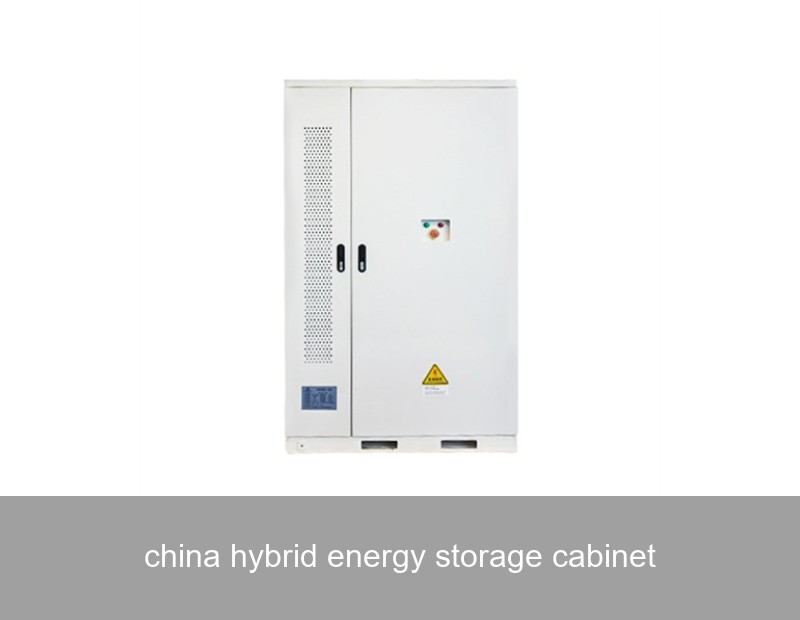
If you're managing a commercial facility, industrial plant, or a microgrid, you've felt the pressure. The demand for reliable, clean, and cost-effective power is soaring, while grid instability and energy prices remain a persistent challenge. A powerful solution is emerging, not from a single technology, but from a smart integration: the hybrid energy storage cabinet. And when it comes to innovation in this space, China's advancements are commanding global attention. These integrated systems combine the rapid response of lithium-ion batteries with the endurance and cycle life of alternative storage technologies, creating a resilient and versatile power asset. For businesses in Europe and the US, understanding this technology is key to building a future-proof energy strategy. Let's explore how this integrated approach is redefining energy management worldwide.
Table of Contents
- The Phenomenon: Why Hybrid is the New Standard
- The Data: Quantifying the Hybrid Advantage
- The Case Study: A European Logistics Hub
- The Insight: Beyond the Hardware
- Highjoule's Role in the Hybrid Landscape
- Your Energy Future: A Question of Integration
The Phenomenon: Why Hybrid is the New Standard
Think of energy needs like a vehicle's demands. You need instant torque for acceleration (rapid grid response) and a large fuel tank for a long journey (sustained energy supply). A single battery type often struggles to provide both cost-effectively. This is the core challenge that China's hybrid energy storage cabinet solves. By integrating different storage technologies within a single, containerized cabinet, these systems deliver a multifaceted solution. Typically, they pair lithium-ion batteries for high-power, short-duration tasks (like frequency regulation or smoothing solar output) with flow batteries or advanced lead-carbon batteries for long-duration, high-cycle applications (like shifting large blocks of solar energy from day to night).
The global drive, particularly in Europe and the US, is towards maximizing the value of every renewable kilowatt-hour. A hybrid system does precisely that. It's not just about storing energy; it's about applying the right tool for the right job within your energy profile, leading to superior economics and reliability.

Image Source: Unsplash - Representative image of advanced energy storage hardware
The Data: Quantifying the Hybrid Advantage
Let's move beyond concept to concrete numbers. Why are system integrators and energy managers increasingly opting for a hybrid approach? The benefits are measurable across three key areas:
| Metric | Single-Technology System | Hybrid Storage Cabinet | Impact |
|---|---|---|---|
| System Lifespan | Limited by the weakest component's cycle life. | Optimized by assigning tasks to the most suitable technology, extending overall life. | Up to 25-40% longer useful life, reducing CAPEX over time. |
| Levelized Cost of Storage (LCOS) | Can be high for long-duration applications. | Significantly lower for combined applications by using cheaper tech for bulk storage. | Studies show 15-30% reduction in LCOS for multi-service applications. |
| Revenue Streams / Value Stacking | Often limited to 1-2 primary services (e.g., solar self-consumption). | Can simultaneously provide frequency response, arbitrage, backup, and peak shaving. | Can unlock 3-5+ distinct value streams, dramatically improving ROI. |
Data from industry analyses, including those by the U.S. Department of Energy's Energy Storage Hub, consistently highlight that the flexibility of hybrid systems is critical for economic viability in markets with complex grid services and volatile prices.
A Real-World Case: A German Automotive Logistics Center
Consider a large logistics hub in Lower Saxony, Germany. The facility operates 24/7, has a 2.5 MW rooftop solar PV array, and faces steep demand charges from the grid. Their goal: maximize solar consumption, eliminate demand spikes, and ensure backup for critical cold storage.
Their Solution: A 1.5 MWh hybrid energy storage system. The cabinet-integrated design featured:
- Lithium-Ion Module (500 kW / 250 kWh): For ultra-fast response. It handles peak shaving, clipping solar export peaks in milliseconds, and provides primary frequency response to the grid.
- Flow Battery Module (250 kW / 1250 kWh): For long-duration storage. It shifts the bulk of the daytime solar energy to power nighttime operations and provides guaranteed backup for up to 5 hours.
The Results (12-month period):
- Solar Self-Consumption Rate: Increased from 35% to over 90%.
- Demand Charges: Reduced by 68%.
- Additional Grid Revenue: Earned approximately €45,000 annually from frequency regulation services.
- ROI Timeline: Projected payback period shortened from 9 to 5.5 years due to stacked revenues.
This case exemplifies the hybrid cabinet's power: it wasn't just a battery; it was a multi-talented energy asset on the facility's balance sheet.
The Insight: The Brains Behind the Brawn
Here's the crucial insight often missed: the physical cabinet and battery chemistry are only half the story. The true magic lies in the Energy Management System (EMS) software. A hybrid system with a rudimentary controller is like a sports car with a novice driver—you won't unlock its potential.
The advanced EMS in a modern hybrid cabinet acts as the central intelligence. It makes real-time, millisecond decisions: Should we use the lithium batteries to respond to a grid frequency dip, or save them for the upcoming facility peak? Should we charge the flow battery now with cheap grid power or wait for the solar peak? This software optimizes for the highest economic return, equipment longevity, and operational safety simultaneously. When evaluating a hybrid solution from any provider, the sophistication of its EMS is as important as the battery specs.

Image Source: Unsplash - Representative image of energy data management
Highjoule's Intelligent Approach to Hybrid Solutions
At Highjoule, we've been at the forefront of intelligent energy storage since 2005. We view the hybrid energy storage cabinet not just as a product, but as the physical core of a comprehensive energy resilience strategy. Our approach is built on three pillars:
- Adaptive Modular Design: Our H-Cube Hybrid Series cabinets are engineered for flexibility. They allow for configurable ratios of power-optimized (e.g., Li-Ion) and energy-optimized (e.g., advanced flow battery) modules within the same standardized footprint. This means your system can be precisely tailored to your load profile and future-proofed for expansion.
- Neuron IQ EMS: This is our proprietary brain. Neuron IQ doesn't just manage batteries; it learns your facility's patterns, integrates weather forecasts, and responds to real-time market signals in deregulated markets like the US or Germany. It ensures every kilowatt-hour stored and discharged delivers maximum financial or operational value.
- Full-Lifecycle Partnership: We provide more than hardware. From initial site assessment and financial modeling to commissioning, remote monitoring, and performance guarantee options, Highjoule partners with you for the life of the system. Our global service network ensures support for our commercial and industrial clients in Europe and North America.
For a manufacturing plant in Texas looking to insulate itself from grid volatility or a supermarket chain in the UK aiming to meet stringent sustainability targets, Highjoule's hybrid solutions translate complex technology into reliable, measurable outcomes.
Your Energy Future: A Question of Integration
The evolution of the energy storage cabinet from a simple battery box to an intelligent, hybrid power hub represents a fundamental shift. It moves us from asking "How much storage do I need?" to a more strategic question: "How can I optimally integrate multiple storage forms to build a resilient, profitable, and sustainable energy ecosystem for my specific needs?"
As you evaluate your next steps in energy resilience, what single energy challenge—be it demand charge reduction, renewable integration, or backup power certainty—if solved, would unlock the most value for your operation today? The answer might just lie in the integrated intelligence of a hybrid system.
 Inquiry
 Online Chat