


Solar für Strom: How Much Can You Really Generate and Save?
You've seen the panels on rooftops and heard the buzz about clean energy. The big question on every homeowner's and business owner's mind is: "Solar für strom—how much?" How much power can a system generate, how much will it cost, and crucially, how much can it save me? The answer isn't a one-size-fits-all number, but a fascinating equation involving your location, your roof, your energy habits, and the technology you choose. Let's break down the real numbers behind solar power.
Table of Contents
- The Core Question: Factors That Determine Your Solar Yield
- From Sunlight to Savings: The Math Behind Solar Generation
- The Game Changer: How Battery Storage Transforms "Solar für Strom"
- Real-World Case Study: A German Bakery's Recipe for Energy Independence
- Tailoring the Solution: How Highjoule Makes Your Solar Investment Smarter
- Your Next Step: From Calculation to Action
The Core Question: Factors That Determine Your Solar Yield
Asking "solar für strom, how much?" is like asking "how fast can a car go?" It depends. For solar, the key variables are:
- Geographic Location (Insolation): This is the amount of solar radiation your area receives. A rooftop in Southern California or Southern Spain will naturally produce more than one in Northern Germany or Washington State. For instance, average daily solar irradiation can range from 2.5 kWh/m² in northern Europe to over 5.5 kWh/m² in sunnier regions.
- Roof Orientation and Tilt: In the Northern Hemisphere, south-facing roofs are ideal. A tilt angle roughly equal to your latitude often maximizes annual yield.
- System Size (kWp): Measured in kilowatt-peak (kWp), this indicates the system's maximum potential output under ideal lab conditions. A typical residential system in the US ranges from 6 to 12 kWp.
- Shading and Local Conditions: Even partial shading from a chimney or tree can significantly impact output. Modern systems use technologies like power optimizers to mitigate this.
- Panel Efficiency: Higher-efficiency panels (now commonly 20-23%) generate more power per square meter of roof space.
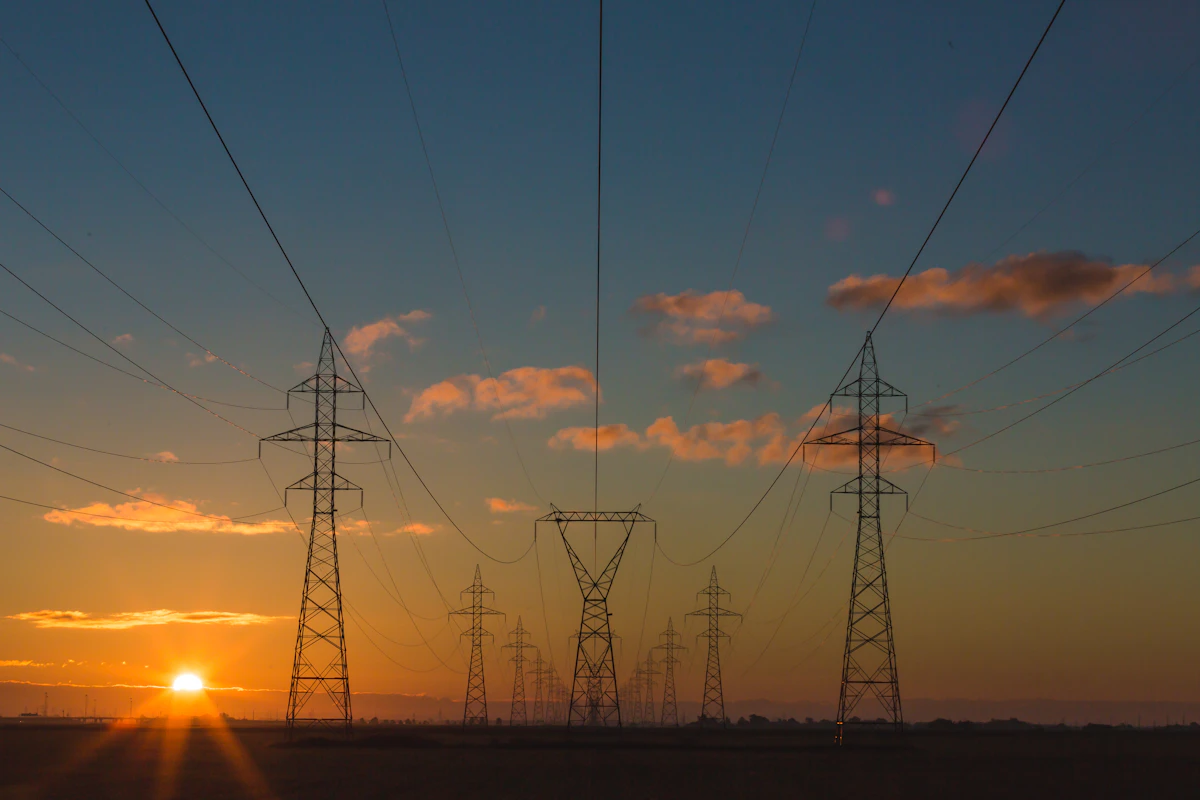
Image Source: Unsplash (Photographer: American Public Power Association)
From Sunlight to Savings: The Math Behind Solar Generation
Let's put some tangible numbers to the concept. A simplified formula for annual energy production (kWh) is:
System Size (kWp) × Annual Peak Sun Hours × System Performance Ratio (typically 0.75-0.85)
Consider a 10 kWp system installed on a well-oriented roof in a region with 1,200 annual peak sun hours (common in many parts of Central Europe and the Northern US).
10 kWp × 1,200 hours × 0.80 = 9,600 kWh per year.
For context, the average U.S. household consumes about 10,500 kWh annually (source: U.S. Energy Information Administration). This means such a system could cover a very substantial portion of a home's needs. But here's the catch: solar generation is intermittent. You produce most during midday, but your consumption often peaks in the morning and evening. This mismatch is where the simple "solar für strom" calculation gets its most important upgrade.
The Game Changer: How Battery Storage Transforms "Solar für Strom"
Without storage, excess solar energy is often fed back to the grid for a feed-in tariff, which is usually lower than the retail price you pay to buy power back at night. This dynamic reduces your potential savings. Adding a battery storage system changes the equation entirely. It allows you to:
- Increase Self-Consumption: Store your excess daytime solar energy for use in the evening, dramatically reducing your reliance on the grid.
- Gain Energy Security: Provide backup power during grid outages, a growing concern for both homes and businesses.
- Maximize Financial Return: In areas with time-of-use rates, you can avoid buying expensive peak-hour electricity from the utility.
Suddenly, the question isn't just "solar für strom how much can I generate?" but "how much of that precious, self-generated power can I actually use on my own terms?" A high-quality battery system can boost your self-consumption rate from 30-40% to 70% or more.
Real-World Case Study: A German Bakery's Recipe for Energy Independence
Let's look at a concrete example. A traditional family bakery in Bavaria, Germany, faced high and unpredictable energy costs. Their refrigeration, ovens, and lighting created a constant, high base load with peaks in the early morning. They installed a 45 kWp solar array paired with a Highjoule HES 50 commercial battery storage system (50 kWh usable capacity).
| Metric | Before Installation | After Installation (First Year) |
|---|---|---|
| Annual Grid Electricity Purchase | 82,000 kWh | 18,500 kWh |
| Self-Consumption of Solar Power | N/A | 94% |
| Estimated Annual Energy Cost Savings | Base | €14,300 |
| CO2 Emissions Reduction | Base | ~38 tonnes |
The system was sized to cover their nighttime and early morning load from the battery, which was charged by solar during the day. The bakery now runs its critical cooling systems during short grid outages, protecting inventory. This case shows that for commercial operations, the value of solar plus storage extends beyond direct savings to include operational resilience and sustainability branding—key factors in today's market.

Image Source: Unsplash (Photographer: ELEVATE)
Tailoring the Solution: How Highjoule Makes Your Solar Investment Smarter
At Highjoule, we understand that the true answer to "solar für strom how much" is a personalized energy strategy. Since 2005, we've evolved from a component provider to a global leader in intelligent, integrated storage solutions. Our products are designed to maximize the utility of every kilowatt-hour your solar panels produce.
For residential clients, our HES Home series features scalable lithium iron phosphate (LFP) battery systems known for safety and long cycle life. Integrated with a sophisticated energy management system (EMS), it learns your consumption patterns and optimizes storage and discharge, often yielding the highest possible self-consumption rates.
For commercial and industrial (C&I) applications, our modular HES C&I solutions can be scaled from tens of kWh to multiple MWh. They handle more complex loads, can participate in demand charge management, and are built for the rigorous duty cycles of business operations. Our microgrid controllers can even integrate multiple generation sources (solar, wind, gensets) with storage for complete off-grid or grid-supported energy independence.
Our systems are designed for the specific grid requirements and market conditions of Europe and North America, ensuring compliance, safety, and optimal financial performance whether you're in Texas or Tyrol.
Your Next Step: From Calculation to Action
So, how do you move from a generic question to a specific, profitable plan for your property?
- Audit Your Energy: Examine your utility bills from the past year. Identify your average monthly consumption (kWh) and, importantly, your peak demand (kW).
- Get a Professional Assessment: A reputable installer will use satellite imagery and tools like NREL's PVWatts Calculator (a trusted, free tool from the National Renewable Energy Lab) to model solar production on your specific roof.
- Model with Storage: This is crucial. Ask your consultant to model scenarios with and without battery storage. Analyze the impact on self-consumption, projected savings, and payback period.
The landscape of energy is shifting from centralized consumption to decentralized production and smart management. The most forward-thinking homes and businesses aren't just asking how much solar can generate—they're asking how much control they can reclaim over their energy flow and costs.
What would a 70% or higher energy self-sufficiency rate mean for your operational stability or household budget in an era of volatile energy prices?
 Inquiry
 Online Chat