


How Much Sun Does a 20kW Solar System Need? Understanding the SG05LP3 Factor
So, you're considering a 20kW solar installation—a fantastic choice for a medium-sized business or a large home with high energy demands. But one question inevitably pops up: how much sun does a 20kW system actually need to be worthwhile? The answer isn't just about counting sunny days. It hinges on a deeper understanding of your local "solar climate," system design, and crucially, the technology that converts sunlight into usable power. That's where components like the SG05LP3 come into play, representing the advanced inverters and system architecture that maximize every kilowatt-hour. Let's demystify the factors that determine your system's success.
Table of Contents
- Beyond the Basics: It's Not Just Peak Sun
- Key Factors Influencing Your 20kW System's Output
- A Real-World Case: 20kW Performance in Berlin vs. Phoenix
- Why Technology Like the SG05LP3 Matters for Marginal Gains
- Beyond Solar Panels: The Critical Role of Energy Storage
- Is Your Site Ready for a High-Performance 20kW System?
Beyond the Basics: It's Not Just Peak Sun
Most installers start with "peak sun hours." This is a standardized measure, not the hours between sunrise and sunset. One peak sun hour equals one hour of sunlight at an intensity of 1,000 watts per square meter. Your location's average daily peak sun hours are the primary driver of solar production.
- Sunny Regions (e.g., Southern California, Arizona, Southern Europe): 5.5 to 6.5+ peak sun hours daily.
- Moderate Regions (e.g., Northern France, Germany, Mid-Atlantic USA): 3.5 to 4.5 peak sun hours daily.
- Less Sunny Regions (e.g., Pacific Northwest, UK): 2.5 to 3.5 peak sun hours daily.
A 20kW system in Phoenix might produce around 32,000 kWh annually, while the same system in Berlin might produce closer to 18,000 kWh. That's a stark difference dictated first and foremost by geography. But this is just the starting point. Two identical 20kW systems on neighboring streets can have significantly different outputs. Why?
Key Factors Influencing Your 20kW System's Output
Think of your solar potential as a chain. Peak sun hours are the first link, but the following links must be strong to avoid losses.
| Factor | Impact on Production | Mitigation Strategy |
|---|---|---|
| Roof Orientation & Tilt | South-facing (in Northern Hemisphere) at an optimal angle yields highest output. East/West can lose 10-20%. | Advanced mounting systems, careful array layout. |
| Shading | Even partial shading (from chimneys, trees) can disproportionately reduce output by triggering bypass diodes. | Detailed shading analysis, use of power optimizers or microinverters. |
| Temperature | Solar panels lose efficiency as they heat up. A hot, sunny day can see reduced peak output. | Choosing panels with a low temperature coefficient, ensuring airflow. |
| System Efficiency | Losses occur in wiring, inverters, and conversion. A system might only deliver 85-90% of its DC rating as AC power. | High-quality components, professional design and installation. |
A Real-World Case: 20kW Performance in Berlin vs. Phoenix
Let's illustrate with concrete numbers. Consider a commercial bakery looking to offset its energy costs with a 20kW rooftop system.
- Location 1: Phoenix, Arizona, USA
- Average Daily Peak Sun Hours: 6.2
- Estimated Annual Production (optimized): ~32,000 kWh
- On-Site Consumption: High during daytime (ovens, cooling), allowing for excellent direct self-consumption.
- Location 2: Berlin, Germany
- Average Daily Peak Sun Hours: 3.8
- Estimated Annual Production (optimized): ~19,500 kWh
- On-Site Consumption: Also high, but solar production is more spread over the year with a strong summer peak.
The Phoenix system generates over 60% more energy annually. However, the financial and environmental value isn't determined by production alone. In Germany, with higher electricity prices and strong decarbonization goals, the value of each self-generated kilowatt-hour can be higher. This is where intelligent system design, including storage, becomes paramount to maximize the utility of every bit of sun you get.

Why Technology Like the SG05LP3 Matters for Marginal Gains
This brings us to a critical component: the inverter. It's the brain of your solar system, converting DC from panels to AC for your building. High-performance inverters, like the class of technology exemplified by the SG05LP3 series, are engineered to squeeze maximum efficiency out of variable conditions.
- High Peak Efficiency: They operate at 98%+ efficiency, meaning less energy is lost as heat during conversion.
- Wide Operating Voltage Range: They can harvest energy earlier in the morning and later in the evening under low-light conditions, effectively extending your "sun day."
- Advanced MPPT Tracking: Multiple Maximum Power Point Trackers quickly adapt to changing irradiance and shading, ensuring the system is always operating at its optimal point.
For a 20kW system, a 1-2% gain in inverter efficiency can mean an extra 200-400 kWh of free electricity per year. Over a 25-year lifespan, that's significant. Companies like Highjoule integrate these high-caliber components into holistic systems. For instance, Highjoule's HPS Series Commercial Storage Solutions are designed to seamlessly pair with large-scale solar arrays, using smart inverter technology to not just convert power, but also manage when to store it, use it, or even feed it back to the grid based on real-time economics.
Beyond Solar Panels: The Critical Role of Energy Storage
Asking "how much sun do you need?" is becoming outdated. The smarter question is: "How can I make the most of the sun I get?" This is the core of modern energy independence. A 20kW solar system without storage often exports a large surplus to the grid at low rates, only for you to buy back power at night at high rates.
Adding a battery energy storage system (BESS) changes the game entirely. It allows you to:
- Increase Self-Consumption: Store your daytime solar excess for use in the evening, sometimes boosting the utilization of your solar energy from 30-40% to 70-80% or more.
- Provide Backup Power: Keep critical loads running during grid outages—a key concern for businesses.
- Participate in Grid Services: In some markets, you can earn revenue by providing grid stability services.
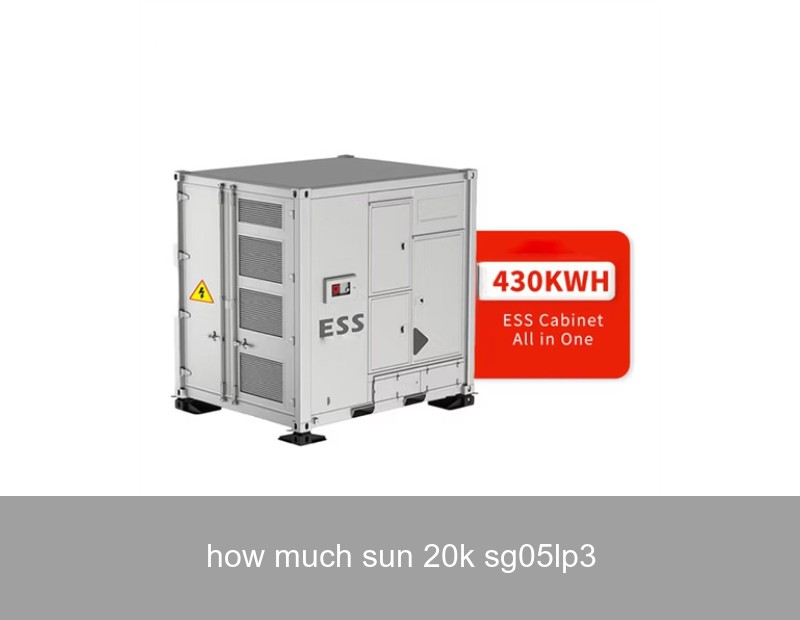
Highjoule specializes in this integration. Their IntelliBESS platform for commercial and industrial applications uses AI-driven energy management to dynamically decide the most economical flow of energy every second of the day. It considers solar production, consumption patterns, tariff structures, and even weather forecasts. This means a 20kW system in a moderately sunny region, paired with a Highjoule storage system, can often deliver greater financial ROI and resilience than a larger solar-only system in a sunnier locale. According to a 2022 NREL report, pairing solar with storage can increase the value of solar by 20-40% for commercial entities, depending on the market.

Is Your Site Ready for a High-Performance 20kW System?
The journey to a successful 20kW installation starts with a detailed assessment that goes far beyond counting roof tiles. It requires analyzing:
- Historical weather and solar irradiance data for your exact coordinates.
- Hourly electricity consumption profiles to size solar and storage optimally.
- Future energy plans (e.g., adding EV fleets, expanding facilities).
- Local grid policies and financial incentives.
At Highjoule, with nearly two decades of experience since 2005, we've moved beyond being just a provider of hardware. We are a solutions partner for commercial, industrial, and microgrid projects. Our process involves sophisticated modeling to predict performance and financial returns accurately, ensuring that your system—whether it's a 20kW array or a multi-megawatt installation—is built to deliver on its promise, regardless of how many peak sun hours your location averages.
So, what's the true potential of your roof or land? What would a detailed analysis, factoring in the latest storage and smart management technology, reveal about your path to energy security?
 Inquiry
 Online Chat