


Solar Geysers in South Africa: A Smart Path to Energy Independence and Cost Savings
If you live in South Africa, you're intimately familiar with two things: abundant sunshine and the persistent challenge of load-shedding. While "solar geysers South Africa" has become a common search term for homeowners seeking relief from soaring electricity bills and unreliable power, there's a bigger, more transformative story unfolding. It's a story about integrating hot water solutions into a complete, intelligent home energy ecosystem. This is where the conversation evolves from simply heating water to achieving true energy resilience.
Table of Contents
- The Phenomenon: Beyond Just Hot Water
- The Data: Why Solar Thermal Makes Compelling Sense
- The Case Study: A Johannesburg Household's Transformation
- The Insight: The Future is Integrated, Not Isolated
- Highjoule's Role: From Solar Geysers to Whole-Home Energy Intelligence
- What's Your Home's Energy Personality?
The Phenomenon: Beyond Just Hot Water
For years, the standard solar geyser in South Africa has been a workhorse. A roof-mounted thermal collector, a tank, and the simple physics of sunlight heating a transfer fluid. It's a brilliant, proven technology that significantly reduces the electricity drawn from the grid for water heating, which can account for 30-50% of a typical household's energy bill. But in today's context, this standalone approach has limitations. What happens during prolonged cloudy days or when your hot water demand unexpectedly spikes? The electric backup element kicks in, often during peak tariff hours or, worse, during a load-shedding window, rendering the system ineffective.
This leads to a frustrating paradox: you have a solar geyser, but you're still vulnerable to power cuts and cost volatility. The phenomenon we're observing now is a shift in consumer thinking. Homeowners are no longer asking, "Which solar geyser should I buy?" but rather, "How can I make my entire home energy-secure and efficient?"
The Data: Why Solar Thermal Makes Compelling Sense
Let's look at the numbers. South Africa boasts over 2,500 hours of sunshine per year, with solar irradiance levels among the highest in the world. A properly sized solar water heating system can provide between 50% and 90% of your annual hot water needs, depending on location and usage. The initial investment, often supported by rebate programs, typically pays for itself in 3-6 years through electricity savings.
However, the real data point that changes the equation is load-shedding stages. When Eskom announces Stage 4 or higher, the cumulative hours without power cripple standalone appliances. A solar geyser without a smart, alternative backup becomes a heavy tank of cooling water. This is the gap that modern energy management seeks to bridge.
| Household Size | Conventional Electric Geyser (Cost ZAR) | Solar Geyser with Electric Backup (Cost ZAR) | Estimated Annual Savings (ZAR) |
|---|---|---|---|
| 2-3 People | R8,400 - R10,800 | R1,680 - R3,240 | R6,720 - R7,560 |
| 4-5 People | R12,000 - R14,400 | R2,400 - R4,320 | R9,600 - R10,080 |
Note: Estimates based on average consumption and a pre-2024 electricity tariff. Savings increase with higher tariff hikes.
The Case Study: A Johannesburg Household's Transformation
Consider the real-world example of the van der Merwe family in Fourways, Johannesburg. In 2022, they installed a high-quality 300-liter solar geyser. Their daytime savings were excellent, but evening load-shedding left them with lukewarm showers, and their winter electricity bill remained high due to the backup element's use.
In 2023, they decided to think holistically. They kept their solar geyser but integrated it with two key additions:
- A 5kW hybrid inverter system.
- A 10.2kWh Highjoule lithium-ion battery storage unit.
Here's how the system now works in synergy: The solar geyser remains the primary water heater using sunlight. The household's rooftop PV panels (for electricity) and the battery system are managed by Highjoule's Energy Management System (EMS). The intelligent EMS prioritizes using surplus solar PV energy to power the geyser's backup element when needed, before drawing from the battery or grid. It also ensures the geyser is heated during scheduled times to avoid pulling power during peak rates or load-shedding.
The Result? Their water heating costs dropped to near zero, and their overall grid dependence fell by 85%. The solar geyser was no longer an isolated island but a vital part of a microgrid that included:
- PV Solar Panels: For general electricity.
- Solar Geyser: For thermal energy (hot water).
- Highjoule Battery Storage: For time-shifting solar power and backup.
- Highjoule EMS: The "brain" that optimizes all flows.

Image: A modern home with integrated solar panels, a key component of a full energy system. Source: Unsplash
The Insight: The Future is Integrated, Not Isolated
The van der Merwe's case reveals the central insight: Maximum resilience and efficiency come from integration, not from standalone products. A solar geyser is a fantastic, efficient component. But its true potential is unlocked when it communicates with your solar PV system, your battery, and your grid connection.
This is the core of modern energy thinking. It's about creating a responsive, adaptive home energy network. Your solar geyser should be able to "wait" for excess solar power instead of demanding grid power. Your battery should be able to decide if it's more efficient to heat water or keep reserve for the fridge and lights during an outage. This level of coordination requires sophisticated software—an Energy Management System.
Highjoule's Role: From Solar Geysers to Whole-Home Energy Intelligence
At Highjoule, with nearly two decades of experience as a global provider of advanced energy storage systems, we see the solar geyser as a crucial load in a smarter home grid. Our expertise lies in providing the intelligence and storage that tie all your energy assets together.
For homeowners in South Africa, Europe, or the US looking to build upon their existing solar geyser investment—or planning a new, comprehensive system—Highjoule offers the missing pieces:
- Highjoule HEM Series Hybrid Energy Systems: These all-in-one units combine a hybrid inverter, AC/DC charging, and grid management. They can be seamlessly configured to prioritize solar PV energy to serve your hot water load, maximizing self-consumption.
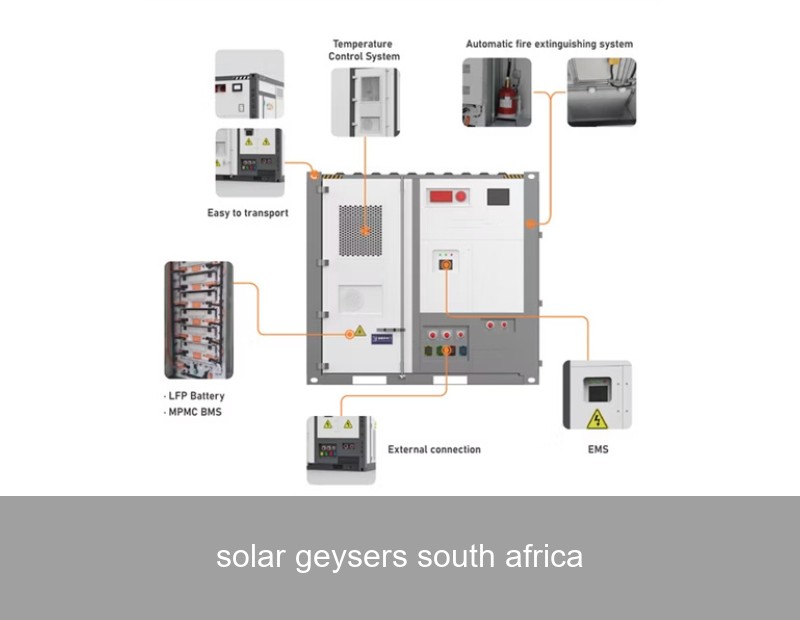
- Highjoule Lithium-Ion Battery Racks (Residential & Commercial): Our scalable, high-cycle-life batteries store energy from your PV panels, ensuring your solar geyser's backup element and entire home have power during outages and at night.
- Highjoule Energy Management System (EMS) Platform: This is the cornerstone. Our cloud-connected platform uses AI and weather forecasting to optimize energy flows. It can learn your hot water usage patterns and ensure the tank is heated using the cheapest, most efficient source available—direct sun, excess PV, or stored battery power—while always preserving essential backup capacity.
Think of it this way: we provide the brain and the brawn that allow your solar geyser to perform at its absolute best, 24/7, regardless of the grid's condition.

Image: An intelligent energy management system display visualizing home energy flows. Source: Unsplash
Practical Considerations for an Integrated System
If you're exploring this path, here are key questions to discuss with your installer:
- System Sizing: Is my existing solar geyser correctly sized for my needs in an integrated system?
- Controller Upgrade: Can my geyser's controller be replaced or interfaced with a smart relay to accept signals from a home EMS?
- Load Prioritization: How will the system prioritize between heating water, charging the battery, and running essential appliances during a grid outage?
- Scalability: Can I add more battery capacity or PV panels in the future if my needs change?
What's Your Home's Energy Personality?
The journey toward energy independence is personal. It starts with a single step, like installing a solar geyser. But where does it lead? For some, the goal is simply lower bills. For others, it's the absolute certainty of having hot water and lights on during stage 6 load-shedding. For the environmentally conscious, it's about maximizing the use of every clean kilowatt-hour from the sun.
So, we leave you with this open question: Is your solar geyser a destination, or is it the first component in your home's own intelligent, resilient power station? The technology to choose the latter path is here, proven, and ready to be configured for your unique life under the South African sun.
 Inquiry
 Online Chat