


Solar Inverter and Battery Charger: The Intelligent Heart of Your Energy Independence
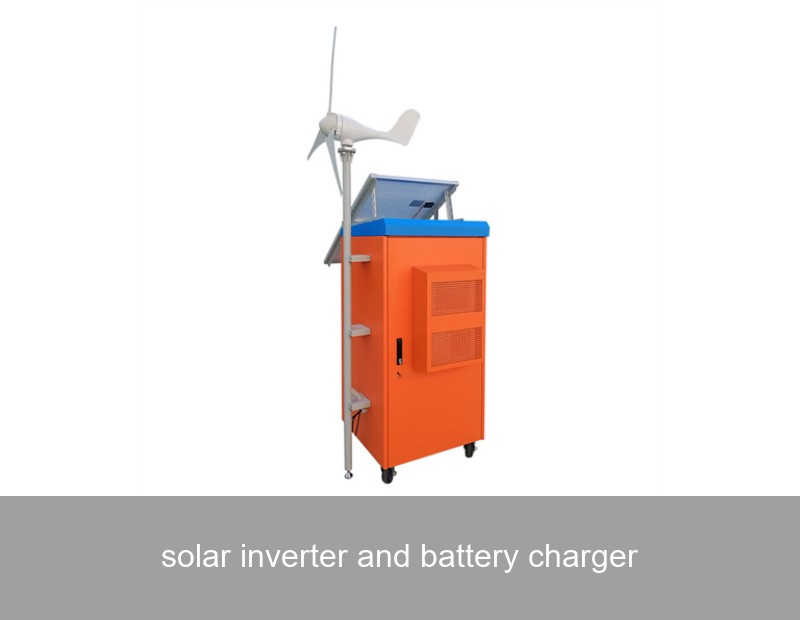
Imagine a sunny afternoon. Your solar panels are working hard, but you're at the office. Where does all that clean power go? Or picture a sudden grid outage on a stormy night—your home goes dark, even though you have a battery sitting in the garage. This gap between solar generation, storage, and reliable use is precisely where the sophisticated duo of a solar inverter and battery charger comes into play. They are not just components; they are the intelligent command center of a modern energy system. For homeowners and businesses across Europe and the US, understanding this technology is the key to unlocking true energy resilience and maximizing the return on your renewable investment.
Table of Contents
- The Phenomenon: From Simple Conversion to Intelligent Management
- The Data: Quantifying the Need for Smarter Systems
- The Evolution: How Solar Inverters and Chargers Work Together
- The Highjoule Approach: Integrated Intelligence for Real-World Demands
- Case Study: A German Bakery's Recipe for Resilience
- Future Horizons: What's Next for Energy Management?
The Phenomenon: From Simple Conversion to Intelligent Management
In the early days of solar, the setup was relatively simple: panels converted sunlight to direct current (DC), an inverter changed it to alternating current (AC) for your home, and any excess was fed back to the grid. The battery, if present, often had a separate, clunky charger. This disjointed approach led to inefficiencies. You might lose precious energy during conversion steps, or your system might not react optimally during a blackout. The modern challenge isn't just generating power—it's orchestrating it seamlessly between generation (solar), storage (battery), and consumption (your appliances).

This is where the latest generation of hybrid solar inverters with integrated, high-efficiency battery charging comes in. Think of it as the difference between a basic phone and a smartphone. The new system is an all-in-one energy manager.
The Data: Quantifying the Need for Smarter Systems
Why is this intelligent management so crucial? Let's look at the numbers. According to the U.S. Energy Information Administration (EIA), the average U.S. household experienced just over 8 hours of power interruptions in 2020, with major events driving the average up (Source: EIA). In Europe, energy security and price volatility have become top concerns. Simultaneously, the levelized cost of solar PV has fallen by over 88% since 2009 (Source: IRENA).
This creates a powerful economic and security imperative: maximize self-consumption of cheap solar power and protect against outages. A system with a non-integrated inverter and charger might achieve 70-80% self-consumption. In contrast, an advanced, DC-coupled system with intelligent management can push that figure to 90% or higher, storing every possible kilowatt-hour for later use instead of buying expensive grid power at night.
Key Functions of an Advanced Solar Inverter & Charger System:
- DC Coupling: Channels solar DC power directly to the battery with minimal conversion loss, unlike older AC-coupled systems.
- Bidirectional Inversion: Seamlessly converts DC to AC for home use and AC to DC for battery charging from the grid if needed.
- Grid Services: In some markets, systems can provide frequency regulation or voltage support to the grid.
- Storm Guard Mode: Automatically charges the battery to 100% when severe weather is forecasted.
- Load Management: Can prioritize power to critical circuits (refrigerator, medical equipment) during an outage.
The Evolution: How Solar Inverters and Battery Chargers Work Together
So, how does this integrated magic happen? Let's break down the technology in a simple way.
| Component | Traditional Role | Advanced, Integrated Role |
|---|---|---|
| Solar Inverter | Convert DC from panels to AC for immediate use or export. | The primary brain. Manages solar input, grid connection, and can directly output DC to charge batteries. Makes millisecond decisions on energy routing. |
| Battery Charger | A separate unit converting AC to DC to charge the battery, often with lower efficiency. | Fully integrated into the inverter. Uses high-frequency transformer technology for efficient, multi-stage charging that prolongs battery life. |
| System Controller | Often a separate, simple logic board. | Sophisticated software within the inverter that learns consumption patterns, uses weather forecasts, and optimizes for cost or carbon footprint. |
This integration means fewer boxes on your wall, less energy lost as heat during multiple conversions, and a single, user-friendly app to control everything. For a system to be truly resilient, this seamless coordination is non-negotiable.
The Highjoule Approach: Integrated Intelligence for Real-World Demands
At Highjoule, with nearly two decades of experience since 2005, we've seen the energy landscape transform. Our engineering philosophy is built on the principle that hardware and software must be co-designed from the ground up to deliver real reliability and value. That's why our HPS Series Hybrid Power Station is engineered as a unified solution, not a bundle of separate parts.
The HPS Series embodies the next generation of the solar inverter and battery charger. Its DC-coupled architecture ensures peak round-trip efficiency, meaning more of the sun's energy ends up powering your home or business. Its integrated battery management system (BMS) communication supports a wide range of lithium-ion chemistries, providing flexible and future-proof storage. Crucially, our EnergyOS software platform turns raw data into actionable intelligence, allowing users to set preferences like "maximize self-consumption," "cost savings," or "full backup readiness."
For commercial and industrial applications, this intelligence scales. Our systems can manage complex load-shedding schemes, integrate with generators for microgrids, and provide detailed reporting on energy flows and savings—a critical tool for facility managers on both sides of the Atlantic.
Case Study: A German Bakery's Recipe for Resilience
Let's make this concrete with a real example from Bavaria, Germany. Bäckerei Schmidt (name changed for privacy) is a medium-sized artisan bakery with high energy demands for ovens, refrigeration, and lighting. Their challenges were twofold: skyrocketing energy costs and the critical need to avoid spoilage during even brief grid failures.
In 2022, they installed a Highjoule C&I (Commercial & Industrial) solution featuring a 100kW hybrid inverter system with 240kWh of battery storage, integrated with their existing rooftop solar. The goals were to increase solar self-consumption and provide full backup for cold storage and critical baking lines.
Results After 12 Months:
- Self-Consumption Rate: Increased from 35% to 92% of their solar generation.
- Grid Energy Cost Reduction: Cut peak-hour grid electricity purchases by 78%.
- Reliability: Successfully navigated three planned grid outages and two unexpected faults with zero operational disruption.
- ROI Timeline: Projected payback period reduced to under 6 years, thanks in part to Germany's dynamic energy market and the system's ability to perform controlled grid export during high-price periods.
"For us, it's not just about saving money," the owner noted. "It's about guaranteeing we can bake bread every morning, no matter what. The system runs automatically; we almost don't think about it—which is exactly what we needed."
Future Horizons: What's Next for Energy Management?
The journey doesn't stop at high self-consumption and backup. We are moving towards true prosumer ecosystems, where your solar inverter and battery charger becomes a grid-interactive asset. Imagine your system automatically participating in virtual power plants (VPPs), earning revenue by providing collective grid stability during times of high demand. Envision it integrating with your EV charger, prioritizing cheap solar power to fuel your car. The core technology enabling these possibilities is the intelligent, software-upgradable hybrid inverter.
This future requires systems that are not just robust but also adaptable. It requires a provider that thinks in terms of lifelong system performance and evolving utility partnerships, not just a one-time sale.

As you consider your path to energy independence, what role do you see your energy system playing in the next five years—a silent guardian, a cost-saving workhorse, or an active participant in the broader clean energy transition?
 Inquiry
 Online Chat