


The Solar Inverter for Freezer: Your Key to Uninterrupted, Sustainable Cold Storage
a sudden summer storm knocks out the grid. Hours pass. You peek into your freezer, home to weeks of groceries, and feel a pang of anxiety. For businesses, this scenario is a financial nightmare. But what if your freezer could seamlessly switch to the sun's power, maintaining its icy hum without a flicker? This isn't just a dream; it's the practical reality enabled by a specialized solar inverter for freezer applications. This crucial device is the intelligent brain of a solar-powered cold storage system, ensuring that whether you're a homeowner safeguarding family meals or a farm preserving harvests, your perishables stay perfectly preserved.
The Critical Role of a Solar Inverter for Your Freezer
At its core, a solar panel produces Direct Current (DC) electricity. Your freezer, like most appliances, runs on Alternating Current (AC). The solar inverter's primary job is this fundamental conversion. But for a critical load like a freezer, a standard grid-tied inverter isn't enough. A dedicated system needs to handle unique challenges:
- Starting Surge (Inrush Current): A freezer's compressor needs a significant burst of power—often 3-5 times its running wattage—to start up. An undersized inverter will trip or fail.
- 24/7 Reliability: Food spoilage doesn't take breaks. The system must provide power day and night, requiring integration with battery storage.
- Voltage Stability: Freezers are sensitive to voltage fluctuations. A high-quality inverter delivers clean, stable power, protecting your appliance's compressor.
In essence, the right solar inverter acts as a resilient power manager, juggling solar production, battery storage, and the freezer's demanding power profile to guarantee constant cooling.
The Silent Crisis: Power Interruptions & Food Waste
The phenomenon is global. In the US alone, power outages are increasing in frequency and duration. According to the U.S. Energy Information Administration, the average American customer experienced just over 5 hours of power interruption in 2021. For a standalone freezer, even a 4-hour outage in a hot garage can push internal temperatures into the danger zone.
The data gets starker when we look at food waste. The U.S. Department of Agriculture estimates that between 30-40% of the food supply is wasted. A significant portion of this occurs at the consumer and retail levels due to improper storage and power failures. For small businesses like butcher shops, fisheries, or ice cream parlors, a prolonged outage can mean thousands of dollars in lost inventory instantly.

Image Source: Unsplash. A commercial freezer represents significant inventory value that requires absolute power reliability.
Beyond Backup: The Intelligent Solar Inverter Solution
So, how does a solar-powered system with the right inverter solve this? Let's break it down logically:
- Daytime Operation: Solar panels generate DC power. The hybrid or off-grid solar inverter converts it to clean AC to run the freezer directly. Any excess solar energy charges the connected battery bank.
- Nighttime & Cloudy Days: The inverter intelligently draws power from the battery storage system to keep the freezer running, switching sources seamlessly.
- Grid Outage (The Critical Moment): In a hybrid setup, the instant the grid fails, the inverter disconnects from the grid (a safety feature called "islanding") and continues to power the freezer from solar and batteries alone. You likely won't even notice the transition.
| Scenario | Power Source for Freezer | Inverter's Key Action |
|---|---|---|
| Sunny Day | Solar Panels (Primary), Grid/Battery (Supplementary) | Convert solar DC to AC; manage surplus to battery. |
| Cloudy Day / Night | Battery Storage (Primary) | Draw stable AC power from batteries. |
| Grid Outage | Solar + Battery (Islanded System) | Island from grid, maintain continuous power flow. |
A Real-World Case: Saving Food, Money, and Carbon in California
Let's move from theory to practice. Consider "Sunshine Organics," a mid-sized organic grocery store in Northern California, an area prone to Public Safety Power Shutoffs (PSPS) due to wildfire risk. Their challenge: a 50 cubic foot walk-in freezer storing $25,000 worth of frozen goods.
Their Old Reality: During a 2-day PSPS event, they relied on a diesel generator. Cost: $450 in fuel, noise, emissions, and lingering anxiety about generator failure.
Their Solar Solution: They installed a 10kW solar array, a 20kWh lithium-ion battery storage system, and a robust hybrid solar inverter specifically programmed to prioritize the freezer circuit.
The Data-Driven Outcome: In the following year, the store experienced three grid outages totaling 42 hours. The solar+battery+inverter system maintained the freezer at -18°C without interruption. The annual savings were clear:
- Fuel Savings: $1,350 (avoided generator use)
- Food Waste Prevention: Estimated $7,500+ (potential inventory loss)
- Grid Energy Offset: Reduced freezer's grid electricity consumption by ~70%.
- ROI: The system paid for itself in under 4 years, not counting potential tax incentives.
This case highlights that a correctly sized solar inverter for freezer duty isn't an expense; it's a risk mitigation and profitability tool.
Choosing the Right Solar Inverter for Your Freezer System
Not all inverters are created equal for this task. Here’s a quick guide on what to look for:
- Type: A Hybrid (Multi-Mode) Inverter is ideal. It can manage solar, batteries, and the grid simultaneously.
- Power Rating (Surge Capacity): This is critical. If your freezer's compressor has a locked-rotor amperage (LRA) of 40A at 240V, you need a surge capacity of at least 9,600 Watts. Always oversize the inverter's continuous rating by a factor of 1.5 to 3 for motor starts.
- Battery Compatibility: Ensure the inverter is compatible with modern, high-cycle lithium-ion batteries (like LiFePO4) for longer lifespan and deeper discharges.
- Software & Monitoring: Look for inverters with user-friendly apps that allow you to set priorities (e.g., "always power the freezer") and receive outage alerts.
Highjoule's Integrated Approach to Reliable Cold Storage
At Highjoule, with nearly two decades of expertise in advanced energy storage, we understand that protecting critical cold storage goes beyond selling a component. Our approach is system-level integration. For applications like freezers, we provide the Highjoule HPS Series Hybrid Power System.
This system is engineered for resilience. Its core is a high-efficiency hybrid inverter built with a surge capacity specifically designed to handle the demanding start-up loads of refrigeration compressors. It's seamlessly pre-integrated with Highjoule's own smart, modular lithium-ion battery packs and sophisticated energy management software (EMS).
What does this mean for you? A single, optimized solution where the inverter, battery, and controls are designed to work in perfect harmony. Our EMS can be configured to always reserve sufficient battery capacity for your freezer circuit, ensuring peace of mind through multiple days of bad weather or grid outages. For commercial and industrial clients, we extend this into comprehensive microgrid solutions, where a freezer is just one part of a fully resilient, solar-powered operation.

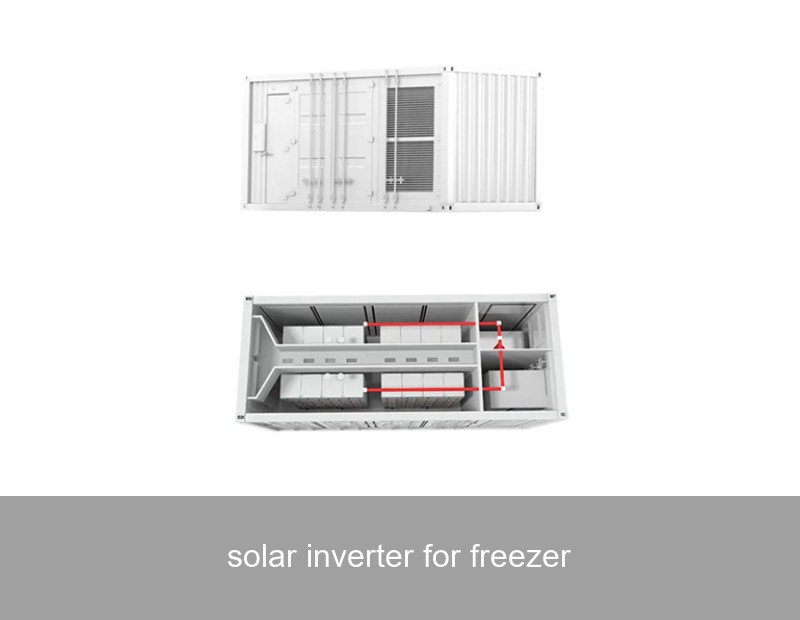
Image Source: Unsplash. A modern, integrated hybrid inverter and battery storage system, similar to Highjoule's approach.
Looking Ahead: The Future of Solar-Powered Cold Chains
The integration of solar inverters with critical appliances like freezers is a cornerstone of the evolving smart, resilient home and business. As battery costs continue to fall and inverter intelligence grows, these systems become the default choice for new constructions and retrofits, especially in areas with unstable grids or a high commitment to sustainability.
The technology is moving towards even greater autonomy. Imagine an inverter system that can predict weather patterns, pre-chill your freezer before a forecasted heatwave, and communicate with other appliances to optimize overall home energy use—all while keeping your food safe.
Could your current power setup survive a 24-hour blackout without compromising your frozen goods? What would the true cost of that failure be for your household or your business?
 Inquiry
 Online Chat