


Demystifying Solar Inverter Price: Your Guide to Smart Value Beyond Livguard & Competitors
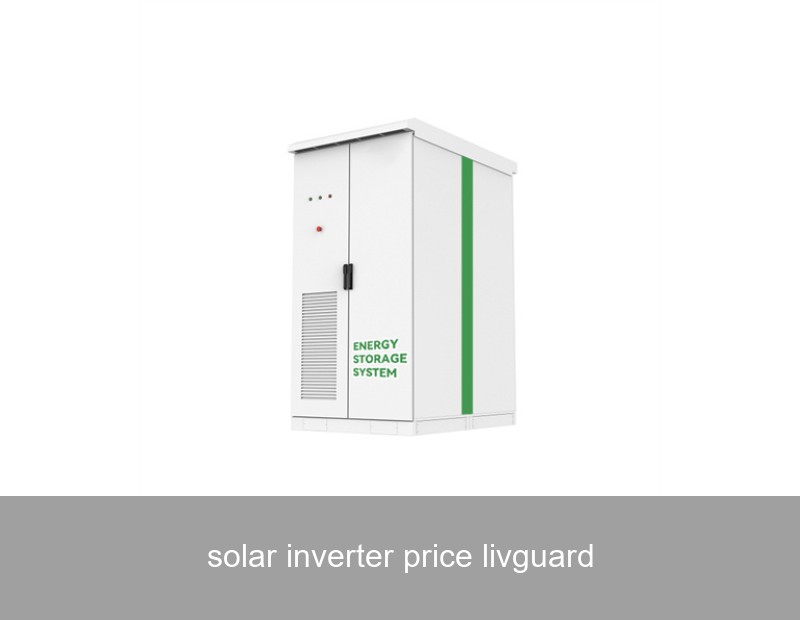
If you're researching a solar installation, you've likely typed "solar inverter price Livguard" or similar terms into a search engine. It's a logical starting point! The inverter is the brain of your photovoltaic (PV) system, converting the sun's DC power into usable AC electricity for your home or business. However, focusing solely on the upfront equipment cost can be a bit like buying a car based only on the sticker price of the engine. The real value—and the real savings—lie in the system's overall performance, intelligence, and longevity. As a global leader in advanced energy storage since 2005, Highjoule understands that the optimal power solution balances smart technology, reliable hardware, and long-term financial sense.
Key Factors Influencing Solar Inverter Price
The price range for solar inverters is broad, from a few hundred to several thousand dollars or euros. Why such a variance? Several core technical and market factors are at play.
- Inverter Type & Topology: The basic string inverter is often the most budget-friendly entry point. For roofs with shading or multiple orientations, Microinverters (attached to each panel) or DC Power Optimizers (paired with a string inverter) maximize harvest but increase cost. For systems integrating batteries, a Hybrid Inverter is essential, commanding a higher price due to its complex bidirectional capabilities.
- Power Rating (kW): This is the primary cost driver. A 5kW inverter for a typical home will cost less than a 50kW unit for commercial use. It's crucial to size your inverter correctly for your array's output and future expansion.
- Efficiency & Thermal Management: A premium inverter might boast 98.5% peak efficiency versus 97%. Over 20+ years, that small percentage translates to significant extra energy yield. Superior thermal design (like Highjoule's passive cooling in our H-Series Hybrid Inverters) ensures consistent performance on hot days and extends lifespan, adding to the value proposition.
- Grid Services & Software Intelligence: Modern inverters are grid-interactive computers. Features like advanced frequency-watt response, voltage regulation, and seamless islanding for microgrids add cost but are critical for grid stability and future-proofing. The sophistication of the monitoring platform (like Highjoule's EnergyOS™) is a key part of the product's worth.
- Warranty & Manufacturer Support: A 10-year warranty typically costs more than a 5-year standard offering. It reflects the manufacturer's confidence in their product's durability and their commitment to supporting you long-term.
Livguard and the Competitive Inverter Market Landscape
Brands like Livguard have established a strong presence in several markets, particularly noted for offering competitive pricing on batteries and inverters. When evaluating "solar inverter price Livguard," it's important to contextualize it within the broader ecosystem. The market segments into value-focused offerings and premium, feature-rich solutions. The right choice depends entirely on your project's goals: is it purely for immediate cost reduction, or for building a resilient, intelligent, and scalable energy asset?
For instance, in a basic grid-tied system without storage plans, a competitively priced string inverter may suffice. However, the energy landscape is shifting rapidly. With increasing grid volatility and the rising appeal of energy independence, the ability to add storage later is paramount. This is where a forward-thinking strategy matters. Investing in a hybrid-ready or DC-coupled system architecture from the start, even if at a moderately higher initial inverter price, can save tens of thousands in avoided replacement costs down the line.
Beyond Price: The Value of a Complete, Intelligent System
At Highjoule, we approach energy solutions holistically. The inverter shouldn't be an isolated component; it must be the intelligent core of a synchronized system. Our H-Series Hybrid Inverters are engineered not just to convert power, but to orchestrate it. They seamlessly integrate with Highjoule's modular lithium-ion battery cabinets and our EnergyOS™ platform, which provides real-time analytics, predictive energy management, and remote firmware updates.
This integrated approach delivers value that a standalone inverter cannot:
- Maximized Self-Consumption: The system intelligently decides when to store solar excess, when to use it, and when to draw from the grid, slashing your bills.
- Uninterruptible Power Supply (UPS): Our inverters provide sub-20ms switchover to battery backup during an outage—critical for homes offices, and sensitive industrial loads.
- Future-Proof Scalability: Need more power or storage? Our DC-coupled architecture allows for easy, cost-effective expansion of both PV and battery capacity without replacing the core inverter.

Image Source: Unsplash (Representative image of a modern home energy system)
A Real-World Case: The German Bakery's Energy Recipe
Let's move beyond theoretical price comparisons and look at data from the field. Consider a mid-sized artisan bakery in Bavaria, Germany. Their challenge: high, time-variable electricity costs, a need for unwavering refrigeration, and a corporate sustainability target.
Initial Scenario: They considered a standard 40kW PV system with a low-cost string inverter. The "solar inverter price" was attractive, but the system could not address peak shaving or backup.
Highjoule Solution: We deployed a 45kW H-50 Hybrid Inverter paired with a 60kWh Highjoule CubeStack™ battery system. The EnergyOS™ was programmed for their specific load profile: using solar to power daytime operations, charging batteries with midday excess, and discharging during the high-tariff evening baking shift. The system also provides full backup for cold storage.
| Metric | Result | Impact |
|---|---|---|
| Energy Self-Sufficiency | Increased from 35% to 82% | Dramatically reduced grid dependence |
| Peak Demand Charges | Reduced by 74% | Substantial monthly cost savings on utility bills |
| ROI Period | Estimated 5.2 years | Faster payback due to integrated smart management |
| CO2 Footprint | Reduced by 28 tonnes annually | Meeting sustainability goals ahead of schedule |
This case, documented in a renewable energy case study repository, illustrates how the system intelligence, not just the inverter hardware, created tangible financial and operational returns. The bakery's manager noted, "The price of the inverter was one line item in the quote. The value of never worrying about spoilage during an outage or a sudden price spike is priceless for our business."
Making the Right Choice for Your Investment
So, how should you navigate the "solar inverter price" question? Start by defining your objectives. Is it purely bill reduction, or do you need backup power, grid independence, or participation in virtual power plants? For residential users in Europe and the US, regulations like EU climate directives and US federal tax credits (ITC) are making integrated storage-plus-solar systems more financially accessible than ever.
When you evaluate quotes, look at the Levelized Cost of Energy (LCOE)—the total cost of the system over its life divided by the energy it produces. A higher-quality, intelligent system often has a lower LCOE. Ask your provider about software capabilities, warranty service, and upgrade paths.

Image Source: Unsplash (Representative image of professional system monitoring)
Highjoule's solutions for commercial, industrial, and residential applications are designed with this total lifecycle value in mind. Our global service network and robust product warranties ensure your investment is protected. We don't just sell inverters; we deliver predictable, controllable, and sustainable energy independence.
 Inquiry
 Online Chat