


Solar Wunderbox: How Much Does a Complete Home Energy System Really Cost?
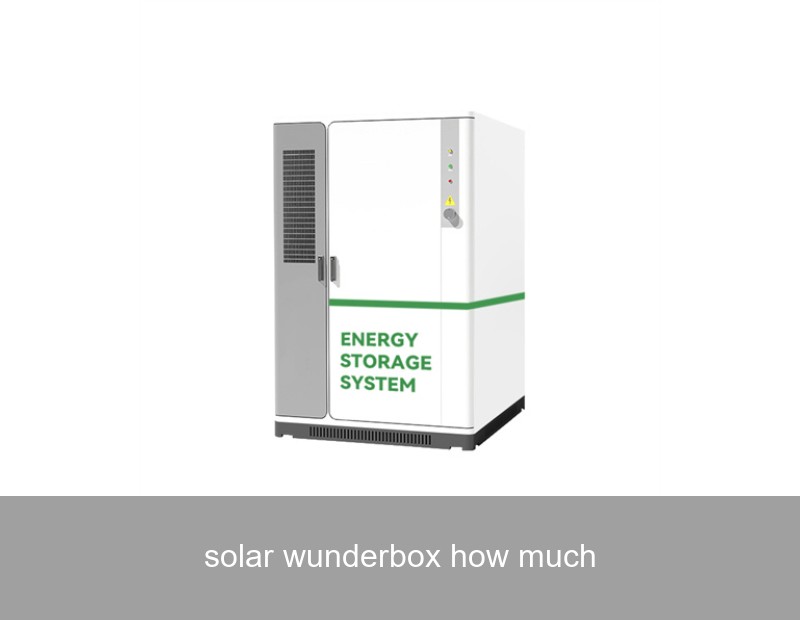
So, you're thinking about harnessing the sun's power and you keep hearing about a magical "solar wunderbox"—a sleek, all-in-one unit that promises energy independence. The burning question on everyone's mind is, inevitably, "solar wunderbox how much?" Let's be honest: if you're searching for that phrase, you're not just looking for a price tag for a piece of hardware. You're asking for the cost of a solution: a reliable, intelligent system that stores solar energy, powers your home during outages, and slashes your electricity bills. The answer isn't a single number, but a journey through value, technology, and long-term savings. Let's demystify it together.
The Real Cost Breakdown: More Than Just a Box
First, let's clarify terminology. In the industry, a "solar wunderbox" typically refers to an integrated solar battery storage system. It's the brain and brawn behind a modern energy-independent home. When you ask "how much," you need to consider the complete ecosystem, which usually consists of three core components:
- Solar PV Panels: The generators on your roof, converting sunlight into electricity.
- The Battery Storage Unit (The "Wunderbox"): The heart of the system, storing excess solar energy for use at night or during peak times.
- The Inverter/Energy Manager: The intelligent controller that directs energy flow between panels, battery, home, and the grid efficiently and safely.
A 2023 report by the U.S. Department of Energy's Solar Energy Technologies Office indicates that while solar panel costs have dropped dramatically, the total installed cost of a residential solar-plus-storage system in the U.S. can range widely, from $25,000 to $45,000+ before incentives. In Europe, prices are comparable but vary significantly by country and local regulations. The "box" itself—the battery—often represents 30-40% of this total system cost.

A modern home energy setup: solar panels generate power, while the battery storage unit (often wall-mounted) stores it for later use. Image credit: Unsplash.
A Real-World Case: The Schmidt Family in Bavaria
Let's move from abstract ranges to a concrete example. Meet the Schmidt family, living in a detached home near Munich, Germany. Their goal: maximize self-consumption of solar power and gain backup capability. In early 2023, they installed a 10 kW solar array paired with a 13.5 kWh lithium iron phosphate (LFP) battery system.
| Component | Specification | Cost (EUR, before subsidies) |
|---|---|---|
| Solar Panels | 10 kWp | €12,500 |
| Battery Storage ("Wunderbox") | 13.5 kWh, LFP chemistry | €9,800 |
| Hybrid Inverter & System Integration | Includes smart energy management | €4,200 |
| Installation & Other Costs | Mounting, wiring, commissioning | €3,500 |
| Total Gross System Cost | €30,000 | |
| After German Federal Subsidy (BAFA) | ~€21,000 |
The key takeaway? The net investment was significantly lower. More importantly, their system now covers 82% of their annual electricity needs. They've reduced their grid electricity purchase from 5,800 kWh to just 1,044 kWh annually. With Germany's high electricity prices (around €0.40/kWh in 2024), this translates to annual savings of approximately €1,900. Their simple payback period is projected to be just over 11 years, on a system with a 20+ year lifespan for panels and a battery warranty of 10 years or 10,000 cycles.
The Highjoule Approach: Smart Integration for Maximum Value
This is where companies like Highjoule redefine the "solar wunderbox" concept. Since 2005, we've moved beyond selling just a battery. We provide intelligent, integrated energy ecosystems. Our HES Series (Home Energy System) is a prime example. It combines a high-cycle life LFP battery, a hybrid multi-mode inverter, and our proprietary EnergyOS™ software into a seamless unit.
So, "how much" for a Highjoule system? While pricing is customized, the value proposition is clear: our integrated design reduces installation complexity and cost by up to 20% compared to piecing together components from different vendors. The EnergyOS™ platform learns your consumption patterns, automatically switches between grid, solar, and battery power to optimize for time-of-use rates, and can even participate in grid-balancing programs in some regions, creating a potential revenue stream. You're not just buying storage; you're buying an intelligent home energy manager that maximizes your financial return.

An integrated home battery system with a clear display, showing energy flow and system status. Image credit: Unsplash.
Key Factors Influencing Your System's Price
Understanding these variables will help you make sense of any quote:
- Battery Capacity (kWh): This is your "energy bank" size. A typical home might need 10-15 kWh to cover evening usage. More capacity = higher cost.
- Power Rating (kW): How much power the battery can deliver at once. Critical for running multiple high-power appliances (like AC or an EV charger) simultaneously during an outage.
- Chemistry & Cycle Life: High-quality LFP batteries (like those in Highjoule systems) cost more upfront but last significantly longer and are safer than some alternatives.
- Inverter Capability: A "hybrid" inverter that handles both solar and battery is essential. Its power rating must match your solar array and home load.
- Installation Complexity: Electrical panel upgrades, mounting location, and local permitting fees can add cost.
- Local Incentives: This is huge! The U.S. Residential Clean Energy Credit offers a 30% federal tax credit. Many European countries and U.S. states have additional rebates.
Beyond the Price Tag: Calculating Long-Term Value
Focusing solely on the initial "solar wunderbox how much" question can be short-sighted. The true metric is Levelized Cost of Energy (LCOE) for your home—the average net cost per kWh you use over the system's life. With a Highjoule system, you:
- Lock in Energy Costs: The sun's fuel is free. You're insulating yourself from volatile utility rate hikes.
- Gain Resilience: What's the cost of a spoiled fridge, a dark home, or lost work during a power outage? For many, backup power is priceless.
- Increase Property Value: Studies, including one from the Zelman & Associates research firm, indicate homes with solar+storage sell at a premium.
- Contribute to Sustainability: You're directly reducing your carbon footprint, a value that's increasingly important.
Your Next Step Towards Energy Independence
The journey to answering "solar wunderbox how much" is deeply personal. It depends on your energy goals, your home's architecture, and your local landscape of energy prices and incentives. The most effective way to get a clear, meaningful number is to move from online searches to a personalized assessment.
What specific energy challenges in your home—be it soaring bills, frequent outages, or a desire for true energy independence—are you most motivated to solve with a smart storage solution?
 Inquiry
 Online Chat