


Solar Inverter WiFi Connection: The Unseen Lifeline of Your Energy Independence
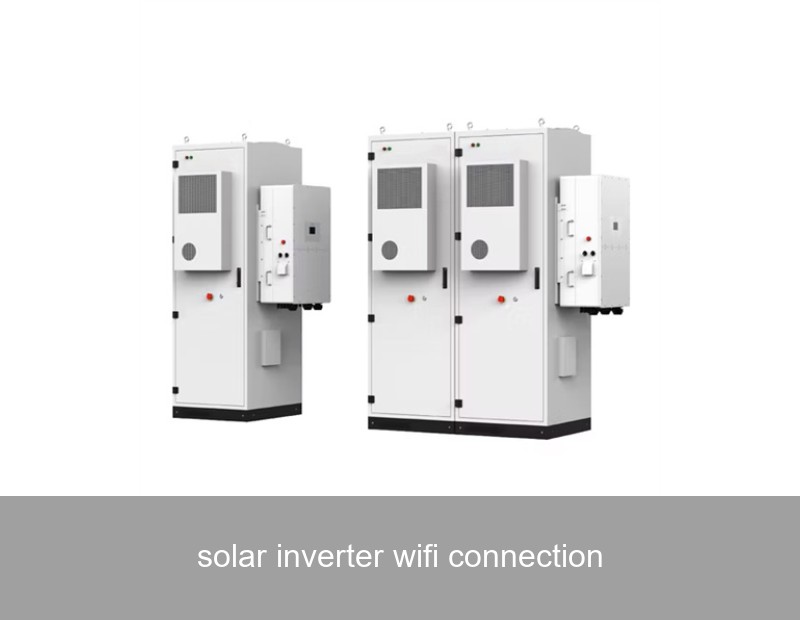
Let's be honest. When you invested in your solar panels, the sales pitch was probably all about clean energy, slashing bills, and independence. The technician might have mentioned "you can monitor it all from an app," but that likely felt like a nice bonus. Here's the reality that installers and homeowners often discover later: your solar inverter WiFi connection isn't a bonus feature; it's the central nervous system of your entire power setup. Without a stable, intelligent connection, you're flying blind, potentially losing money and control daily. As a product technology expert at Highjoule, I've seen how this single point of failure can undermine the promise of solar. This article will explore why this connection is critical, the pitfalls of poor connectivity, and how modern solutions are redefining what it means to be connected.
Why Your Solar Inverter's WiFi Connection is More Than Just a Convenience
Think of your solar inverter as the brain of your photovoltaic system. It converts raw DC power from your panels into usable AC power for your home. Now, imagine that brilliant brain being isolated, unable to communicate. A disconnected inverter is a black box. You have no idea how much energy it's producing, if it's functioning optimally, or if it has shut down due to a fault. The solar inverter WiFi connection is the vital link that transforms this appliance into an intelligent, responsive asset. It enables real-time monitoring, performance analytics, remote updates, and, crucially, integration with battery storage systems—the key to true 24/7 renewable power.
The Silent Phenomenon: The "Set-and-Forget" Inverter
The common scenario goes like this: the installation is complete, the app is set up on your phone, and you see your first kilowatt-hours flowing in. It's thrilling! For the first few weeks, you check it daily. Then life gets busy. You forget. This is the "set-and-forget" phenomenon. The problem arises months later when a minor grid fluctuation or a local signal interference causes the inverter to lose its WiFi link. Since you're not actively checking, this disconnection can go unnoticed for weeks or even months. During this time, a drop in efficiency or a complete shutdown could be silently eroding your expected savings and return on investment. You only discover it when your electricity bill arrives, and it's suspiciously high.
The Data Don't Lie: Quantifying the WiFi Disconnect
Industry data and our own anonymized service logs at Highjoule reveal a telling story. Studies suggest that a significant percentage of residential solar systems experience communication dropouts exceeding 48 hours at least once per year. Let's break down what that means in hard numbers:
| Scenario | System Size | Potential Daily Energy Loss (if offline/faulty) | Monthly Financial Impact* |
|---|---|---|---|
| Suburban Home | 6 kW | 24-30 kWh | $70 - $150 |
| Small Business | 25 kW | 100-125 kWh | $300 - $500 |
*Estimates based on average retail electricity rates in Germany and California (€0.35/kWh, $0.25/kWh). Losses can be higher with time-of-use rates.
The loss isn't just financial. An unconnected system cannot receive critical firmware updates that enhance safety, improve grid-support functions, or patch cybersecurity vulnerabilities. In an era of smart grids, a non-communicating inverter is a liability.
Case Study: A Brewery's Bitter Taste of Disconnection
Consider a real example from a craft brewery in Bavaria, Germany. They installed a 40 kW solar system with a standard inverter to offset their high refrigeration loads. The system performed well initially. However, after a router upgrade in their office, the inverter's basic WiFi dongle failed to maintain a stable connection across the thick stone walls of the brewery building. For nearly two months, the system was producing, but at a 15% reduced efficiency due to a calibration issue that couldn't be addressed remotely.
The brewery lost over 1,800 kWh of expected production—enough to brew hundreds of liters of beer. They only realized the issue during a seasonal energy review. The fix required a costly service call for a technician to simply reconnect and update the system. This case underscores that for commercial and industrial (C&I) applications, a consumer-grade solar inverter WiFi connection is insufficient. Reliability needs to be industrial-strength.

Image Source: Unsplash - Representative image of commercial solar installation.
Technical Insights: What Makes a Robust Solar Inverter WiFi Connection?
Not all WiFi connections are created equal. The common pitfalls include:
- Weak Signal Integrity: Basic inverters often have internal antennas not designed for challenging environments (e.g., metal cabinets, distant rooftops).
- No Failover Mechanism: If WiFi fails, the system has no backup (like cellular connectivity) to maintain communication.
- Poor Security Protocols: Outdated security can make your energy system a target.
- Closed Ecosystems: Some inverters only talk to their proprietary apps, preventing integration with home energy management systems or advanced storage solutions.
A professional-grade system should offer dual- or tri-band connectivity, external antenna options, and sophisticated signal processing to ensure a persistent and secure link to your network and the cloud.
The Highjoule Solution: Beyond Basic Connectivity
At Highjoule, we engineer our solar inverter and battery storage systems with the understanding that connectivity is a core feature, not an add-on. Our H-Energy Hub, the brain of our residential and C&I solutions, is built for unwavering communication.
- Multi-Path Communication: It features integrated, high-gain dual-band WiFi, Ethernet, and an optional 4G/LTE cellular module. If your home network blips, the system seamlessly fails over to cellular to keep you connected and report its status.
- Highjoule Synergy Platform: This isn't just a monitoring app. It's an AI-driven energy management platform. A stable solar inverter WiFi connection feeds it real-time data, allowing it to learn your consumption patterns, forecast weather, and optimize every kilowatt-hour—deciding whether to power your home, charge your battery, or sell back to the grid for maximum benefit.
- Proactive Diagnostics: Our systems don't wait for you to notice a problem. If the connection degrades or production dips, the system can send an alert to both the homeowner and Highjoule's partner installers, enabling proactive maintenance.

Image Source: Unsplash - Representative image of a home energy monitoring display.
Integration is Key
This robust connectivity allows the Highjoule system to be the perfect partner for hybrid and storage-heavy setups. The inverter communicates not just with the cloud, but in real-time with our battery packs, smart load controllers, and even electric vehicle chargers. This creates a truly synchronized and efficient home energy ecosystem, all managed through a single, intuitive interface.
Future-Proofing Your Investment
The energy landscape is evolving rapidly. Grids are becoming dynamic, with variable tariffs and demand-response programs. A "dumb," disconnected inverter cannot participate. A smart, reliably connected system like Highjoule's can automatically adjust your energy use and storage to capitalize on these programs, generating additional income or savings. Furthermore, as regulations like the EU's Solar Rooftop Initiative push for smarter solar integration, having a system with certified grid-support capabilities—enabled by constant communication—will be essential.
When evaluating your solar or storage system, ask your installer pointed questions: "What happens if the WiFi goes down?" "Is there a backup communication method?" "How does the system ensure it stays online and updated?" The answers will tell you if you're buying a commodity inverter or an intelligent energy asset.
Is your current solar setup giving you the full transparency and control you paid for, or is a weak link in its communication chain holding your energy independence back?
 Inquiry
 Online Chat